

Tuonela : The Dark and Silent Underworld of Finnish Folklore
| Description | |
|---|---|
| Mythology | Finnish Mythology |
| Description | Shadowy realm of silence |
| Ruler/Guardian | Tuoni & Tuonetar |
| Inhabitants | Souls, Spirits, Swan |
| Nature | Neutral (rest, no judgment) |
Mythlok Perspective
In Mythlok’s Perspective, Tuonela stands apart from many famous underworlds because it removes the obsession with punishment and replaces it with silence. The realm feels less like a prison and more like an eternal pause where memory, identity, and motion slowly fade away. Its cold landscapes mirror the northern environment from which the mythology emerged, making the afterlife feel deeply tied to nature itself. The Swan of Tuonela especially reflects this balance between fear and beauty. Similar symbolic birds appear in other traditions, such as the swans linked to Celtic otherworld myths and the funerary birds associated with Slavic folklore. Yet Tuonela remains uniquely Finnish in its emotional tone. Instead of dramatic suffering or divine judgment, it presents death as a quiet crossing into shadow and stillness.
Tuonela
Introduction
Kalevala presents Tuonela as the haunting land of the dead within Finnish tradition. Known by related names such as Manala and Vainajala, this realm occupies a central place in Finnish folklore and spiritual imagination. Rather than depicting eternal punishment or heavenly reward, Tuonela represents a quiet destination where all souls eventually arrive. The underworld is not ruled by moral judgment but by inevitability, reflecting an older worldview in which death was seen as a natural continuation of existence.
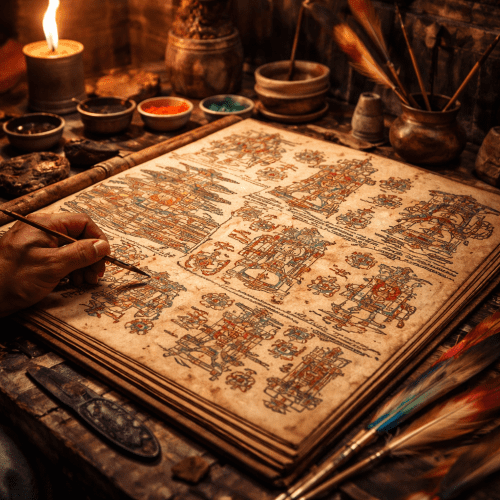
The idea of Tuonela developed through centuries of oral storytelling among Finnish and Karelian communities before being preserved in written form during the nineteenth century. Its atmosphere is filled with silence, darkness, and still waters, creating one of the most distinctive afterlife realms in European tradition. Unlike fiery depictions of hell found in later Christian belief systems, Tuonela is cold, distant, and emotionally subdued. This difference gives Finnish mythology a unique perspective on mortality and the relationship between the living and the dead.
Description
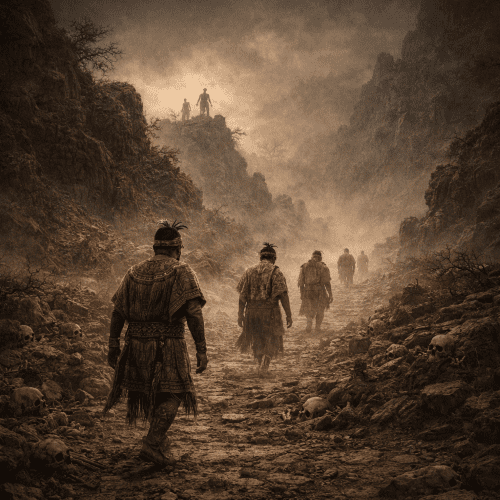
Tuonela is commonly imagined as a gloomy and mist-covered world separated from human lands by the River of Tuoni. Ancient poems describe the region as surrounded by dark waters and endless twilight. Dense forests, marshlands, barren plains, and shadowed islands shape its landscape, giving the realm a feeling of permanent stillness. The absence of sunlight creates an atmosphere where time itself appears frozen.
The River of Tuoni serves as the boundary between life and death. Its black waters are dangerous and nearly impossible for ordinary mortals to cross. In many stories, the river functions as both a physical and spiritual barrier. Those who enter Tuonela rarely return to the world of the living. This concept closely reflects the importance of rivers in Finno-Ugric spiritual traditions, where waterways often symbolized transitions between worlds.
One of the most memorable symbols within Tuonela is the Swan of Tuonela. The sacred bird glides across the dark river, embodying both beauty and danger. Its presence is calm yet unsettling, reinforcing the idea that death in Finnish belief is mysterious rather than openly terrifying. The swan later became one of the most famous artistic symbols connected to Finnish identity.
Ruler/Guardian
The underworld is ruled by Tuoni, the grim god associated with death and decay. He is often portrayed as an aged and severe figure connected directly to the earth and darkness. Tuoni does not act as a punisher in the traditional sense. Instead, he oversees the inevitable arrival of all souls into his realm.
His wife, Tuonetar, serves as the hostess of Tuonela. In many traditions, she welcomes newly arrived spirits and offers them a dark drink or beer that causes forgetfulness. This symbolic act separates the dead from memories of earthly life, allowing them to fully enter the realm of the departed.
Other figures connected to Tuonela include Loviatar, who is associated with suffering and illness, and Surma, a monstrous being linked with destruction. Together, these figures reinforce Tuonela’s role as a domain tied to mortality, disease, and the natural end of life.
Inhabitants
The primary inhabitants of Tuonela are the souls of the dead. Unlike many mythological afterlives, there is no major distinction between virtuous souls and wicked ones. Everyone enters the same shadowy existence regardless of social status or moral behavior. This equality in death reflects ancient Finnish beliefs about fate and the shared destiny of humanity.
The realm is also inhabited by spirits and supernatural beings associated with decay and the wilderness. Kalma is among the most feared figures connected with graves and decomposition. Her presence symbolizes the physical reality of death rather than abstract punishment.
Animals also hold an important place in Tuonela’s mythology. The Swan of Tuonela remains the most sacred creature of the underworld, while giant fish and monstrous river beings appear in some folk traditions. These creatures create an environment where nature itself seems transformed by death and silence.
Access
Entering Tuonela was believed to be extremely difficult for the living. The most common path involved crossing the River of Tuoni, either by bridge, swimming, or through the help of a ferryman known in some traditions as Tuonen tytti. The crossing symbolized a permanent break from earthly life.
Finnish shamans were believed to possess the rare ability to travel into Tuonela through trance states. These spiritual journeys were often undertaken to seek hidden knowledge, healing powers, or magical words. Shamans relied on spirit guides and protective rituals because the underworld was considered highly dangerous.
Ancient stories repeatedly emphasize that mortals who entered Tuonela were not meant to return. The rulers of the underworld actively prevented escape, and magical barriers such as iron nets blocked passage. This idea strengthened the belief that death was final and irreversible.
Instances of Visit
One of the most famous journeys to Tuonela involves Väinämöinen. In the Kalevala, he enters the underworld searching for magical words needed to complete a boat. During his visit, the inhabitants warn him that living people should never enter the realm unslain. He eventually escapes by transforming himself into a snake, highlighting both his wisdom and magical power.
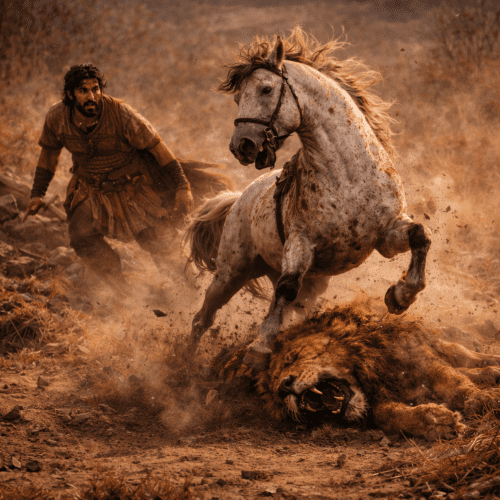
Another major myth centers on Lemminkäinen. He is tasked with killing the Swan of Tuonela as part of a dangerous quest. Before completing the task, he is killed and his body is thrown into the river of death. His mother later gathers his scattered remains and revives him, creating one of the most emotional stories in Finnish mythology. These myths portray Tuonela not simply as a destination for the dead but as a place of forbidden knowledge and spiritual transformation. Heroes who enter the realm rarely emerge unchanged.
Symbolism
Tuonela symbolizes the unavoidable cycle of life and death. Rather than focusing on punishment, the underworld represents stillness, rest, and separation from the living world. Its quiet atmosphere reflects a northern worldview shaped by harsh winters, darkness, and isolation.
The contrast between Tuonela and the bright world above also reflects a symbolic duality between light and shadow, warmth and coldness, life and silence. The underworld is not chaotic but deeply ordered, existing as a natural counterpart to earthly existence.
The Swan of Tuonela adds another symbolic layer to the mythology. The bird represents beauty standing beside death, suggesting that the boundary between fear and peace is often delicate. In Finnish culture, this image became a lasting artistic metaphor for transition and mystery.
Comparative Analysis
Tuonela shares similarities with Hades in Greek mythology because both realms are separated by a river and ruled by death-associated deities. However, Hades eventually developed separate areas for reward and punishment, while Tuonela remained largely neutral.
In Hel from Norse tradition, the dead also inhabit a cold and shadowy world beneath the living realm. Both Hel and Tuonela avoid the fiery imagery associated with later religious concepts of hell, emphasizing stillness instead of torment.
The Christian concept of hell differs greatly from Tuonela because it focuses on eternal punishment and moral judgment. Finnish mythology instead treats death as an unavoidable condition shared equally by all people. This distinction makes Tuonela one of the more philosophically restrained underworlds in world mythology.
Modern Influence
Tuonela continues to influence Finnish culture through art, literature, and music. Painter Akseli Gallen-Kallela created famous works such as Lemminkäisen äiti, which visually captured the sorrow and mystery of the underworld myths.
Composer Jean Sibelius immortalized the myth through the orchestral piece The Swan of Tuonela, one of the best-known musical interpretations of Finnish folklore. The composition’s slow and haunting atmosphere mirrors the silence associated with the realm of the dead.
Today, Tuonela appears in fantasy fiction, heavy metal music, visual arts, and games inspired by Finnish folklore. Its imagery continues to resonate because it presents death not as violent chaos but as a mysterious and solemn passage into another state of existence.

Sources
Encyclopedia.com. (n.d.). Tuonela. https://www.encyclopedia.com/environment/encyclopedias-almanacs-transcripts-and-maps/tuonela
Lore of Ancestors. (2025, January 16). Tuonela: Land of the dead. https://www.loreofancestors.com/kalevala-finnish-mythology/tuonela/
Wikipedia contributors. (2026). Tuonela. Wikipedia. https://en.wikipedia.org/wiki/Tuonela
Wikipedia contributors. (2026). Finnish mythology. Wikipedia. https://en.wikipedia.org/wiki/Finnish_mythology
Pentikäinen, J. Y. (1999). Kalevala mythology (R. Poom, Trans.). Indiana University Press.
Haavio, M. (1952). Väinämöinen: Eternal sage. Academia Scientiarum Fennica.
Holmberg, U. (1927). The mythology of all races: Finno-Ugric, Siberian (Vol. 4). Marshall Jones Company.
Haavio, M. (1939). Suomalaisten tuonela-kuvitelmia [Finnish conceptions of Tuonela]. Kotiseutu, 1, 1-12.
Frequently Asked Questions
What is Tuonela in Finnish mythology?
Tuonela is the Finnish underworld where the souls of the dead reside in eternal silence and twilight.
Who rules Tuonela?
Tuonela is ruled by Tuoni, the god of death, alongside his wife Tuonetar.
What is the River of Tuoni?
The River of Tuoni is the dark river separating the living world from the Finnish underworld.
Why is the Swan of Tuonela important?
The Swan of Tuonela symbolizes beauty, death, and the transition between life and the afterlife.
Which Finnish epic mentions Tuonela?
Tuonela appears prominently in the Kalevala, Finland’s national epic compiled by Elias Lönnrot.