


Sitan : The Keeper of the Underworld in Tagalog Tradition
At a glance
| Description | |
|---|---|
| Origin | Philippine Mythology |
| Classification | Gods |
| Family Members | Lakapati (Wife) |
| Region | Philippines |
| Associated With | Underworld |
Mythlok Perspective
In Mythlok’s Perspective, Sitan represents more than the ruler of an underworld. His mythology reveals how ancient Tagalog beliefs connected morality with the fate of the dead. Unlike Hades in Greek mythology, whose identity as an underworld sovereign is firmly established, Sitan’s identity emerged through the interpretation of earlier references to malevolent spirits. This distinction makes his story particularly interesting, showing how mythology evolves through the preservation and reinterpretation of cultural memory.
Sitan
Introduction
Sitan is a figure associated with the underworld in ancient Tagalog mythology, particularly with Kasanaan, the realm where the souls of the wicked were believed to suffer after death. His mythology centres on the fate of the dead, the consequences of human actions and the distinction between righteousness and wrongdoing. Although his familiar identity as the ruler of the underworld comes from later interpretations of Tagalog beliefs, his name appears in one of the earliest surviving accounts of indigenous Filipino religious traditions.
In 1589, the Franciscan missionary Juan de Plasencia recorded the beliefs of the Tagalogs concerning death and the afterlife in his account Customs of the Tagalogs. He described two destinations for departed souls. Maca was a place of rest reserved for those who had lived honourably, while Casanaan was a realm of suffering for the wicked. Plasencia noted that demons inhabiting Casanaan were called sitan. The distinction is significant because his account refers to these beings collectively rather than clearly identifying a single underworld ruler.
The interpretation of Sitan as the chief deity of Kasanaan became more established through later studies of Philippine mythology, particularly the work of Filipino anthropologist F. Landa Jocano. In his reconstruction, Sitan governs the realm of punishment and commands several supernatural agents who influence the lives of mortals. This portrayal places him at the centre of a mythological system concerned with moral responsibility, death and the spiritual consequences of human behaviour.
Physical Traits
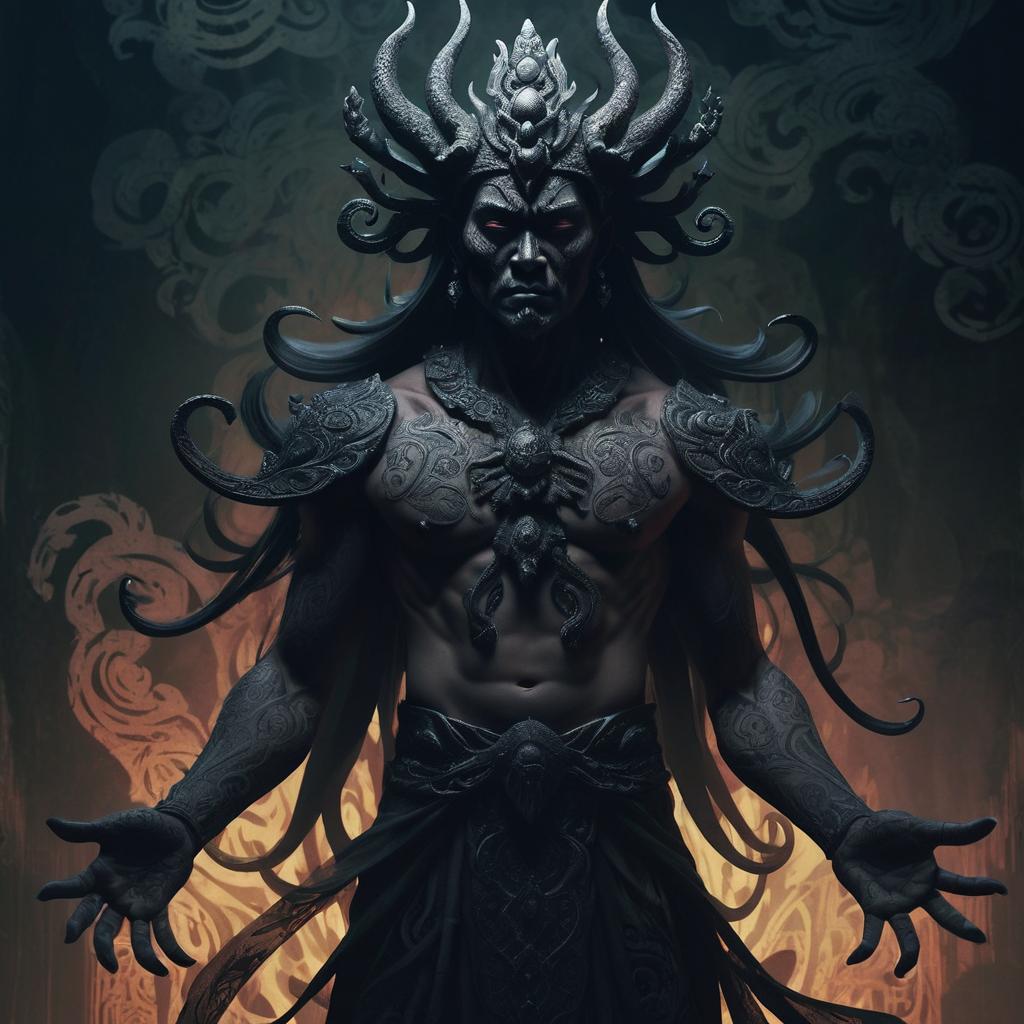
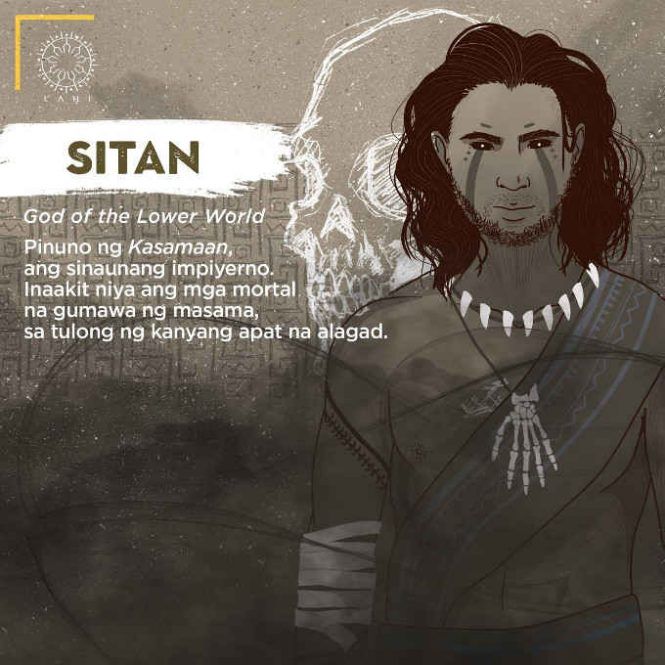
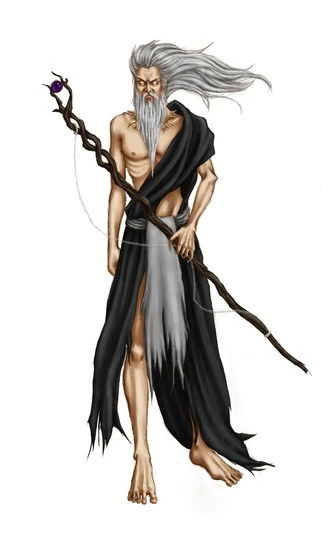
Unlike many prominent deities in world mythology, Sitan has no established physical description in the earliest surviving Tagalog accounts. There are no reliable historical descriptions detailing his complexion, clothing, stature or distinctive bodily features. His identity is primarily defined through his association with Kasanaan and his authority over the realm of the dead rather than through a recognisable physical form.
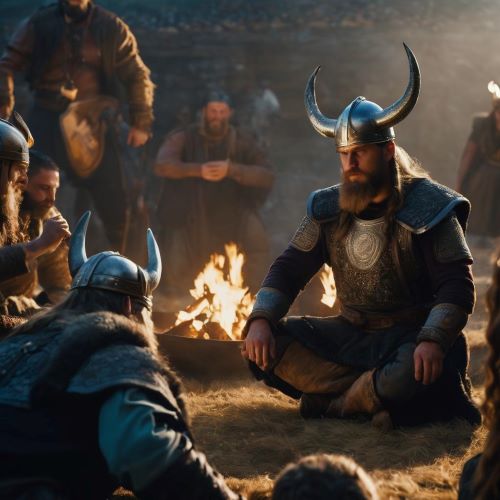
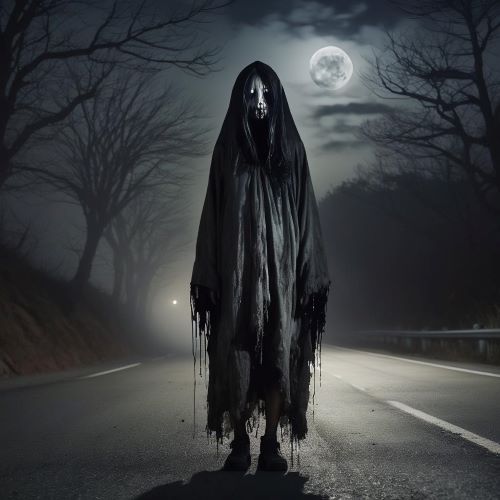
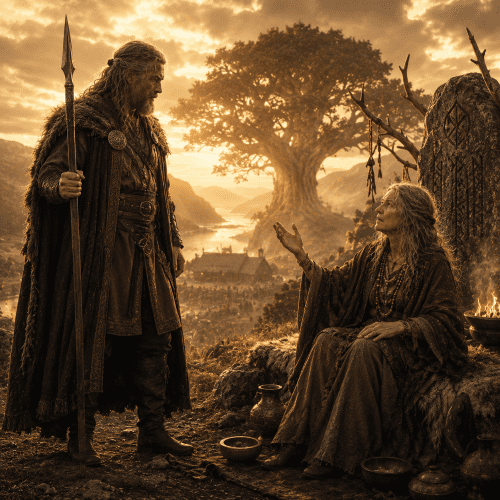
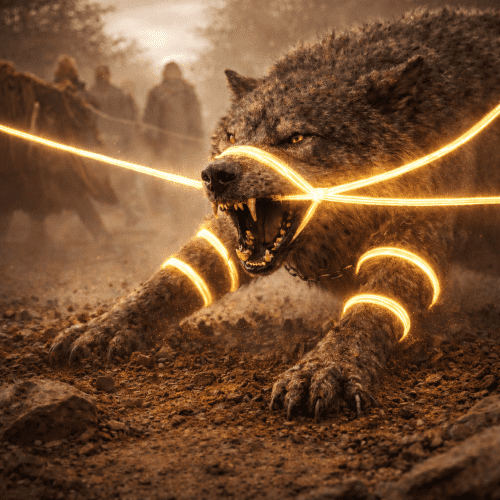
Later artistic interpretations sometimes portray Sitan as a terrifying, dark figure befitting his association with the underworld. Such representations reflect the visual language commonly used to depict demonic beings and rulers of the dead. However, these images should be understood as creative interpretations rather than established elements of ancient Tagalog tradition. His mythological significance rests on his position within the spiritual order of the afterlife, not on any particular physical appearance.
Family
There is little reliable information about Sitan’s family or personal relationships in traditional Tagalog accounts. No established genealogy identifies him as the husband of another deity or the father of supernatural beings. His connection with other figures in Philippine mythology is better understood through their respective roles in the spiritual world.
One particularly important relationship in later accounts is his association with four supernatural agents: Mangagauay, Manisilat, Mankukulam and Hukluban. These beings are presented in Jocano’s reconstruction as agents serving Sitan and carrying out different forms of harm among mortals. Their responsibilities include spreading disease, disrupting marriages, producing supernatural fires and changing physical forms.
Mangagauay is associated with illness and death, while Manisilat is known for creating discord between husbands and wives. Mankukulam is connected with mysterious fires, and Hukluban possesses the ability to assume different forms. Together, these figures create a network of supernatural influences extending from the underworld into everyday human life. Their association with Sitan establishes his authority within this interpretation of Tagalog mythology, although it does not constitute a conventional family relationship.
Other names
Sitan is the name most commonly associated with the underworld figure in discussions of ancient Tagalog beliefs. However, its historical and linguistic origins remain uncertain. The similarity between Sitan and Satan has attracted attention, particularly because both names are associated with malevolent supernatural forces and the realm of punishment.
Jocano also noted the possible connection between Sitan and the Islamic term Shaitan, which refers to a devil or malevolent spirit. This resemblance has raised questions about the influence of Islamic religious ideas on the spiritual traditions of the Philippine islands before and during the arrival of Spanish missionaries. Islam had already established a presence in parts of the archipelago, particularly in the southern Philippines and through maritime trade networks.
Nevertheless, the precise relationship between these names cannot be established with certainty. The surviving historical material does not provide sufficient evidence to treat Satan, Shaitan or other similarly pronounced names as direct alternative names for Sitan. His identity is best understood within the context of Tagalog beliefs about the afterlife and the supernatural beings associated with Kasanaan.
Powers and Abilities
Sitan’s principal authority is associated with Kasanaan, the realm of punishment for souls who have committed wrongdoing during their lives. In the later reconstruction of Tagalog mythology, he presides over this underworld domain and commands supernatural agents who influence human existence. His role reflects the belief that death did not necessarily bring the same fate to everyone, with the moral character of an individual determining their destination after life.
His authority is particularly evident through the four agents associated with him. Mangagauay is responsible for spreading disease and is described as using charms to inflict illness upon unsuspecting victims. She can also assume human form, appearing as a healer while concealing her supernatural intentions. Manisilat works against domestic harmony, creating conflict between husbands and wives and destroying otherwise peaceful households.
Mankukulam is associated with mysterious fires that appear around human dwellings, particularly at night. He is described as disguising himself as a healer or religious practitioner before carrying out his supernatural activities. Hukluban possesses the ability to transform into different forms and is associated with powers that can cause death or bring about healing.
These abilities belong to the individual agents rather than being established personal powers of Sitan. Their inclusion in his underworld hierarchy illustrates how supernatural forces were understood to influence different aspects of human life. Through these figures, Sitan’s domain extends beyond the world of the dead, connecting the underworld with illness, family discord and other misfortunes experienced by the living.
Modern Day Influence
Sitan remains a recognised figure in the study and interpretation of Philippine mythology, particularly in discussions of ancient Tagalog beliefs about death and the afterlife. His association with Kasanaan provides an important perspective on how precolonial communities understood the consequences of human behaviour and the existence of different destinations for departed souls.
His mythology also offers insight into the relationship between indigenous religious traditions and the cultural influences that reached the Philippine islands through centuries of trade and interaction. The similarities between Sitan, Satan and Shaitan raise interesting questions about the movement of religious ideas across Southeast Asia, although their precise historical connections remain uncertain.
In contemporary literature, folklore publications and creative interpretations of Philippine mythology, Sitan continues to represent the darker dimensions of the supernatural world. His association with punishment and the underworld provides a foundation for exploring themes of mortality, justice and moral responsibility. The supernatural agents connected with him also offer a glimpse into traditional explanations of disease, domestic conflict and unexplained occurrences.
Sitan’s significance ultimately lies in what his mythology reveals about ancient Tagalog ideas of life, death and moral consequence. His connection with Kasanaan reflects a belief system in which human actions carried consequences beyond physical existence. Through the surviving accounts and later interpretations, Sitan remains an intriguing figure in the wider tradition of Philippine mythology, offering a window into the spiritual imagination of the communities that once inhabited the islands.
Related Images
Sources
Clark, J. (2020, March 24). Sitan and Kasanaan: Early Tagalog documentation and Jocano’s reconstruction. The Aswang Project. https://www.aswangproject.com/sitan/
Kahimyang Project. (n.d.). Customs of the Tagalogs: Juan de Plasencia (1589). https://kahimyang.com/resources/books/The-Philippine-Islands-V7.pdf
University of the Philippines Asian Center. (n.d.). F. Landa Jocano collection. https://ac.upd.edu.ph/index.php/resources/books-f-landa-jocano-collection
National Book Development Board. (2023). Encyclopedia of Philippine Folk Beliefs and Customs. https://pub-mediabox-storage.rxweb-prd.com/exhibitor/document/exh-a4e72a09-e064-41a6-b14b-cda0661cc4e2/97501222-3c65-4c7b-bb5a-e38a9fd6bee4.pdf
Blair, E. H., & Robertson, J. A. (Eds.). (1903). The Philippine Islands, 1493–1803 (Vol. 7). The Arthur H. Clark Company.
Demetrio, F. R. (1968). Towards a survey of Philippine folklore and mythology. Ateneo de Manila University Press.
Potet, J.-P. G. (2017). Ancient beliefs and customs of the Tagalogs. Lulu Press.
Jocano, F. L. (1968). Notes on Philippine divinities. Asian Studies, 6(2), 169–182.
Frequently Asked Questions
Who is Sitan in Philippine mythology?
Sitan is an underworld figure in ancient Tagalog beliefs, associated with Kasanaan, the realm where the souls of the wicked were believed to face punishment.
What is Kasanaan in Tagalog mythology?
Kasanaan is the underworld in ancient Tagalog beliefs, described as a place of punishment for wicked souls after death, in contrast to Maca, the resting place of the righteous.
Who are the four agents of Sitan?
Sitan’s four associated agents are Mangagauay, Manisilat, Mankukulam and Hukluban, supernatural beings linked to disease, family discord, mysterious fires and shapeshifting.
Is Sitan the same as Satan?
No established historical evidence confirms that Sitan and Satan are the same figure. Their names have linguistic similarities, but Sitan belongs to the context of ancient Tagalog beliefs.
What is the difference between Sitan and Bathala?
Bathala was regarded as the supreme creator deity in ancient Tagalog beliefs, while Sitan is associated with Kasanaan and the underworld. They represent different aspects of the spiritual world.


