


Cú Chulainn vs Achilles : The Ultimate Mythological Hero Comparison
When discussing the greatest warriors in world mythology, two names inevitably rise above the rest—Cú Chulainn, the legendary champion of Celtic mythology, and Achilles, the unrivaled hero of Greek mythology. Both possessed extraordinary abilities, descended from divine bloodlines, and met tragic ends that transformed them into immortal legends. Their stories have inspired countless books, poems, films, and modern adaptations, yet they emerged from cultures with very different ideas about heroism, honor, and destiny.
Although they are often compared because of their unmatched martial prowess, Cú Chulainn and Achilles represent fundamentally different heroic ideals. Achilles embodies the Greek pursuit of eternal glory through personal excellence, while Cú Chulainn symbolizes unwavering duty and sacrifice in service of his people. Understanding these differences offers fascinating insight into the values that shaped Celtic and Greek mythology alike.
Divine Origins and Extraordinary Childhoods
Both heroes were born with divine ancestry, ensuring that their lives would never follow the path of ordinary mortals. Cú Chulainn, originally named Sétanta, was the son of the mortal warrior Sualtam and the goddess Deichtine, making him a hero touched by the supernatural from birth. Even as a child, his incredible strength and fearlessness set him apart. His famous name was earned after he killed the ferocious guard dog belonging to the smith Culann and volunteered to protect the household until a replacement could be trained. Rather than being born a legend, he became one through his actions.
Achilles‘ birth was equally remarkable. He was the son of King Peleus and the sea goddess Thetis, making him one of Greek mythology’s greatest demigods. Later traditions famously claim that Thetis dipped him into the River Styx to make him nearly invulnerable, leaving only his heel exposed. Although this story became one of mythology’s most recognizable legends, it does not appear in Homer’s Iliad and likely developed centuries later. Even without complete invulnerability, Achilles was portrayed as the finest warrior of his generation, destined to choose between a long, ordinary life and a short existence filled with everlasting fame.
Training That Forged Legendary Warriors
Neither hero relied solely on divine heritage. Their greatness was refined through years of exceptional training under legendary mentors. Cú Chulainn journeyed to Scotland to study under the renowned warrior Scáthach, one of the greatest martial instructors in Celtic mythology. There he mastered advanced combat techniques, learned strategies few others possessed, and received the fearsome Gáe Bolga, a magical spear capable of inflicting devastating wounds that no ordinary weapon could match. His education was brutal, emphasizing endurance, discipline, and overwhelming offensive power.
Achilles was trained by Chiron, the wise centaur who mentored many of Greece’s greatest heroes. Unlike Cú Chulainn’s largely military education, Chiron taught Achilles a balance of warfare, hunting, medicine, music, and leadership. Greek mythology often celebrated heroes who combined physical excellence with intellectual refinement, and Achilles perfectly embodied this ideal. His unmatched combat abilities were complemented by discipline and tactical understanding, making him more than simply a powerful fighter.
Supernatural Power vs Perfect Skill
Perhaps the most striking difference in the debate of Cú Chulainn vs Achilles lies in how each hero achieved victory in battle. Cú Chulainn possessed one of the most terrifying abilities found anywhere in mythology—the ríastrad, often translated as the “warp-spasm.” During moments of extreme combat, his body underwent a horrifying transformation. His muscles twisted unnaturally, one eye bulged outward while the other retreated into his skull, his hair stood on end, and his strength increased beyond mortal limits. Friend and enemy alike feared witnessing this monstrous battle frenzy, as it transformed him into an almost unstoppable force of destruction.
Achilles displayed no comparable supernatural transformation. Instead, his greatness came through unparalleled speed, precision, endurance, and battlefield awareness. Homer consistently portrays him defeating multiple opponents through flawless technique rather than magical powers. His reputation was built upon absolute mastery of warfare, making him the closest thing Greek mythology had to the perfect soldier. While Cú Chulainn became terrifying because he briefly transcended humanity, Achilles inspired fear because he represented the highest level human skill could ever achieve.
Legendary Weapons That Defined Their Reputation
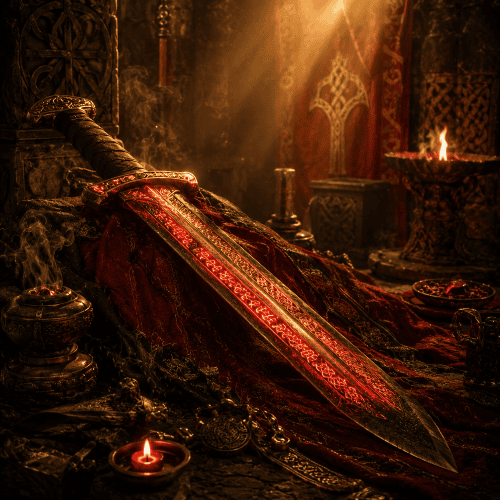
Both warriors wielded weapons that became inseparable from their legends, although they reflected different mythological traditions. Cú Chulainn’s greatest weapon was the Gáe Bolga, a barbed spear unlike any other. Thrown using the foot rather than the hand, it exploded into countless deadly barbs once it pierced an enemy, making survival nearly impossible. The weapon symbolized the brutal and unpredictable nature of Celtic warfare, where victory often depended upon overwhelming force and supernatural intervention.
Achilles’ greatest treasures were his divine armor and shield, forged by the smith god Hephaestus after the death of Patroclus. Homer’s description of this shield remains one of the most celebrated passages in ancient literature, depicting not only scenes of war but also agriculture, festivals, justice, and everyday life. His spear, crafted from the sacred ash tree of Mount Pelion, could only be effectively wielded by Achilles himself. Together, his equipment represented divine craftsmanship and the heroic ideal rather than sheer destructive power.
Honor, Duty, and the Meaning of Heroism
Although both heroes were fearless in battle, true Cú Chulainn vs Achilles motivations reveal entirely different philosophies of heroism. Cú Chulainn consistently fought to protect Ulster regardless of the personal cost. Even when prophecy foretold his death, he refused to abandon his responsibilities. His actions were driven by loyalty, honor, and an unwavering commitment to his kingdom. The needs of his people always came before his own survival, making sacrifice a defining element of his character.
Achilles, by contrast, pursued kleos—the Greek concept of everlasting glory earned through extraordinary deeds. His anger at Agamemnon, which leads him to withdraw from the Trojan War, demonstrates that personal honor often outweighed collective responsibility. Only after the death of Patroclus did revenge replace wounded pride as his primary motivation. Greek mythology therefore presents Achilles as a deeply human hero whose emotions, flaws, and desires shape the course of history.
These contrasting motivations illustrate the broader differences between Celtic and Greek mythology. Celtic heroes often define themselves through service to their community, while Greek heroes frequently seek personal excellence and immortal fame.
Tragic Weaknesses and Inevitable Destinies
Neither hero could escape fate, but the nature of their downfall reflects the values of their respective cultures. Achilles’ legendary vulnerability is traditionally associated with his heel, the only part of his body left unprotected when his mother attempted to make him immortal. Although later mythology popularized this detail, Greek tradition consistently portrays Achilles as knowing that choosing glory would ultimately lead to his death. His tragedy is therefore rooted less in physical weakness than in the conscious acceptance of a heroic but shortened life.
Cú Chulainn’s downfall was far more complex. His life was governed by sacred obligations known as geasa, supernatural vows that granted protection so long as they were never broken. Eventually he became trapped between conflicting obligations, forcing him to violate one sacred command in order to fulfill another. Once these protections failed, his enemies finally gained the opportunity they had sought for years. Rather than a hidden physical weakness, Cú Chulainn’s greatest vulnerability was the impossible burden of destiny itself.
Deaths That Created Legends
The deaths in Cú Chulainn vs Achilles ensured that they would be remembered forever, yet each reflects the ideals of their culture. Achilles fell during the Trojan War after Paris, aided by Apollo, struck him with an arrow that found his vulnerable point. Although his life ended young, he achieved the eternal glory he had knowingly chosen, becoming the greatest hero of Greek epic tradition.
Cú Chulainn’s final moments are among the most powerful in Celtic mythology. Mortally wounded after breaking his geasa, he refused to collapse before his enemies. Instead, he tied himself to a standing stone so that he would die upright with his sword still in hand. According to legend, his enemies remained too frightened to approach until a raven landed upon his shoulder, confirming that Ireland’s greatest champion had finally fallen. Even in death, he remained unconquered in spirit.
Cú Chulainn vs Achilles: Who Was the Greater Hero?
Choosing between Cú Chulainn and Achilles ultimately depends on how one defines heroism. If greatness is measured through unmatched martial skill, everlasting fame, and influence on Western literature, Achilles stands among history’s most celebrated legendary figures. His story shaped Greek culture and continues to influence literature thousands of years later.
If, however, heroism is measured by loyalty, sacrifice, and unwavering commitment to protecting one’s people despite certain death, Cú Chulainn presents an equally compelling ideal. His willingness to place duty above personal survival makes him one of mythology’s most inspiring champions.
Rather than competing for the title of the greatest warrior, these heroes represent two complementary visions of courage. Achilles teaches that extraordinary achievement can earn immortality through memory, while Cú Chulainn reminds us that true greatness often lies in fulfilling one’s duty even when the outcome is already known. Together, they remain two of mythology’s finest examples of what it means to live—and die—as a hero.
No posts were found.


