


Dáinsleif : The Cursed Sword That Could Never Be Sheathed Without Blood
At a glance
| Description | |
|---|---|
| Mythology | Norse Mythology |
| Type | Carried |
| Power | 08/10 |
Mythlok Perspective
In Mythlok’s Perspective, Dáinsleif stands apart from legendary weapons like Excalibur or Kusanagi-no-Tsurugi, which ultimately reinforce kingship or divine authority. Instead, it embodies the Norse belief that once honour gives way to vengeance, conflict becomes self-sustaining. The sword is less a symbol of martial glory than of irreversible consequence, reflecting a worldview where fate and human choices become impossible to separate.
Dáinsleif
Introduction
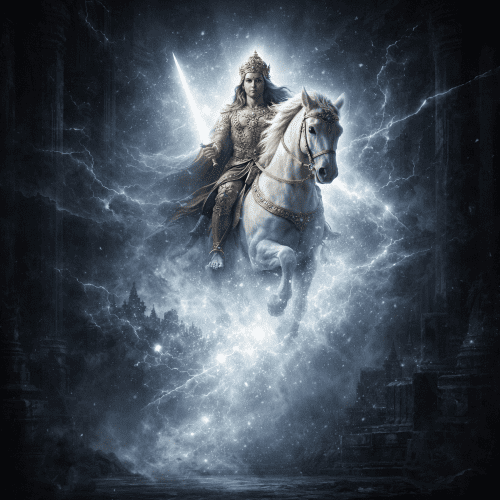
Dáinsleif is one of the most infamous weapons in Norse mythology, remembered not because it won glorious victories but because it made violence unavoidable. Unlike legendary weapons such as Mjölnir or Gungnir, which often symbolize divine authority or protection, Dáinsleif represents the darker side of power. Once drawn from its scabbard, the sword demanded blood, ensuring that peace could no longer be achieved.
The sword is most closely associated with King Högni and the legendary Hjaðningavíg (Battle of the Hjaðnings), one of the most tragic feuds in Old Norse literature. According to the surviving medieval sources, Högni refused reconciliation after unsheathing Dáinsleif because its curse required that someone die before it could be returned to its sheath. In doing so, the weapon transformed a personal dispute into an endless cycle of warfare.
Although Dáinsleif appears only briefly in the surviving texts, its reputation has endured for centuries. Rather than celebrating heroic conquest, the sword illustrates how vengeance, once set in motion, can become impossible to reverse.
Origins
The principal source for Dáinsleif is Skáldskaparmál, a section of Snorri Sturluson’s Prose Edda, written in the 13th century. Here, the sword appears during the story of King Högni, his daughter Hildr, and the warrior Heðinn. After Heðinn abducts Hildr, he attempts to avoid war by offering compensation. Högni rejects the proposal, explaining that Dáinsleif has already been drawn, making peace impossible.
The sword’s name means “Dáinn’s legacy” or “Dáinn’s heirloom.” While scholars generally connect the name to the dwarf Dáinn, the texts never explicitly state that he forged the blade. Instead, Snorri simply describes it as a sword made by dwarves, whose legendary craftsmanship produced many of Norse mythology’s greatest treasures, including divine weapons and magical artifacts.
Its dwarven origin is significant because such creations rarely came without consequences. Norse myths often portray dwarven masterpieces as objects of extraordinary power that carry dangerous conditions or unintended costs. Dáinsleif perfectly reflects this tradition. Rather than existing as a heroic relic, it serves as an instrument through which fate and violence become inseparable.
Powers
Dáinsleif possesses three supernatural abilities that make it one of the deadliest weapons in Norse legend. First, whenever the sword is drawn, it is destined to take a life before it can be sheathed again. Second, every strike reaches its target with deadly certainty. Third, any wound inflicted by the blade can never heal.
These powers eliminate the uncertainty normally found in battle. A skilled warrior may still miss with an ordinary sword, spare an opponent, or leave behind survivable injuries. Dáinsleif removes all such possibilities. Once unsheathed, death becomes inevitable, and the conflict cannot end peacefully.
Its curse extends beyond the battlefield. The sword’s unhealable wounds symbolize the lasting scars created by revenge and blood feuds. In Norse culture, where honour and family loyalty often demanded retaliation, violence could continue across generations. Dáinsleif transforms that social reality into myth by making every act of combat irreversible.
The weapon is frequently compared to Tyrfing, another famous cursed sword from Norse legend. Both blades guarantee death and carry destructive enchantments, but their symbolism differs. Tyrfing spreads tragedy through successive generations of owners, while Dáinsleif represents the moment when reconciliation itself becomes impossible.
Owners/Users
The only clearly identified owner of Dáinsleif in the surviving mythological tradition is King Högni. He wields the sword during his pursuit of Heðinn after the abduction of his daughter, Hildr. This single episode firmly establishes both the weapon’s legendary reputation and its association with Högni.
Unlike several other mythological weapons that pass between numerous heroes or gods, Dáinsleif remains closely tied to one individual and one defining event. This limited ownership strengthens its identity as a legendary heirloom rather than a widely used weapon of war.
Later works inspired by Norse mythology occasionally place Dáinsleif in the hands of different characters or expand its history. However, these modern interpretations are creative adaptations rather than part of the original medieval tradition. The surviving Old Norse sources consistently associate the sword with Högni and the conflict that made it famous.
Instances used
The defining appearance of Dáinsleif occurs during the Hjaðningavíg, or Battle of the Hjaðnings. After Heðinn abducts Hildr, he later regrets his actions and attempts to negotiate peace by offering compensation. Högni refuses because he has already drawn Dáinsleif, whose curse demands bloodshed before it can be returned to its sheath.
The battle that follows becomes one of the most remarkable conflicts in Norse legendary tradition. According to the story, Hildr possesses supernatural abilities that allow her to resurrect the fallen warriors each night. At dawn they rise again, only to continue fighting the same battle. This cycle repeats endlessly, with many medieval sources suggesting it will continue until Ragnarök.
In this narrative, Dáinsleif serves as far more than a magical weapon. It marks the irreversible turning point where diplomacy fails, honour overrides compromise, and violence becomes eternal. The sword is therefore remembered not for the number of enemies it kills but for the endless war it helps create.



Source
Wikipedia contributors. (2026, February 13). Weapons of Norse mythology. Wikipedia.
https://en.wikipedia.org/wiki/Weapons_of_Norse_mythology
Wikipedia contributors. (n.d.). Dáinsleif. Wikipedia.
https://es.wikipedia.org/wiki/D%C3%A1insleif
Ancient Pages. (2025, July 22). Cursed magical Dainsleif sword of King Hogni and legendary battle.
https://www.ancientpages.com/2025/07/23/cursed-magical-dainsleif-sword-of-king-hogni-and-ragnarok/
Snorri Sturluson. (2005). Edda: Skáldskaparmál (A. Faulkes, Trans.). Everyman.
Larrington, C. (2014). The Poetic Edda (2nd ed.). Oxford University Press.
Faulkes, A. (1998). Edda: Prologue and Gylfaginning (2nd ed.). Viking Society for Northern Research.
Simek, R. (2007). Dictionary of Northern Mythology (A. Hall, Trans.). D. S. Brewer.
Frequently Asked Questions
What is Dáinsleif in Norse mythology?
Dáinsleif is a legendary cursed sword associated with King Högni. It is famous because it must kill once drawn, never misses its target, and inflicts wounds that never heal.
Who owned Dáinsleif?
The surviving Old Norse sources identify King Högni as the primary owner and wielder of Dáinsleif during the Battle of the Hjaðnings.
Who forged Dáinsleif?
What made Dáinsleif cursed?
Its curse required that someone die whenever the sword was unsheathed. Additionally, any wound caused by the blade was impossible to heal, making peaceful resolutions impossible once it was drawn.
Is Dáinsleif different from Tyrfing?
Yes. Both are cursed swords, but Tyrfing spreads misfortune across generations of owners, whereas Dáinsleif symbolizes the inevitability of bloodshed and the impossibility of ending a feud peacefully.


