Cú Chulainn : The Irish Warrior Who Stood Against an Army
Listen
At a glance
| Description | |
|---|---|
| Origin | Irish Mythology |
| Classification | Demigods |
| Family Members | Lugh (Father), Deichtine (Mother), Emer (Wife), Connla (Son), Conchobar mac Nessa (Uncle) |
| Region | Ireland |
| Associated With | War, Heroism, Defence of Ulster |
The Mythlok Perspective
Cú Chulainn represents a form of heroism rooted not in conquest but in obligation. His power exists to protect, not to rule, and his tragedy emerges from devotion rather than ambition. Unlike kings who gain authority through lineage, Cú Chulainn earns meaning through endurance and sacrifice. Comparable figures appear across cultures. Achilles shares his short-lived glory and rage-driven combat, while Arjuna mirrors his moral struggle between duty and personal loss. Yet Cú Chulainn stands apart in his isolation. He is not a general or a ruler, but a solitary force, holding the line until fate itself demands payment.
Cú Chulainn
Introduction
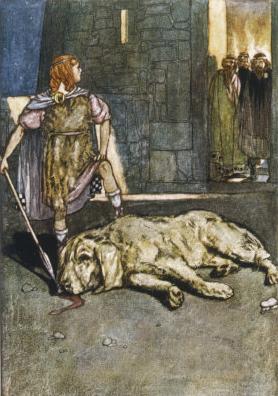
Cú Chulainn stands at the heart of early Irish heroic tradition as the unrivalled champion of the Ulster Cycle. His legend is preserved primarily in medieval Irish manuscripts that recount a mythic age of warriors, kings, and supernatural forces shaping the island’s destiny. Born Sétanta, he earned the name Cú Chulainn, meaning “Hound of Culann,” after killing a smith’s guard dog and pledging himself as its replacement. This formative act of honour and responsibility set the tone for a life defined by duty, violence, and fate.
Revered as a semi-divine hero, Cú Chulainn is best known for his role in the Táin Bó Cúailnge, where he single-handedly defends Ulster against the invading forces of Connacht. While the men of Ulster are incapacitated by a supernatural curse, he alone stands between his homeland and destruction. His story blends youthful brilliance with inevitable tragedy, presenting a hero who achieves eternal fame at the cost of an early and brutal death. More than a warrior, Cú Chulainn represents the Irish ideal of heroic sacrifice, where glory and loss are inseparable.
Physical Traits
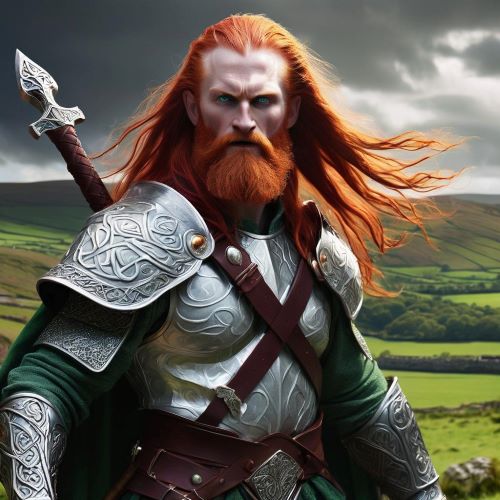
Descriptions of Cú Chulainn’s appearance emphasise contradiction and transformation. In his normal state, he is portrayed as youthful, handsome, and radiant, often appearing younger than his years despite his fearsome reputation. Medieval sources describe him as small in stature yet impossibly agile, with a presence that commands attention and admiration. His beauty is frequently highlighted, reinforcing the idea that heroism in Irish tradition encompasses charisma as much as strength.
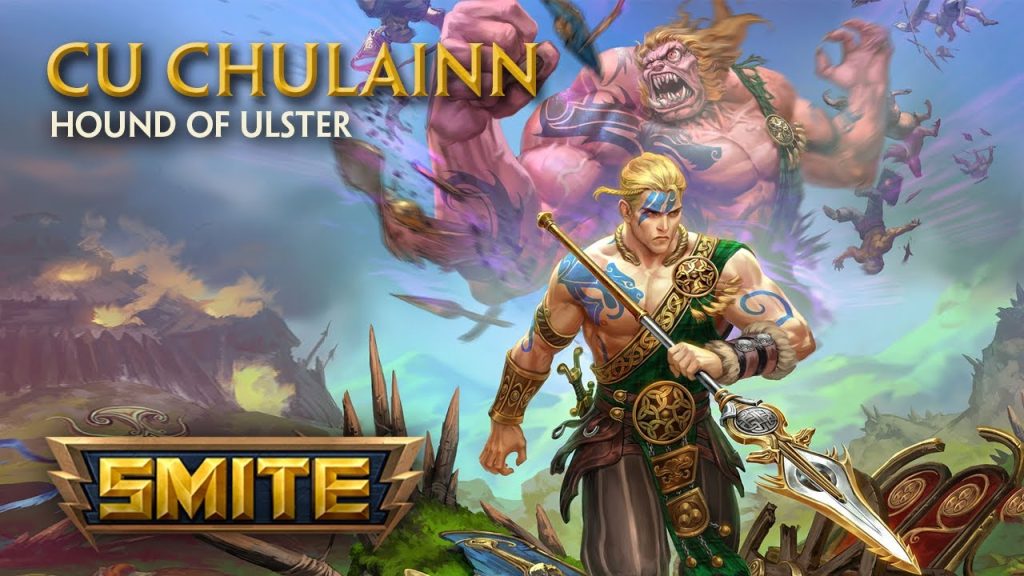
This image is violently disrupted during his battle frenzy, known as the ríastrad. In this state, his body undergoes a grotesque metamorphosis that renders him almost inhuman. His limbs twist unnaturally, his facial features distort, and his eyes behave independently of one another. Hair bristles and sparks with heat, and his entire form becomes a living weapon. The ríastrad is not merely physical rage but a supernatural transformation that marks the boundary between human warrior and otherworldly force. It is this terrifying duality that makes Cú Chulainn both revered and feared.
Family
Cú Chulainn’s lineage reflects his position between the mortal and divine worlds. His mother, Deichtine, was the sister of Conchobar mac Nessa, king of Ulster, anchoring him firmly within royal society. His divine father is Lugh, a god associated with mastery, light, and many skills, whose influence explains Cú Chulainn’s precocious talents and supernatural resilience. Some traditions also name the mortal warrior Sualtam as his foster father, reinforcing the layered nature of his identity.
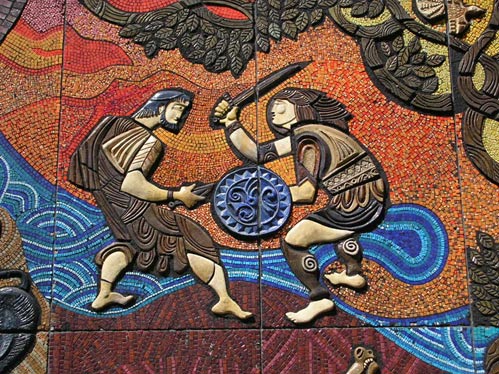
Marriage further binds Cú Chulainn to human relationships and responsibilities. His wife Emer is remembered for her intelligence, eloquence, and emotional strength, often acting as a stabilising force in his turbulent life. Yet tragedy defines his family story. His son Connla, born from his union with the warrior woman Aífe, is unknowingly killed by Cú Chulainn in combat due to binding taboos and withheld identities. This moment stands as one of the most devastating episodes in Irish heroic literature, underscoring the cost of glory and the cruelty of fate.
Other names
Before earning his legendary title, Cú Chulainn was known as Sétanta, a name associated with his childhood and early exploits. The transition from Sétanta to Cú Chulainn marks his formal entry into the heroic world, transforming a gifted boy into Ulster’s sworn protector. The name itself carries symbolic weight, as “hound” implies loyalty, guardianship, and ferocity when threatened.
Across manuscripts and translations, variations of his name appear due to differences in Old and Middle Irish spelling. These variations do not alter his identity but rather reflect the oral and regional transmission of his legend. Regardless of form, the name Cú Chulainn remains synonymous with Ulster’s defence and the ideal of a warrior bound by honour rather than personal ambition.
Powers and Abilities
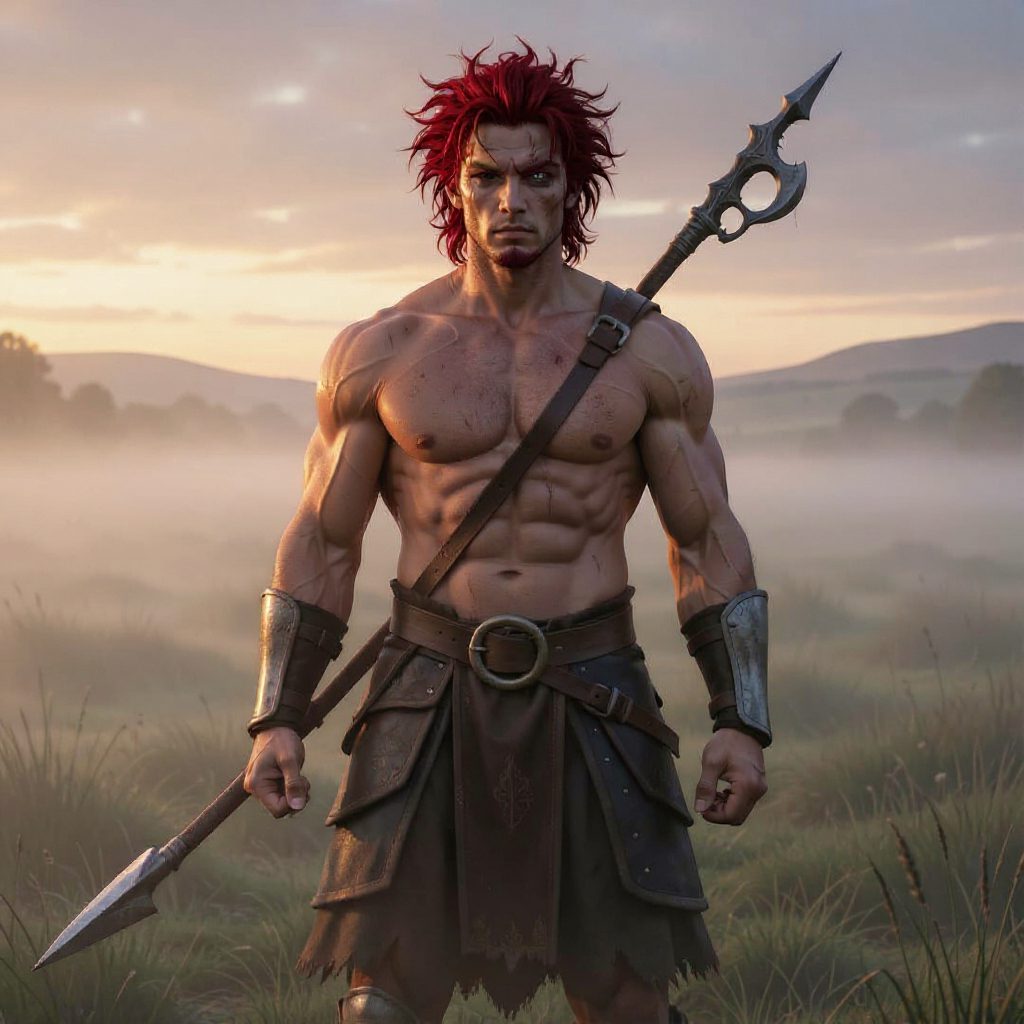
Cú Chulainn’s abilities place him beyond the limits of ordinary warriors. His strength and speed allow him to face entire armies alone, particularly during the defence of Ulster. Central to his legend is the Gáe Bulg, a deadly spear learned during his training with the warrior woman Scáthach. Unlike conventional weapons, the Gáe Bulg inflicts catastrophic internal wounds, making survival virtually impossible once struck.
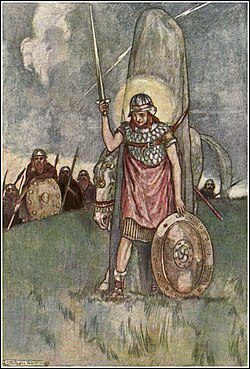
Equally significant are the geasa, or sacred taboos, placed upon him. These supernatural obligations grant protection while upheld but bring swift downfall when broken. His eventual death is directly linked to the forced violation of these geasa, illustrating the moral framework governing heroic power in Irish tradition. Even in death, his defiance endures. Mortally wounded, he binds himself to a standing stone so that he may die upright, terrifying enemies until they are certain he has fallen. His power, therefore, is not just physical but symbolic, rooted in honour, endurance, and inevitability.
Modern Day Influence
Cú Chulainn continues to shape Irish cultural identity well beyond the medieval period. His image has been used as a symbol of resistance, sacrifice, and national pride, most notably in connection with the 1916 Easter Rising. The iconic sculpture of the dying hero in Dublin links ancient legend with modern political struggle, reinforcing his role as a timeless defender of the land.
In literature, theatre, music, and digital media, Cú Chulainn remains a recurring presence. Writers and artists reinterpret his story to explore themes of masculinity, violence, destiny, and youthful brilliance. He appears in global popular culture through novels, video games, anime, and comics, often adapted into new mythic frameworks while retaining his core identity. His enduring relevance lies in the emotional weight of his story, which balances heroism with loss in a way that continues to resonate across generations.
Related Images
Source
Kinsella, T. (1969). The Táin. Oxford University Press.
Gregory, A. (1902). Cuchulain of Muirthemne. John Murray.
Carson, C. (2008). The Táin: A new translation of the Táin Bó Cúailnge. Penguin Classics.
Smyth, D. (1996). A guide to early Irish myth and legend. Poolbeg Press.
Ó hÓgáin, D. (1990). Myth, legend and romance: An encyclopaedia of Irish folklore. Prentice Hall.
Lady Gregory. (1902). Cuchulain of Muirthemne. https://en.wikipedia.org/wiki/C%C3%BA_Chulainn
Mythopedia. (2023). Cu Chulainn. https://mythopedia.com/topics/cu-chulainn/
Fate series wiki. (n.d.). Cú Chulainn. https://record-of-ragnarok.fandom.com/wiki/C%C3%BA_Chulainn
Frequently Asked Questions
Who was Cú Chulainn in Irish legend?
Cú Chulainn was a semi-divine warrior and the central hero of the Ulster Cycle, known for defending Ulster single-handedly during the Táin Bó Cúailnge.
What does the name Cú Chulainn mean?
The name means “Hound of Culann,” earned after he killed a guard dog and vowed to replace it in service.
What is the ríastrad?
The ríastrad is Cú Chulainn’s supernatural battle frenzy, during which his body transforms and his power becomes nearly unstoppable.
Who trained Cú Chulainn?
He was trained by the warrior woman Scáthach, who taught him advanced combat skills and gifted him the Gáe Bulg.
How did Cú Chulainn die?
He died after being mortally wounded when his sacred taboos were broken, binding himself to a stone so he could die standing.