Táin Bó Cúailnge : Ireland’s Epic War of Heroes and Kings
At a glance
| Attribute | Description |
|---|---|
| Mythology | Irish Mythology |
| Language Written | Old Irish, Middle Irish, Early Modern Irish |
| Age | Circa 1200 CE |
| Author | Anonymous scribes |
| Main Characters | Cú Chulainn, Queen Medb, King Ailill, Fer Diad, Fergus mac Róich |
Mythlok Perspective
In Mythlok’s Perspective, the Táin Bó Cúailnge is not simply a war story but a meditation on the cost of greatness. Cú Chulainn stands as a hero whose victories come with isolation, pain, and personal loss. The epic suggests that true heroism often requires sacrifice rather than glory. The struggle over cattle symbolizes deeper conflicts involving status, identity, and power. Similar themes appear in the Greek tale of Achilles during the Trojan War and in the Indian story of Arjuna in the Mahabharata. Across cultures, epic heroes are remembered not because they avoid suffering, but because they endure it in service of something larger than themselves.
Táin Bó Cúailnge
Introduction
The Táin Bó Cúailnge, often translated as The Cattle Raid of Cooley, is the most celebrated epic in Irish literature and the centerpiece of the Ulster Cycle. Frequently described as Ireland’s national epic, it tells the story of a devastating conflict between the provinces of Connacht and Ulster, triggered by a dispute over wealth, prestige, and the ownership of a legendary bull.
At the heart of the tale stands Cú Chulainn, the youthful warrior who becomes the sole defender of Ulster when its warriors are incapacitated by a supernatural curse. Facing an invading army almost alone, he embodies courage, sacrifice, and unwavering loyalty. The epic combines heroic warfare, supernatural intervention, political ambition, and tragic personal relationships, creating a story that has endured for centuries.
Although preserved in medieval manuscripts, the narrative reflects much older oral traditions and offers a remarkable glimpse into the values, beliefs, and social structures of early Celtic Ireland. Today, the Táin Bó Cúailnge remains one of the most influential works of Irish storytelling and continues to inspire readers, artists, and scholars around the world.
Historical Background
The origins of the Táin Bó Cúailnge lie in Ireland’s oral storytelling traditions, where heroic tales were passed down through generations long before they were written. Scholars generally believe the story existed in oral form for centuries before being recorded by medieval scribes.
The earliest surviving versions appear in manuscripts dating from the twelfth century, most notably the Book of the Dun Cow and the Book of Leinster. These texts preserve different versions of the epic, reflecting centuries of retelling and adaptation. Linguistic evidence suggests portions of the story may have been committed to writing as early as the seventh or eighth century.
The narrative is traditionally set during a heroic age around the beginning of the Christian era. Ireland is portrayed as a land divided into rival kingdoms, where status, cattle wealth, and military reputation shaped political power. While the events themselves belong to legend rather than recorded history, they preserve important cultural memories about tribal society and heroic ideals.
As the central tale of the Ulster Cycle, the Táin occupies a position comparable to other great epic traditions such as the Greek Iliad and the Indian Mahabharata. Its survival through centuries of social and religious change demonstrates its enduring importance within Irish culture.
Synopsis & Themes
The story begins with Queen Medb of Connacht and her husband King Ailill comparing their wealth. Their possessions are nearly equal, except for Ailill’s prized white bull, Finnbhennach. Determined to match her husband’s status, Medb seeks to acquire the famous brown bull Donn Cuailnge from Ulster.
Negotiations fail, and Medb launches a massive military expedition to seize the animal by force. Her campaign appears unstoppable because the warriors of Ulster are suffering from a curse placed upon them by Macha, leaving them unable to fight during the invasion.
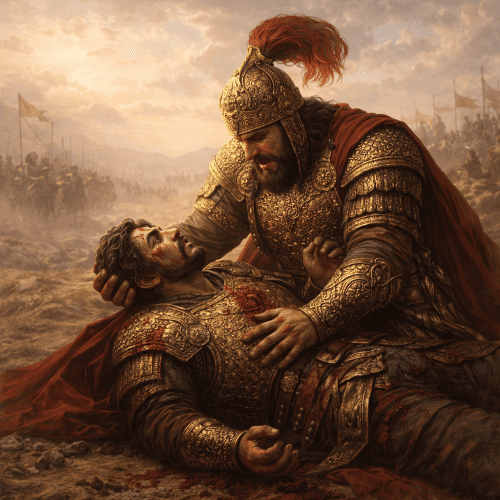
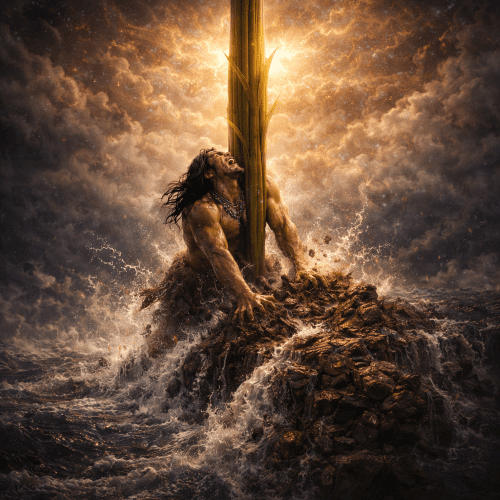
Only the young hero Cú Chulainn remains unaffected. Using a series of single combats at river crossings and strategic delays, he confronts the invading forces alone. His defense transforms him into one of the greatest heroes in Celtic tradition. One of the most emotional episodes occurs when Cú Chulainn faces his foster-brother Fer Diad. The duel lasts three days and ends in tragedy, highlighting the conflict between personal loyalty and political obligation.
Several themes run throughout the epic. Heroism is central, but it is often portrayed alongside suffering and sacrifice. The story explores the destructive consequences of pride and rivalry, particularly through Medb’s determination to equal her husband’s wealth. Questions of fate, honor, and personal duty shape the decisions of nearly every major character.
The narrative also examines power from multiple perspectives. Medb’s leadership challenges conventional assumptions about gender in ancient warrior societies, while Cú Chulainn’s struggles reveal the heavy burden that accompanies greatness.
Key Characters
The dominant figure of the Táin Bó Cúailnge is Cú Chulainn, the legendary champion of Ulster. Renowned for his extraordinary combat abilities and divine ancestry, he becomes the kingdom’s last line of defense during its moment of greatest vulnerability. His courage and tragic destiny have made him one of the most recognizable heroes in Irish tradition.
Medb serves as the story’s primary driving force. Intelligent, ambitious, and fiercely independent, she commands armies and shapes political events through determination and strategic skill. Her pursuit of Donn Cuailnge sets the entire conflict in motion. Ailill mac Máta, Medb’s husband, plays an important role in the dispute that sparks the war. His ownership of Finnbhennach creates the imbalance that motivates Medb’s quest for a rival bull.
Fer Diad represents one of the story’s most tragic figures. As Cú Chulainn’s foster-brother and former companion, he becomes an unwilling opponent whose death carries deep emotional consequences. Fergus mac Róich provides a link between both sides of the conflict. Once a ruler of Ulster, he now fights alongside Connacht, creating complex tensions of loyalty and identity.
Another important figure is The Morrígan, the enigmatic goddess associated with war, fate, and prophecy. Her encounters with Cú Chulainn add a supernatural dimension to the narrative and emphasize the close relationship between the mortal and divine worlds.
Cultural & Religious Significance
The Táin Bó Cúailnge occupies a unique place within Irish cultural history. More than a heroic adventure, it preserves ancient Celtic concepts of honor, kingship, warfare, and social obligation. Through its characters and conflicts, the epic reveals how prestige and reputation influenced political relationships in early Ireland.
The story also reflects a worldview in which supernatural forces actively influence human affairs. The curse of Macha, the interventions of the Morrígan, and the extraordinary abilities of Cú Chulainn demonstrate a society where divine powers and mortal actions were deeply intertwined.
Cattle serve as powerful symbols throughout the narrative. In early Irish society, livestock represented wealth, authority, and prosperity. The struggle over Donn Cuailnge therefore carries economic, political, and symbolic significance far beyond the ownership of a single animal.
The preservation of the tale by Christian monks is equally remarkable. Although the story emerged from a pre-Christian cultural environment, medieval scribes recognized its literary value and ensured its survival. As a result, the Táin remains one of the most important surviving sources for understanding Ireland’s mythic past.
Modern Adaptations
The influence of the Táin Bó Cúailnge extends far beyond medieval literature. Modern translations have introduced the epic to global audiences, with versions by scholars and writers such as Thomas Kinsella and Ciarán Carson becoming especially influential.
The story has inspired novels, graphic novels, theatrical productions, musical works, and visual art. Irish artists frequently reinterpret its themes to explore identity, heroism, and national memory. The legendary duel between Cú Chulainn and Fer Diad remains a particularly popular subject because of its emotional depth and dramatic intensity.
Film and television creators have also shown increasing interest in adapting the epic for modern audiences. New productions continue to explore the rich narrative potential of Ireland’s most famous heroic tale. More than a thousand years after it was first recorded, the Táin Bó Cúailnge remains a living tradition. Its themes of courage, ambition, loyalty, and sacrifice continue to resonate with audiences, ensuring its place among the world’s greatest epic stories.

Source
Boyd, M. (2025). The essential Táin Bó Cúailnge and other stories from the Ulster Cycle. Celtic Studies Publications.
Britannica. (2025). The cattle raid of Cooley. Encyclopaedia Britannica. https://www.britannica.com/topic/The-Cattle-Raid-of-Cooley
Britannica. (2025). Cú Chulainn. Encyclopaedia Britannica. https://www.britannica.com/topic/Cu-Chulainn
Herstory. (2019). Medb. https://www.herstory.ie/mythicwomen/2019/6/19/medb
Kinsella, T. (1969). The Táin. Oxford University Press.
O’Rahilly, C. (1967). Táin Bó Cúalnge from the Book of Leinster. Dublin Institute for Advanced Studies.
Ó Scolaí, D. (2017). Táin Bó Cuailnge. Leabhar Breac.
Wikipedia. (2024). Táin Bó Cúailnge. https://en.wikipedia.org/wiki/T%C3%A1in_B%C3%B3_C%C3%BAailnge
Frequently Asked Questions
What does Táin Bó Cúailnge mean?
Táin Bó Cúailnge translates as “The Cattle Raid of Cooley,” referring to Queen Medb’s campaign to capture the bull Donn Cuailnge.
Who is the hero of the Táin Bó Cúailnge?
Cú Chulainn is the epic’s central hero, defending Ulster alone against the invading forces of Connacht.
Why did Queen Medb invade Ulster?
Medb sought to acquire Donn Cuailnge, a legendary bull whose value would equal her husband Ailill’s prized animal.
Is Táin Bó Cúailnge based on real history?
The tale is mythological, but it may preserve cultural memories and social traditions from ancient Ireland.
Why is Táin Bó Cúailnge important?
It is considered Ireland’s national epic and remains one of the most influential works in Irish literature and Celtic tradition.