

Muhnochwa : The Faceless Night Terror of North India
| Description | |
|---|---|
| Origin | India |
| Classification | Cryptid |
| Demeanour | Evil |
| Habitat | Rural areas |
| Status | Not Proved |
Mythlok Perspective
In Mythlok’s perspective, Muhnochwa reflects a powerful social moment where fear spreads faster than facts. Emerging prominently in North India during periods of panic, this legend became a symbol of collective anxiety. Unlike ancient spirits tied to temples or forests, Muhnochwa was born in rumor, newspapers, and whispered warnings. Across cultures, Muhnochwa resembles the Slender Man legend in the West and the Spring-Heeled Jack panic in Victorian England. Each arose during times of uncertainty, blending fear, media amplification, and public imagination. Muhnochwa shows how modern societies still create shadow figures when facing unexplained events.
Muhnochwa
Introduction
The Muhnochwa is an urban legend from Allahabad, Uttar Pradesh, India, linked to mysterious face-scratching attacks. The name, meaning “face scratcher” in Hindi, reflects its supposed behavior. In 2002, a surge of reported incidents spread fear throughout the region, turning the creature into a subject of fascination and speculation. Over time, the mystery deepened, giving rise to various theories and cementing Muhnochwa’s place in local folklore.
Physical Attributes
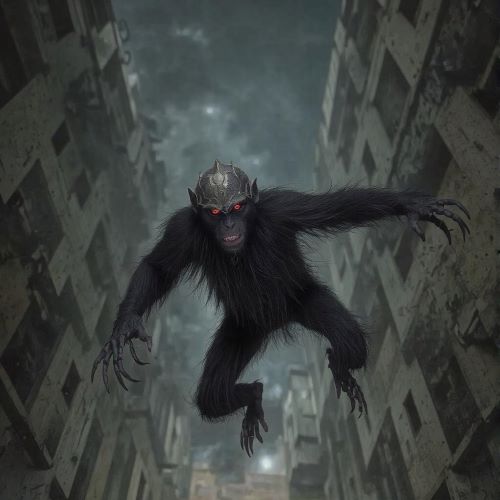
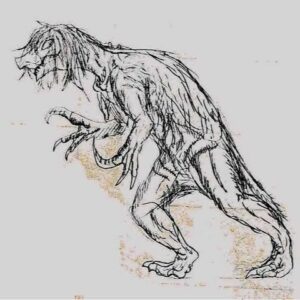
Eyewitness descriptions of the Muhnochwa differ greatly. Some claim it resembles a spiky flying insect with scorpion-like limbs, while others envision it as a long-haired humanoid, a turtle, a hawk, or even a rubber doll. Reports also mention a small, glowing insect, a sharp-edged turtle-like being, or a spherical creature with bat-like wings that flashes red and blue lights. Some accounts go even further, suggesting it appears mechanical, akin to an aircraft emitting colorful lights. Despite these varied depictions, the Muhnochwa is consistently described as a nocturnal entity, with victims waking up to unexplained scratches and a burning sensation.
First Sighting/Reporting
In 2002, reports of a mysterious face-scratching entity spread across Allahabad and nearby areas, originating in rural Mirzapur before reaching urban centers. Dubbed “Muhnochwa,” meaning “face scratcher,” the phenomenon sparked widespread fear, prompting villagers to organize night patrols. As media coverage amplified the hysteria, more people came forward with similar accounts, fueling speculation and panic. Despite no concrete proof of its existence, sightings and stories persisted, cementing Muhnochwa’s place in local folklore.
Other Names
The name “Muhnochwa” comes from Hindi, meaning “face scratcher,” a direct reference to its supposed attacks. In Bhojpuri, it carries the same meaning, and some have dubbed it the “scratch monster.” Comparisons have been drawn to the Monkey Man of Delhi, a similar urban legend from 2001, which was also blamed for mysterious nighttime assaults. Though no other widely accepted names exist, the creature’s story aligns with other cryptid tales in Indian folklore.
Modus Operandi
Muhnochwa was said to strike at night, preying on those sleeping outside or in dimly lit spaces. Victims often woke with deep, burning scratches on their faces, necks, and arms, with some claiming to have seen the creature hovering before the attack. In rare cases, it was reported to enter homes, intensifying fear and confusion. The hysteria led to extreme reactions, including mistaken attacks on innocent people. While believers insisted on its supernatural nature, skeptics attributed the phenomenon to mass hysteria, self-inflicted wounds, or common insects like mosquitoes and bedbugs.
Pop Culture References
Though not widely represented in mainstream media, the Muhnochwa has influenced discussions on Indian urban legends. It shares similarities with the Monkey Man of Delhi, which was symbolically portrayed in the 2009 Bollywood film Delhi-6. In 2023, Orijit Sen’s comic Night of the Muhnochwa revisited the hysteria that gripped Uttar Pradesh in 2002. The legend remains a frequent topic in online forums and articles, often compared to other unexplained phenomena in Indian folklore. While it hasn’t been the central focus of major films or books, its eerie reputation continues to inspire storytellers and artists exploring India’s supernatural myths.
Current Status
There is no tangible proof that the Muhnochwa exists. Skeptics argue that the phenomenon can be explained by mass hysteria, psychological factors, or even common insect bites mistaken for attacks. Some scientists have suggested that sightings may have been caused by ball lightning, a rare atmospheric event. Despite the absence of evidence—no photos, videos, or physical specimens—the legend persists. Even in 2024, references to the Muhnochwa continue to surface, keeping the story alive in local culture. While many dismiss it as folklore, believers still share their experiences, fueling its enduring mystery.


Source
Contributors to Urban Legends Wiki. (2025). Muhnochwa | Urban Legends Wiki – Fandom. https://urbanlegend.fandom.com/wiki/Muhnochwa
Rao Jaswant Singh. (2005). IITian cracks UP urban legend – Times of India. https://timesofindia.indiatimes.com/science/iitian-cracks-up-urban-legend/articleshow/1060276.cms
Rohit Bhattacharya. (2020). The Spine-Chilling Tale Of The Muhnochwa, A Face-Slashing Spirit … https://www.scoopwhoop.com/culture/the-chilling-tale-of-the-muhnochwa/
Heena Kausar. (2017). India’s hair-raising urban myths: From the monkey man to child … https://www.hindustantimes.com/india-news/india-s-hair-raising-urban-myths-from-the-monkey-man-to-child-eating-wolves/story-s5tsCQAXqjJei9MdMR9gYK.html
Frequently Asked Questions
What is Muhnochwa in Indian urban legend?
Muhnochwa is a mysterious creature reported in parts of North India, especially Uttar Pradesh, in the early 2000s. Witnesses described it as a faceless or clawed being that attacked people at night, leaving scratch marks.
Was Muhnochwa real?
There is no confirmed evidence that Muhnochwa was a supernatural entity. Authorities and medical experts suggested that many reported injuries were caused by panic reactions, accidents, or hysteria.
When did the Muhnochwa panic happen?
The panic gained widespread attention around 2002 in Uttar Pradesh and neighboring regions. Reports spread rapidly through local news and word of mouth, leading to fear across multiple villages and towns.
What did Muhnochwa look like?
Descriptions varied widely. Some claimed it had metallic claws, glowing eyes, or no face at all. Others said it was small and agile, attacking quickly before disappearing.
Why did people believe in Muhnochwa?
The legend emerged during a time of social stress and uncertainty. Limited access to verified information, combined with sensational media reports, amplified fear.