

Gods of Egypt (2016) : Divine Battles of Horus and Set
| Description | |
|---|---|
| Country of Origin | USA |
| Language | English |
| Genre | Fantasy, Action |
| Cast | Gerard Butler, Nikolaj Coster-Waldau, Brenton Thwaites, Courtney Eaton, Elodie Yung, Chadwick Boseman |
| Directed by | Alex Proyas |
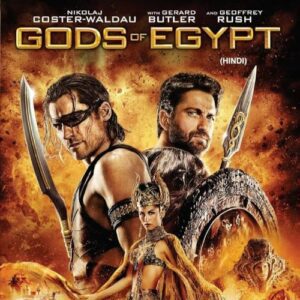
Gods of Egypt
Gods of Egypt (2016), directed by Alex Proyas, presents a visually extravagant interpretation of ancient Egyptian legend, transforming the sacred mythology of the Nile into a large-scale fantasy adventure. The story centers on the cosmic rivalry between Horus and Set, a conflict that echoes one of the most important mythological themes in Egyptian tradition: the eternal struggle between order and chaos. While the film takes considerable creative liberties, its core narrative is loosely inspired by the ancient myth cycle surrounding the death of Osiris and the rise of Horus as the rightful ruler of Egypt.
In Egyptian mythology, Osiris represents the ideal divine king who brings civilization, agriculture, and law to humanity. His reign symbolizes stability and harmony in the world. According to ancient texts such as the Pyramid Texts and later mythological accounts, Osiris is murdered by his jealous brother Set, a god associated with storms, deserts, and destructive forces. Set’s betrayal disrupts the cosmic balance that the Egyptians called Ma’at, the sacred principle of truth, order, and harmony that governed both the universe and human society.
The film adapts this mythological foundation but accelerates the events into an immediate political coup. During the ceremonial coronation of Horus, Set attacks the royal court, kills Osiris, and violently seizes control of Egypt. Horus is defeated and blinded, forcing him into exile while Set establishes a brutal regime over the kingdom. Although the details differ from traditional mythology, the core symbolism remains recognizable. Set’s rise to power represents the triumph of chaos over order, a disruption that must eventually be corrected for the world to function properly.
In classical Egyptian legend, the story of Horus and Set unfolds over a long series of conflicts and trials. Horus, the son of Osiris and Isis, grows up in hiding before challenging Set for the throne of Egypt. Their rivalry involves numerous battles, magical contests, and divine judgments among the gods. The myth ultimately ends with Horus reclaiming the throne, restoring Ma’at, and establishing himself as the divine model for earthly pharaohs. Egyptian kings historically identified themselves with Horus, reinforcing the idea that the pharaoh ruled as the living embodiment of divine order.
The film simplifies this complex mythological narrative by focusing on a more conventional hero’s journey. Horus, portrayed by Nikolaj Coster-Waldau, begins the story weakened and disillusioned after his defeat. His loss of divine power mirrors the mythological motif of a fallen deity who must reclaim his identity. This transformation becomes central to the narrative, turning Horus into a reluctant hero who must rediscover his purpose.
The mortal character Bek, played by Brenton Thwaites, functions as a bridge between the world of gods and humans. In ancient Egyptian belief, the relationship between gods and mortals was deeply interconnected. The well-being of humanity depended on the stability of divine order, and the gods were believed to actively influence the fate of the world. Through Bek’s alliance with Horus, the film reflects this mythological idea that the destinies of mortals and gods are closely intertwined.
Another important mythological element explored in the film is the Egyptian concept of the afterlife. Bek’s motivation is driven by his desire to save his beloved Zaya from the underworld. Egyptian mythology places enormous emphasis on the journey of the soul after death, where individuals must pass through the realm of Anubis and face judgment before entering the eternal paradise known as the Field of Reeds. The film loosely references this belief through its depiction of the underworld and the divine systems that determine the fate of the dead.
Visually, Gods of Egypt portrays the gods as towering beings capable of transforming into powerful animal forms. This imagery reflects an important aspect of Egyptian religious symbolism. Many Egyptian gods were associated with animal attributes that represented specific cosmic forces. Horus, for example, is traditionally depicted with the head of a falcon, symbolizing his dominion over the sky and his role as a divine protector. Set, often portrayed with the mysterious “Set animal,” represents unpredictability and destructive energy.
The film exaggerates these symbolic forms into armored transformations and massive battles, emphasizing spectacle over traditional religious symbolism. Nevertheless, the idea that gods possess multiple forms and supernatural abilities reflects the flexible and symbolic nature of Egyptian divine imagery.
One of the central mythological themes that emerges from the story is the restoration of cosmic balance. Egyptian religion viewed the universe as a fragile system that required constant maintenance through divine authority and ritual. When chaos disrupted this balance, the gods were responsible for restoring order. The eventual confrontation between Horus and Set represents this timeless struggle between harmony and destruction.
Although the film takes significant liberties with the details of Egyptian mythology, it still draws upon the fundamental narrative that shaped ancient Egyptian beliefs about kingship and cosmic stability. The victory of Horus over Set was more than a mythological event; it symbolized the triumph of rightful rule and the preservation of Ma’at in both heaven and earth.
From a mythological perspective, Gods of Egypt functions less as a faithful retelling of ancient legend and more as a fantasy reinterpretation of one of Egypt’s most enduring divine conflicts. Its story adapts the ancient rivalry between Horus and Set into a modern action narrative while preserving the underlying theme of restoring order to a world threatened by chaos.