
Wrath of the Titans (2012) : Perseus and the War of the Gods
| Description | |
|---|---|
| Country of Origin | United States of America |
| Language | English |
| Genre | Action, Fantasy |
| Cast | Sam Worthington, Liam Neeson, Ralph Fiennes, Édgar Ramírez, Toby Kebbell, Rosamund Pike |
| Directed by | Jonathan Liebesman |
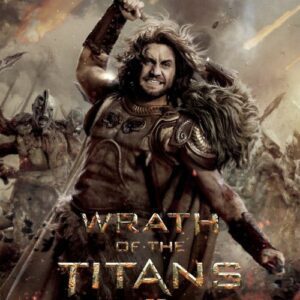
Wrath of the Titans
Wrath of the Titans (2012), directed by Jonathan Liebesman, continues the mythological adventure of Perseus in a story inspired by the legendary conflicts between the Olympian gods and the ancient Titans of Greek tradition. As a sequel to Clash of the Titans, the film expands its focus beyond heroic monster battles and instead explores one of the most important mythological themes in Greek cosmology: the struggle between generations of gods for control of the universe.
In Greek mythology, the Titans were the divine beings who ruled the cosmos before the rise of the Olympian gods. Their leader, Kronos, was the father of several Olympian deities including Zeus, Poseidon, and Hades. According to the ancient mythological tradition, Kronos feared that his children would overthrow him just as he had overthrown his own father, the primordial sky god Uranus. To prevent this prophecy from coming true, Kronos swallowed each of his children at birth.
However, Zeus was secretly saved by his mother Rhea and later grew strong enough to challenge Kronos and the Titans. This rebellion, known in Greek mythology as the Titanomachy, became one of the foundational myths explaining the rise of the Olympian order. Zeus and his allies ultimately defeated the Titans and imprisoned them in the deep abyss of Tartarus, establishing the reign of the Olympian gods over the world.
Wrath of the Titans draws heavily from this mythological conflict by presenting Kronos as the ultimate threat seeking to escape his prison and reclaim control of the cosmos. In the film, Kronos is depicted as a gigantic primordial entity composed of fire and molten rock, emphasizing the destructive and chaotic power associated with the Titans. While ancient myths rarely describe Kronos in such monstrous physical terms, the film uses this imagery to visually represent the overwhelming danger posed by the return of the Titan ruler.
The story once again centers on Perseus, the demigod son of Zeus, played by Sam Worthington. Unlike the classical myth where Perseus completes his legendary deeds and eventually becomes a king, the film portrays him as a reluctant hero who wishes to live quietly among mortals after his earlier adventures. This portrayal reflects a modern storytelling approach in which heroes often struggle with the responsibilities tied to their divine heritage.
The narrative begins with the weakening of the Olympian gods due to the fading belief of humanity. According to the film’s mythology, the gods draw their strength from human worship. As fewer people continue to honor them, their power begins to diminish, weakening the magical prison that holds Kronos in Tartarus. This idea does not appear in classical Greek mythology but echoes broader mythological themes in many cultures where divine power is closely tied to the devotion of worshippers.
A conspiracy among the gods themselves ultimately leads to Kronos’s impending return. Hades, the ruler of the underworld, is manipulated into helping release Kronos in hopes of regaining lost power. In Greek mythology, Hades is typically portrayed as a stern but impartial ruler rather than a villain. However, modern adaptations often cast him as a darker figure associated with betrayal and conflict among the gods.
To stop the Titan’s return, Perseus must work alongside both Zeus and Poseidon to prevent the destruction of the Olympian order. This alliance reflects the mythological hierarchy of the three brothers who rule the sky, sea, and underworld. Their cooperation in the film echoes the broader theme of unity among the gods when faced with an existential threat.
The film also incorporates several mythological creatures drawn from Greek legend. Among them is the Minotaur, the monstrous being traditionally associated with the labyrinth of King Minos on the island of Crete. While the original myth of the Minotaur is unrelated to Perseus, the film includes the creature as part of its wider mythological world filled with dangerous beasts and ancient guardians.
Visually, Wrath of the Titans emphasizes epic battles between gods, monsters, and Titans. The Olympian gods are portrayed as powerful beings wielding elemental forces, while Kronos represents an unstoppable force of destruction that threatens the entire world. This portrayal reinforces the mythological idea that the Titans embody the chaotic and primordial forces that existed before the structured order created by the Olympians.
From a mythological perspective, the film functions as a loose reinterpretation of the Titanomachy, the ancient war between the Titans and the Olympian gods. While it places Perseus at the center of events where he did not originally appear in classical mythology, the narrative still reflects the broader theme of divine conflict that shaped Greek cosmology.
Although the film takes considerable creative liberties with traditional myths, it introduces audiences to the dramatic struggles between the generations of gods that defined ancient Greek storytelling. By focusing on the threat posed by Kronos and the Titans, Wrath of the Titans highlights the enduring fascination with stories about the origins of divine power and the battles that determined the structure of the mythological universe.