

Percy Jackson & the Olympians: The Lightning Thief (2010) : A Demigod Between Gods and Monsters
| Description | |
|---|---|
| Country of Origin | United States of America |
| Language | English |
| Genre | Fantasy, Adventure |
| Cast | Logan Lerman, Alexandra Daddario, Pierce Brosnan, Sean Bean, Kevin McKidd, Steve Coogan, Uma Thurman, Rosario Dawson |
| Directed by | Chris Columbus |
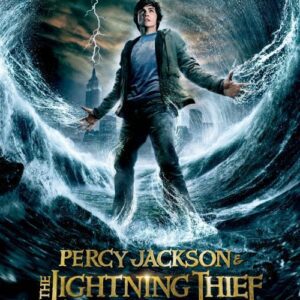
Percy Jackson & the Olympians: The Lightning Thief
Percy Jackson & the Olympians: The Lightning Thief (2010), directed by Chris Columbus, brings ancient Greek legend into a modern setting by imagining a world where the Olympian gods still exist and continue to influence human life. Based on the novel by Rick Riordan, the film follows a teenage boy who discovers that he is a demigod, the son of one of the most powerful gods of Greek tradition. Through its story, the film reinterprets classical myths while presenting them through the lens of contemporary fantasy adventure.
The protagonist, Percy Jackson, learns that he is the son of Poseidon, the god of the sea. In Greek mythology, the children of gods and mortals are known as demigods, figures who often possess extraordinary abilities while still remaining connected to the human world. Ancient myths contain many examples of such heroes, including Heracles, Perseus, and Achilles. The film draws inspiration from these legendary figures by portraying Percy as part of a hidden generation of demigods living among modern humans.
The story begins with a conflict among the Olympian gods after the lightning bolt of Zeus, the most powerful weapon on Mount Olympus, is mysteriously stolen. Zeus believes Percy may be responsible and threatens to unleash divine punishment if the bolt is not returned. In Greek mythology, Zeus’ thunderbolt represents supreme authority over the heavens and the cosmic order. Losing such a weapon symbolizes a disruption in divine power, making the search for the lightning bolt central to the film’s mythological narrative.
Percy’s journey introduces audiences to the hidden world of the Olympian gods who are portrayed as still ruling from modern Olympus, imagined in the film as existing above New York City. This reinterpretation reflects the enduring influence of Greek mythology in Western storytelling. Instead of remaining confined to ancient Greece, the gods are reimagined as immortal beings who continue to move with the centers of human civilization.
The film also introduces Camp Half-Blood, a sanctuary for demigods where they learn to train and survive in a world filled with mythological dangers. In classical mythology, the lives of demigods were often marked by constant trials and encounters with monsters. Heroes such as Heracles and Perseus faced numerous mythical creatures sent by hostile gods or fate itself. The camp in the film echoes this tradition by preparing young heroes to confront the same threats.
Throughout Percy’s quest to retrieve the lightning bolt, he encounters several creatures drawn directly from Greek mythological tradition. Among the most iconic is Medusa, the Gorgon whose gaze turns mortals into stone. In ancient legend, Medusa was defeated by Perseus, who used a reflective shield to avoid looking directly at her face. The film adapts this myth by presenting Medusa as one of the many monsters that continue to exist in the modern world.
Another mythological element appears in the journey to the underworld, ruled by Hades. In Greek tradition, Hades governs the realm of the dead and oversees the souls that pass into the afterlife. The film presents the underworld as a dark and imposing realm where Percy hopes to find answers about the missing lightning bolt. While the portrayal is simplified compared to the complex geography of the Greek underworld described in ancient texts, it still reflects the central idea that the world of the dead is a powerful domain ruled by divine authority.
The narrative of Percy Jackson also reflects a recurring theme in Greek mythology: the tension between gods and their children. In many ancient myths, demigods struggle with their identities because they belong to both the divine and human worlds. Heroes often face resentment from the gods or become pawns in divine rivalries. Percy’s quest echoes this tradition, as the conflict surrounding Zeus’ lightning bolt threatens to spark a war among the Olympian gods.
Visually, the film presents the Olympians as majestic and powerful beings who still command the forces of nature. Zeus appears as the imposing ruler of the heavens, Poseidon commands the seas, and Hades governs the shadows of the underworld. These portrayals capture the central role of the Olympian gods in Greek belief, where each deity represented specific cosmic forces that shaped the world.
However, the film also takes many liberties with classical mythology in order to create a fast-paced modern adventure. Characters and events from different myths are combined, timelines are compressed, and certain gods are portrayed differently from their traditional roles. These changes are typical of modern adaptations that reinterpret ancient legends for contemporary audiences.
From a mythological perspective, Percy Jackson & the Olympians: The Lightning Thief serves as a gateway into the world of Greek legend rather than a strict retelling of classical myths. By placing ancient gods and monsters within a modern setting, the film highlights the enduring influence of Greek mythology on popular culture. Even though the story reimagines many elements of the original myths, it preserves the essential idea that the struggles of gods, heroes, and monsters continue to capture the imagination across generations.