

Sulad : The Visayan Underworld of Souls and Shadows
| Description | |
|---|---|
| Mythology | Philippine Mythology |
| Description | Shadowy underworld of punishment |
| Ruler/Guardian | Sitan, Magwayen |
| Inhabitants | Souls of wrongdoers, Spirits |
| Nature | Punishment |
Mythlok Perspective
In Mythlok’s View, Sulad is less an underworld of fear and more a reflection of continuity beneath existence. It mirrors concepts like the Greek Hades in structure but aligns closer to the Polynesian Po in tone, where darkness is rest rather than punishment. Unlike the Abrahamic hell or the Norse Hel, Sulad emphasizes balance over judgment. This places it among the world’s most nature-aligned afterlife concepts, where death supports life rather than opposing it.
Sulad
Introduction
Sulad is the name given to the underworld in parts of Visayan belief, especially among the Sulod (Panay Bukidnon) people of the Philippines. Often referred to as Idadalmunun, it forms one part of a three-layered cosmos that includes the upperworld known as Ibabawnun and the middleworld where humans live. Within this system, Sulad represents the realm where souls travel after death, reflecting a worldview that connects life, death, and nature into a continuous cycle.
Unlike later interpretations influenced by colonial religion, Sulad was not originally conceived as a place of absolute punishment. Instead, it reflects a more balanced understanding of existence, where the dead continue in another state rather than being eternally judged. This distinction is important when studying Sulad because it reveals how indigenous Filipino belief systems approached morality, death, and the unseen world.
Description
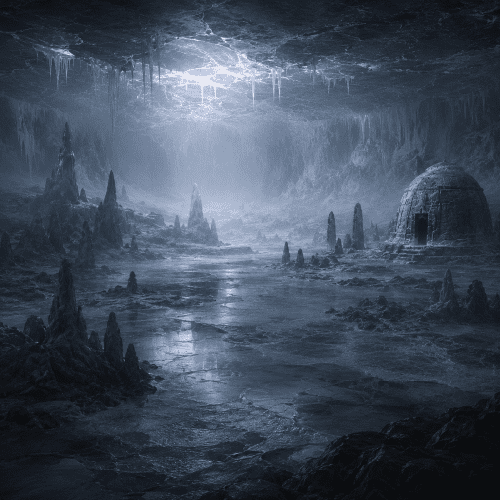
Sulad is imagined as a vast and dim realm beneath the earth, shaped by natural imagery such as caves, rivers, and underground pathways. The environment is often described as mist-filled and shadowy, giving it an atmosphere that feels distant from the living world yet still connected to it. Rather than being a fiery or torturous domain, it is more commonly portrayed as a quiet and transitional space where souls continue to exist.
In many accounts, the terrain includes dark rivers and winding caverns that reflect the geography of the Philippine landscape. These elements are not random but symbolic. Rivers often represent passage, while caves act as gateways between worlds. Souls that arrive in Sulad are believed to retain a form similar to their earthly bodies, though they gradually become less tangible over time.
Early Sulod traditions describe the creation of the world as emerging from primordial forces such as sky and water. Within this cosmology, Sulad exists as a foundational layer beneath the human world, supporting the balance of the entire universe. This positioning reinforces the idea that death is not separate from life but structurally tied to it.
Ruler/Guardian
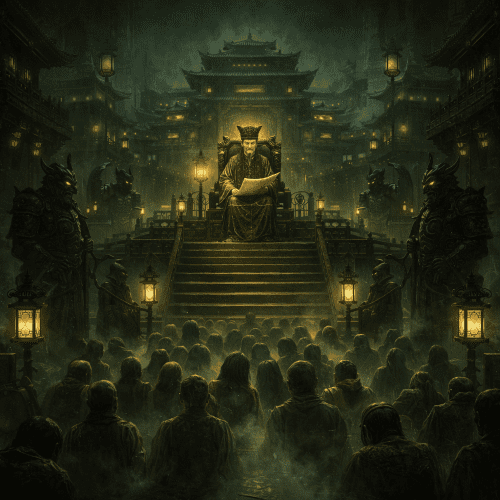
Sulad does not have a single dominant ruler in the way many other underworlds do. Instead, it is governed by a network of spiritual beings known as diwata and anito, who maintain order and guide the movement of souls. This decentralized system reflects the broader animistic worldview of the Visayan people, where power is shared among many spirits rather than concentrated in one figure.
In wider Visayan traditions, a figure named Magwayan is often associated with guiding souls to the afterlife. Rather than acting as a judge, Magwayan functions more like a ferryman, helping the dead cross into the next realm. This role emphasizes transition instead of punishment, reinforcing the idea that Sulad is part of a journey rather than an endpoint.
Later interpretations sometimes connect Sulad to darker figures due to outside religious influence, but these associations do not fully align with earlier indigenous beliefs. Originally, the guardians of Sulad were seen as caretakers who ensured balance between worlds rather than enforcers of moral judgment.
Inhabitants
Sulad is inhabited by a wide range of spiritual beings. The most prominent are the souls of the dead, who continue their existence in this underground realm. Alongside them are ancestral spirits known as anito, who may interact with the living through rituals and offerings.
Nature spirits, often referred to as engkanto, are also believed to dwell in or move through Sulad. These beings are not strictly benevolent or malevolent but exist as part of the natural and spiritual order. Their presence reinforces the idea that Sulad is not isolated but interconnected with other realms.
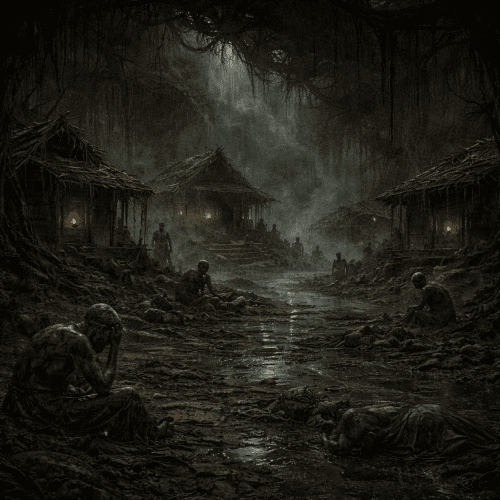
Some traditions also speak of restless or troubled spirits that linger at the edges of Sulad. These entities are often associated with unresolved emotions or improper burial rites. Rather than being punished in a formal sense, they exist in a state of imbalance, highlighting the importance of ritual practices in maintaining harmony between the living and the dead.
Access
Access to Sulad is most commonly achieved through death, which marks the beginning of the soul’s journey away from the human world. This transition is often guided by spiritual entities who help the soul navigate unseen pathways. The journey is not always immediate, as some beliefs suggest that souls may linger briefly before fully entering the underworld.
Natural locations such as caves, rivers, and mountains are considered points of connection between realms. These places are treated with respect and caution because they are believed to act as thresholds where the boundaries between worlds become thin.
Ritual practices play a key role in ensuring a smooth passage to Sulad. Shamans, known as babaylan, perform ceremonies to guide the soul and prevent it from becoming lost or restless. Offerings and chants are used to maintain balance and ensure that the transition does not disrupt the harmony of either world.
Instances of Visit
Sulad is not entirely inaccessible to the living. In traditional belief, certain individuals such as babaylan can enter the underworld through trance states. These journeys are not physical but spiritual, allowing them to communicate with souls or retrieve knowledge needed for healing and guidance.
Epic narratives from the Visayan region, particularly the Hinilawod, describe heroes traveling through underworld realms. These stories often involve encounters with powerful spirits and tests of strength or wisdom. Such journeys highlight Sulad as a place of interaction rather than isolation, where the boundaries between life and death can be crossed under specific circumstances.
These accounts are important because they show that Sulad is not just a destination for the dead but also a realm that plays an active role in storytelling, ritual, and cultural identity.
Symbolism
Sulad represents more than just the afterlife. It embodies the idea of continuity, where death is seen as a transformation rather than an ending. The imagery of rivers and caves reflects natural cycles, reinforcing the belief that life and death are interconnected processes.
It also symbolizes the unseen foundations of existence. Just as roots support a tree beneath the ground, Sulad supports the living world from below. This perspective encourages respect for ancestors and the natural environment, as both are considered part of the same system.
In its original form, Sulad does not focus on punishment but on balance. It reminds individuals of their place within a larger cosmic structure, where harmony between worlds is essential for stability.
Comparative Analysis
When compared to other underworlds, Sulad stands out for its relative neutrality. In Greek belief, Hades serves as a structured realm with distinct regions for different types of souls. In Norse tradition, Hel is associated with those who do not die in battle, often carrying a somber tone.
Sulad differs from both by placing less emphasis on judgment and more on continuity. While later interpretations influenced by colonial religion sometimes portray it as a place of punishment, earlier traditions do not support this view. Instead, Sulad aligns more closely with other indigenous systems where the afterlife is a continuation of existence rather than a final reward or penalty. This distinction highlights the importance of understanding Sulad within its original cultural context rather than through external frameworks.
Modern Influence
Sulad continues to influence Filipino culture today, particularly in literature, art, and storytelling. Modern adaptations of Visayan epics have reintroduced the concept to new audiences, often blending traditional elements with contemporary themes.
In visual art and exhibitions, imagery associated with caves, rivers, and ancestral spirits reflects the enduring presence of Sulad in cultural memory. It also appears in films and digital media, where it is sometimes reinterpreted as a darker or more dramatic setting.
At the same time, there is a growing effort to preserve indigenous knowledge systems. Sulad plays an important role in this movement, serving as a reminder of how earlier communities understood life, death, and the natural world.
Sources
Jocano, F. L. (1967). The Sulod: A Study in Higher Mythology.
Eugenio, D. L. (Ed.). (1993). Philippine Folk Literature: The Epics. University of the Philippines Press.
Roces, A. (2006). Cultura y Religion en la Sociedad Prehispanica de Filipinas.
Cannell, F. (2005). “The Afterlife of Empire: Christianity and Cultural Politics in Indonesia and the Philippines.” Journal of the Royal Anthropological Institute, 11(2), 245-262.
Scribd. (2025, August 3). Sulod Tribe: Myths and beliefs explained | PDF | Folklore. https://www.scribd.com/document/613718408/Sulod-Literature
Wikipedia contributors. (2005, February 3). Philippine mythology. Wikipedia. https://en.wikipedia.org/wiki/Philippine_mythology
Eastern Quezon College. (2023, November 4). Midterm notes eastern quezon college – PHILIPPINE MYTHOLOGY (VISAYAS DEITIES). Studocu. https://www.studocu.com/ph/document/eastern-quezon-college/civil-engineering/midterm-notes-eastern-quezon-college/114858803
Frequently Asked Questions
What is Sulad in Visayan belief?
Sulad is the underworld in Visayan tradition where souls go after death, forming part of a three-layered cosmic system.
Is Sulad the same as hell?
No, Sulad was originally a neutral realm of the dead, not a place of punishment like hell.
Who rules Sulad?
Sulad has no single ruler; it is overseen by spiritual beings like diwata and guided by figures such as Magwayan.
How do souls reach Sulad?
Souls enter Sulad after death, often guided by spiritual entities through natural pathways like rivers or caves.
Can the living visit Sulad?
In tradition, shamans called babaylan could access Sulad through trance for healing or spiritual communication.