

Tahamaling : The Red Guardian Spirit of the Philippine Forest
At a glance
| Description | |
|---|---|
| Origin | Philippine Mythology |
| Classification | Spirits |
| Family Members | N/A |
| Region | Philippines |
| Associated With | Forests, Animals, Protection |
The Mythlok Perspective
Kamohoaliʻi represents a departure from the traditional humanised deity. Within the Mythlok framework, he is understood less as a god who governs the sea and more as the ocean itself choosing to be known. Unlike Mediterranean deities such as Poseidon or Neptune, shaped in the human image to be bargained with, Kamohoaliʻi remains fundamentally elemental. While he shares the predatory divinity of the Fijian shark god Dakuwaqa, he is defined by his sacred role as a navigator, marking the limits of human dominion.
Tahamaling
Introduction
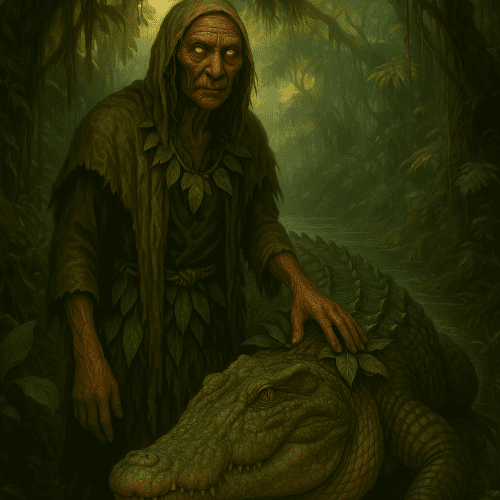
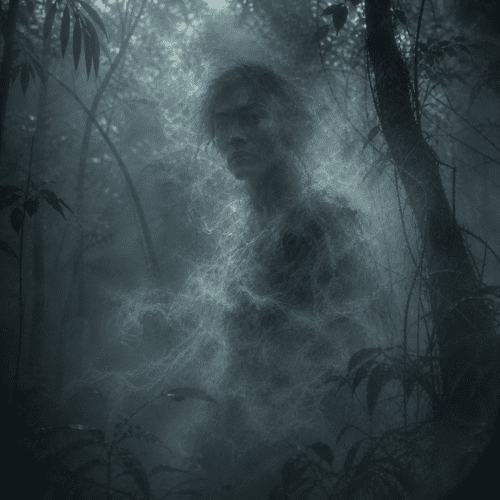
Tahamaling is a mysterious and powerful nature spirit rooted in the traditions of the Bagobo people of Mindanao in the Philippines. Known as a red-skinned guardian of the forest, she belongs to the wider class of spiritual beings called anito, entities believed to inhabit natural spaces and influence the lives of humans. Unlike distant gods, Tahamaling exists close to the human world, silently observing how people interact with nature.
Her presence reflects an ancient ecological worldview in which forests are not empty landscapes but living domains governed by unseen forces. Tahamaling’s role is not merely symbolic. She actively protects animals, heals injured creatures, and enforces a moral code among hunters. Those who respect nature may pass unnoticed, but those who exploit it risk her wrath.
Philippine folklore, shaped through centuries of oral tradition and layered with influences from indigenous belief systems as well as Hindu, Buddhist, Islamic, and later Christian elements, preserves figures like Tahamaling as reminders of balance. Within this evolving mythic landscape, she stands as a guardian spirit whose story continues to resonate in both cultural memory and modern environmental thought.
Physical Traits
Tahamaling is most famously described as a striking female figure with a vivid red complexion, a feature that immediately marks her as something beyond human. Her appearance often combines beauty with unease. At a distance, she may resemble a graceful woman, but closer encounters reveal unsettling traits such as yellow eyes, sharp fangs, and an otherworldly presence.
She is typically depicted wearing minimal adornments, often limited to bracelets and anklets made from bones. These details reinforce her identity as a being deeply connected to the wild rather than human society. Her height is said to be slightly taller than that of ordinary people, giving her a subtle yet noticeable dominance in physical presence.
Some traditions describe a cyclical transformation tied to the full moon, during which her more fearsome nature emerges. During these periods, her predatory side becomes more pronounced, suggesting that she embodies both protection and danger. This duality is central to her identity. She is not purely benevolent or malevolent, but a force of nature itself, capable of nurturing life or ending it when balance is broken.
Family
In Bagobo belief systems, Tahamaling is closely associated with Mahomanay, a male forest spirit often considered her counterpart. While Tahamaling is described with a red complexion, Mahomanay is typically portrayed with lighter or fair skin. Together, they form a complementary pair, representing balance within the natural world.
Their relationship is not always framed in strictly human terms, but many interpretations view them as partners who share responsibility for protecting forest life. Both are guardians of animals, ensuring that hunting remains sustainable and respectful. Their roles extend beyond simple protection, as they are also seen as judges who observe human behavior and decide whether it aligns with the laws of nature.
Tahamaling is also strongly linked to the balete tree, a sacred and often feared tree in Philippine folklore believed to house powerful spirits. This connection reinforces her identity as a being tied to specific natural spaces rather than abstract realms.
Other names
Tahamaling is known by several variations across different regions and interpretations. One of the most common alternative names is Tagamaling, which appears in ethnographic records and may refer to a similar or closely related spirit. In some traditions, Tagamaling is associated with agricultural fertility, particularly crops other than rice, suggesting a broader role connected to sustenance and land.
She is also classified under the category of anito, a term that encompasses a wide range of spirits in Philippine belief systems, including ancestral spirits, nature beings, and protective entities. This classification places her within a larger spiritual framework rather than isolating her as a singular figure.
Occasionally, modern retellings use variations such as Tamalanhig, though these are less standardized and often reflect regional storytelling differences. Despite the variation in names, the core identity remains consistent: a forest-dwelling spirit who governs the relationship between humans and nature.
Powers and Abilities
Tahamaling’s primary role is that of a guardian of animals. She is believed to care for injured or sick creatures within the forest, extending even to domesticated animals that wander into her domain. This nurturing aspect highlights her connection to life and regeneration.
However, her protective nature is balanced by strict enforcement of natural law. Hunters who enter the forest are expected to show respect, often through offerings such as betel nut leaves. These rituals are not mere superstition but acts of acknowledgment, recognizing that the forest belongs to forces beyond human control.
When these customs are ignored, Tahamaling’s response can be severe. Folklore describes her ability to curse individuals, sometimes transforming them into stone or bringing illness and misfortune. During her more fearsome phases, particularly around the full moon, she is also said to become predatory, with some accounts suggesting she consumes human flesh.
Her powers extend beyond physical transformation or harm. She embodies surveillance, judgment, and balance. She sees without being seen, acts without warning, and maintains an invisible boundary between respectful coexistence and destructive intrusion.
Modern Day Influence
Although Tahamaling does not appear as frequently in mainstream media as other mythological beings, her influence persists in subtle but meaningful ways. Philippine cultural organizations such as the National Commission for Culture and the Arts and the Cultural Center of the Philippines continue to support the preservation of indigenous folklore, ensuring that stories like hers are documented and shared.
In modern storytelling, Tahamaling has become a symbol of environmental awareness. Artists, writers, and digital creators reinterpret her as a guardian of ecological balance, aligning her story with contemporary concerns about deforestation and wildlife protection.
Online platforms, folklore archives, and educational initiatives have played a significant role in keeping her narrative alive. As interest in indigenous knowledge systems grows, Tahamaling is increasingly recognized not just as a mythological figure, but as a representation of sustainable living and respect for nature.
Her story continues to evolve, bridging ancient belief systems with modern perspectives, and reminding audiences that the relationship between humans and nature has always been governed by unseen consequences.
Related Images




Source
Benedict, L. W. (1913). Bagobo myths. In Philippine, Visayan and Tagalog folk-tales, and Bagobo myths.
Cole, F. C. (1913). The wild tribes of Davao District, Mindanao. Field Museum of Natural History.
Manuel, A. E. (n.d.). Notes on Bagobo spirits. In Ramos, M. D. (1990). The creatures of Philippine lower mythology. Phoenix Publishing.
Metroscene Magazine. (2022, August 4). 5 Philippine mythological creatures you might not know about. https://www.metroscenemag.com/2022/08/5-philippine-mythological-creatures-.html
Ramos, M. D. (1990). The creatures of Philippine lower mythology. Phoenix Publishing.
The Aswang Project. (2022, June 1). The BUSO complex in Bagobo folklore. https://www.aswangproject.com/bagobo-buso/
The Aswang Project. (2022, June 1). Engkanto de Dios”: The good spirits. https://www.aswangproject.com/engkanto-de-dios/
Ablir, R. (2024, May 15). Enchantment of the Mahomanay: A Tale of Love and Abduction in the Otherworld. Philippine Mythological Creatures.
Jocano, F. L. (1969). Philippine Mythology. Quezon City: Capitol Publishing House.
Lumbera, B., & Lumbera, C. (1982). Philippine Literature: A History and Anthology. National Book Store.
Frequently Asked Questions
Who is Tahamaling in Philippine folklore?
Tahamaling is a red-skinned forest spirit from Bagobo mythology known for protecting animals and enforcing respect for nature.
Is Tahamaling a good or evil spirit?
She is neither purely good nor evil. Tahamaling is a neutral guardian who rewards respect and punishes those who harm the natural world
What does Tahamaling look like?
She appears as a beautiful woman with red skin, yellow eyes, and sometimes fangs, blending beauty with a supernatural presence.
What powers does Tahamaling have?
Her abilities include healing animals, cursing humans, transforming people into stone, and enforcing natural laws within the forest.
Why do hunters offer betel leaves to Tahamaling?
Offerings are a sign of respect, seeking permission to hunt and ensuring protection from her wrath.