
Titanomachy : The Epic War Between the Titans and Olympians
| Description | |
|---|---|
| Origin | Greek Mythology |
| Epics/Texts | Hesiod’s Theogony |
| Key Characters | Zeus, Cronus, Rhea, Cyclopes, Hecatoncheires |
| Type of Event | Ten-year divine war |
| Symbolism | Triumph of order over chaos |
Mythlok Perspective
In Mythlok’s Perspective, the Titanomachy is not simply a war between gods but a mythological expression of generational transformation. The Titans embody raw, primordial power, while the Olympians represent the emergence of structure, law, and organized civilization. The conflict reflects humanity’s recurring experience of old systems giving way to new ones, often through struggle and upheaval. This theme appears across cultures. The Titanomachy resembles the battles between the Devas and Asuras in Indian tradition and echoes the rise of Marduk over Tiamat in Mesopotamian mythology. In each case, a younger force establishes a new cosmic order. What makes the Titanomachy unique is its emphasis on succession as an inevitable cycle, reminding us that even the mightiest rulers eventually become the old order they once challenged.
Titanomachy
Introduction
The Titanomachy is one of the most important events in Greek mythological tradition. Often called the War of the Titans, it was a colossal conflict fought between two generations of divine beings: the Titans, who ruled the cosmos under Cronus, and the Olympians, led by Zeus. More than a simple battle for power, the Titanomachy marked a turning point in the mythological history of the universe. It ended the reign of the Titans and established the Olympian gods as the new rulers of heaven, earth, and the underworld.
The story reflects one of the central themes of Greek mythology: the transfer of power from one generation to the next. Just as Cronus had once overthrown his father Uranus, Zeus would eventually overthrow Cronus. The Titanomachy therefore represents a cycle of succession, authority, and renewal that appears throughout many ancient myths. Its influence can be seen across literature, art, philosophy, and modern popular culture, making it one of the most enduring narratives from the ancient Greek world.
Source Texts
The most complete surviving account of the Titanomachy comes from Hesiod’s Theogony, written around the eighth or seventh century BCE. This foundational work traces the origins of the cosmos, the genealogy of the gods, and the rise of Zeus to supreme power. Hesiod’s version remains the primary source for understanding the war and its consequences.
Although a separate epic poem known as the Titanomachy once existed, it has not survived. Ancient writers attributed it to Eumelus of Corinth, but today only fragments and references remain. These lost materials suggest that alternative versions of the conflict may have circulated in antiquity.
Other Greek authors occasionally referred to the Titanomachy. Homer alludes to the conflict in both the Iliad and the Odyssey, while later dramatists such as Aeschylus and Euripides echoed its themes of rebellion, justice, and divine authority. Mythographers including Pseudo-Apollodorus also preserved details that complement Hesiod’s narrative. Together, these sources helped ensure that the story remained a central part of Greek religious and literary tradition.
Key Characters
At the heart of the Titanomachy stood Zeus, the youngest son of Cronus and Rhea. Saved from being swallowed by his father, Zeus grew to adulthood in secret before returning to challenge the Titan king. He became the leader of the Olympian rebellion and ultimately emerged as ruler of the cosmos.
Zeus was joined by his siblings Hera, Poseidon, Hades, Demeter, and Hestia. Having been swallowed by Cronus shortly after birth, they were eventually freed by Zeus and became key members of the Olympian alliance. Together they formed the core of the future Olympian pantheon.
The Titans were led by Cronus, who had seized power from his own father Uranus. Most of the elder gods supported his rule and fought from their stronghold on Mount Othrys. Atlas, one of the most powerful Titans, became one of Cronus’s greatest champions during the war.
Several important allies tipped the balance in Zeus’s favor. The Cyclopes, giant one-eyed smiths imprisoned by Cronus, forged powerful weapons for the Olympians. Zeus received his thunderbolts, Poseidon his trident, and Hades his helm of invisibility. Equally important were the Hecatoncheires, gigantic beings with one hundred arms, whose immense strength proved decisive in battle.
Not all Titans opposed Zeus. Prometheus and Themis sided with the Olympians, demonstrating that the conflict was not a simple division between good and evil but a struggle over the future direction of the cosmos.
Narrative Summary
The origins of the Titanomachy can be traced to Cronus’s fear of a prophecy. Having overthrown Uranus, Cronus learned that one of his own children would someday overthrow him. To prevent this fate, he swallowed each child born to Rhea.
When Zeus was born, however, Rhea concealed the infant and tricked Cronus into swallowing a stone wrapped in cloth. Zeus grew up hidden from his father and eventually returned to challenge the Titan ruler. With the assistance of the Titaness Metis, Zeus forced Cronus to disgorge his swallowed children.
After reuniting with his siblings, Zeus sought additional allies. He descended into Tartarus and freed the Cyclopes and Hecatoncheires, whom Cronus had imprisoned. Grateful for their liberation, they joined the Olympian cause and provided crucial support.
The war that followed lasted ten years. The Titans fought from Mount Othrys, while the Olympians established themselves on Mount Olympus. Neither side could gain a decisive advantage until the Hecatoncheires entered the conflict. Their relentless assault, combined with Zeus’s thunderbolts, overwhelmed the Titan forces.
Following their defeat, most of the Titans were imprisoned in Tartarus under the guard of the Hecatoncheires. Atlas received a unique punishment and was condemned to support the heavens for eternity. After the victory, Zeus, Poseidon, and Hades divided the universe among themselves. Zeus became ruler of the sky, Poseidon claimed the seas, and Hades received dominion over the underworld. This new order marked the beginning of the Olympian age.
Symbolism
The Titanomachy carries several layers of symbolic meaning. One of its most significant themes is the triumph of order over primal power. The Titans are often associated with the ancient and untamed forces of the cosmos, while the Olympians represent structure, governance, and civilization.
The story also reflects generational conflict. Uranus was overthrown by Cronus, and Cronus in turn was overthrown by Zeus. This pattern mirrors real-world struggles between older and younger generations, highlighting the inevitability of change and renewal.
Another important theme is the contrast between tyranny and just leadership. Cronus rules through fear, attempting to prevent his own children from challenging him. Zeus, by contrast, wins allies through rewards, cooperation, and promises of honor. While Greek myths do not portray Zeus as flawless, his reign is generally presented as more balanced and stable than that of his predecessor.
The imprisonment of the Titans symbolizes the containment of chaotic forces. Rather than destroying them completely, the myths suggest that these powers remain present beneath the surface of the world, restrained but never entirely eliminated.
Comparative Mythology
The Titanomachy belongs to a broader group of myths in which younger gods overthrow an older divine order. Similar stories appear across many cultures, suggesting a widespread ancient fascination with cosmic succession and the establishment of order.
In Mesopotamian tradition, the god Marduk defeats the primordial dragon Tiamat in the Babylonian Enuma Elish. His victory establishes a new cosmic order, much as Zeus’s triumph reshapes the universe.
Norse mythology presents comparable themes through the ongoing conflict between the gods and the giants. Although the Æsir do not completely overthrow the Jötnar, the tension between these groups echoes the struggle between Olympians and Titans.
Indian mythology contains parallels in the recurring battles between the Devas and Asuras. These conflicts often revolve around sovereignty, cosmic balance, and the preservation of divine order, themes that closely resemble those found in the Titanomachy. Such similarities suggest that many ancient cultures used divine warfare as a way of explaining how order emerged from a chaotic or unstable beginning.
Cultural Impact
The Titanomachy played a crucial role in shaping Greek religious thought. By explaining how Zeus became king of the gods, it provided a theological foundation for the worship practices that dominated much of the Greek world.
Ancient artists frequently depicted scenes from the conflict on pottery, temple decorations, sculptures, and frescoes. Images of Zeus wielding thunderbolts or Atlas bearing the heavens became especially popular and remained influential for centuries.
The story also contributed to Greek ideas about authority and justice. Philosophers, poets, and playwrights used the myth to explore questions about leadership, legitimacy, and the responsibilities that come with power. Even language bears the imprint of the myth. The word “titanic” continues to describe something enormous, powerful, or awe-inspiring, reflecting the enduring legacy of the Titans themselves.
Modern Influence
The Titanomachy remains a powerful source of inspiration in modern storytelling. Contemporary authors frequently revisit the conflict, adapting it for new audiences while preserving its core themes.
Rick Riordan’s Percy Jackson novels place the Titans and Olympians at the center of modern adventures, introducing younger readers to Greek mythology. Madeline Miller’s Circe explores the world shaped by the aftermath of the Titanomachy through the perspective of a Titan-descended witch.
Cinema has also embraced the myth. Films such as Clash of the Titans and Immortals draw heavily from the imagery and themes associated with the war between divine generations. Although these adaptations often take creative liberties, they demonstrate the continuing appeal of the story.
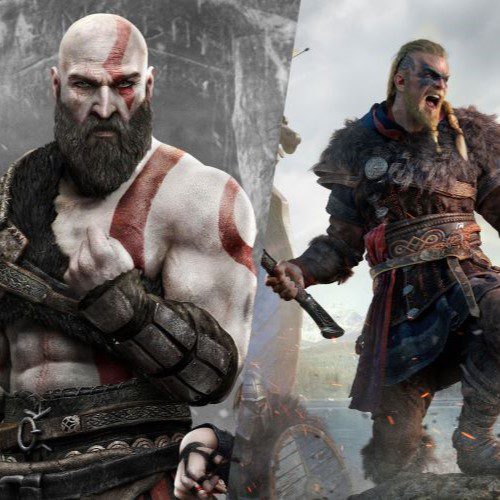
Video games have likewise incorporated elements of the Titanomachy. Franchises such as God of War and Hades reinterpret Greek myths for interactive audiences, presenting the Titans and Olympians as enduring symbols of power, rebellion, and destiny.
Today, the Titanomachy remains more than an ancient legend. It continues to serve as a metaphor for political upheaval, cultural change, and the clash between established institutions and emerging forces. Its themes remain as relevant as ever, ensuring that the war between Titans and Olympians continues to resonate with modern audiences.
Sources
Greek Mythology. (2018). Titanomachy. Greek Mythology. https://www.greekmythology.com/Myths/The_Myths/Titanomachy/titanomachy.html
Greek Myth Wikia. (2026, January 8). Titanomachy | Greek Myth Wikia – Fandom. https://greek-myth.fandom.com/wiki/Titanomachy
Wikipedia. (n.d.). Titanomachy. Wikipedia. https://en.wikipedia.org/wiki/Titanomachy
Greek Legends and Myths. (n.d.). The Titanomachy in Greek Mythology. Greek Legends and Myths. https://www.greeklegendsandmyths.com/titanomachy.html
Hesiod. (2006). Theogony; and, Works and days (M. L. West, Trans.). University of Michigan Press.
Hyginus, G. J. (1960). The myths of Hyginus (M. A. Grant, Ed. & Trans.). University of Kansas Press.
Riordan, R. (2014). Percy Jackson’s Greek gods (1st ed.). Disney-Hyperion Books.
Newington, S. J. (2006). Hesiod’s Theogony [Doctoral thesis, Durham University]. Durham E-Theses. https://etheses.durham.ac.uk/id/eprint/2698/1/2698_711.pdf
Frequently Asked Questions
What is the Titanomachy in Greek mythology?
The Titanomachy was a ten-year war between the Titans and the Olympian gods that ended with Zeus and the Olympians becoming rulers of the cosmos.
Who won the Titanomachy?
The Olympians, led by Zeus, won the Titanomachy with the help of the Cyclopes and Hecatoncheires.
How long did the Titanomachy last?
According to Hesiod’s Theogony, the war lasted for ten years before the Olympians achieved victory.
Why did Zeus fight Cronus?
Zeus fought Cronus to free his siblings, fulfill the prophecy of succession, and end the Titan ruler’s oppressive reign.
What happened to the Titans after the Titanomachy?
Most Titans were imprisoned in Tartarus, while Atlas received the punishment of holding up the heavens for eternity.