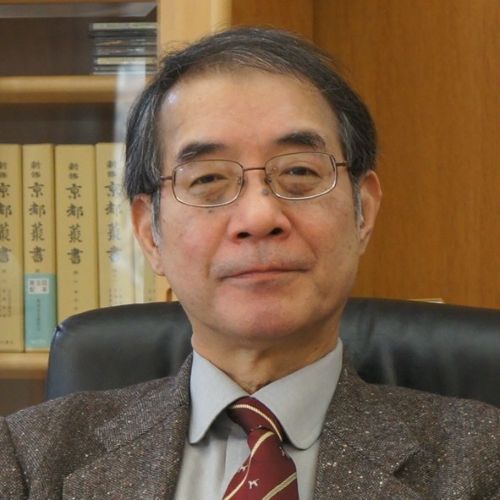


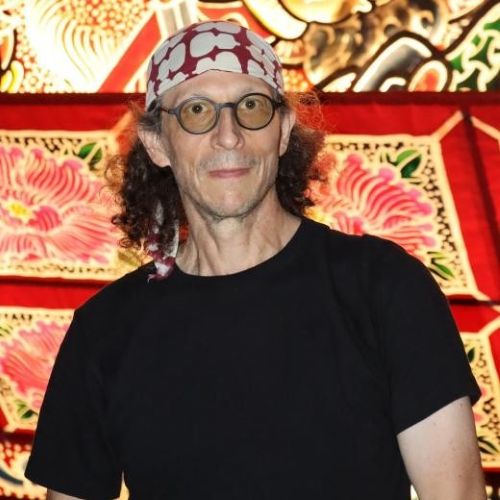
Dr. Michael Dylan Foster : Scholar of Japanese Yokai and Folklore
Mythlok Perspective
In Mythlok’s Perspective, Dr. Michael Dylan Foster represents a new generation of myth scholars who understand that legends never truly disappear. Instead, myths evolve with technology, media, and society. Foster’s work shows that yōkai are not simply ancient Japanese monsters but living cultural symbols that adapt to every era. His approach resembles scholars who studied folklore as a reflection of social psychology rather than isolated fantasy. Much like how Norse trolls became fantasy creatures in Western media or how Celtic fairies evolved into modern supernatural archetypes, Japanese yōkai transformed from feared spirits into cultural icons, mascots, and entertainment figures. Foster’s research demonstrates that mythology survives because humans continually reshape old fears into new stories.
Dr. Michael Dylan Foster
Introduction
Dr. Michael Dylan Foster is one of the most respected modern scholars studying Japanese folklore and supernatural traditions. Best known for his groundbreaking work on yōkai, the strange creatures and supernatural beings of Japanese tradition, Foster has helped global audiences understand how folklore continues to shape modern culture. Through his books, lectures, documentaries, and university teaching, he has become a major voice in connecting classical Japanese legends with contemporary media, tourism, and identity.
Born in the United States, Foster developed an interest in storytelling, travel, and cultural traditions at an early age. According to interviews and public discussions, his fascination with folklore deepened while traveling through Europe and later Japan. Over time, that curiosity evolved into a professional academic career focused on the supernatural traditions of East Asia. He studied at Stanford University and later became a professor specializing in Japanese folklore, literature, and cultural studies.
Foster is currently affiliated with the University of California, Davis, where he serves as a professor and department chair. His work stands out because it does not treat folklore as something frozen in the past. Instead, he argues that myths and supernatural beliefs constantly adapt to social change, technology, and popular culture. This perspective has made his research highly influential not only among scholars but also among readers interested in anime, manga, horror films, gaming, and Japanese history. Today, Dr. Michael Dylan Foster is widely recognized as one of the leading international experts on yōkai studies and modern folklore theory.
Area of Expertise
Dr. Michael Dylan Foster’s primary area of expertise is Japanese folklore, particularly the study of yōkai. In Japanese tradition, yōkai are supernatural beings that range from terrifying monsters to playful tricksters and mysterious spirits. Foster’s research examines how these beings have evolved across centuries and how they continue to appear in modern entertainment and cultural identity.
His scholarship combines folklore studies, anthropology, literature, media studies, and cultural history. Rather than focusing only on ancient myths, Foster studies how folklore moves through different forms of media. His work explores seventeenth-century encyclopedias, Edo-period woodblock prints, oral storytelling traditions, manga, anime, tourism campaigns, and television documentaries. This broad approach allows him to trace how supernatural traditions survive by adapting to new generations.
Another important aspect of his work is the relationship between folklore and commercialization. Foster has written extensively about how once-feared monsters became mascots, collectibles, or symbols of regional pride. He argues that folklore is constantly reshaped by economics, politics, and social anxiety. During periods of rapid change, societies often revive supernatural imagery to express uncertainty, fear, or nostalgia.
Foster is also associated with the concept of the “folkloresque,” a term developed alongside Jeffrey A. Tolbert. The idea refers to modern media that imitates or draws inspiration from folklore while creating entirely new narratives. Horror films, fantasy games, and urban legends frequently use this approach to create a sense of authenticity and cultural depth.
Beyond yōkai studies, Foster’s research includes Japanese festivals, ritual traditions, intangible cultural heritage, and disaster narratives. His fieldwork in rural Japan has contributed significantly to the understanding of how communities preserve traditional practices in a rapidly modernizing world.
Books & Publications
Dr. Michael Dylan Foster has authored and edited several influential books that helped introduce Japanese folklore to international audiences. One of his most famous works is Pandemonium and Parade: Japanese Monsters and the Culture of Yōkai, published in 2009. This award-winning book examines how yōkai developed over several centuries and how Japanese society used supernatural imagery to explain fear, uncertainty, and social change. Foster demonstrates that yōkai are not simply fictional monsters but reflections of historical anxieties and cultural imagination.
Another landmark publication is The Book of Yōkai: Mysterious Creatures of Japanese Folklore. Originally published in 2015 and later expanded in a revised edition, the book serves as both an academic study and an accessible guide to Japanese supernatural beings. It introduces readers to famous creatures such as the kappa, kitsune, tengu, and rokurokubi while explaining their historical origins and transformations in popular culture. The book became especially popular because it balanced scholarly detail with engaging storytelling.
Foster also co-edited The Folkloresque: Reframing Folklore in a Popular Culture World with Jeffrey A. Tolbert. This collection explores how films, games, novels, and television borrow folkloric themes to create emotional realism and cultural familiarity. The term “folkloresque” has since become an important concept in contemporary folklore studies.
In addition to these works, Foster has contributed to books on intangible cultural heritage, Japanese festivals, and disaster narratives. He co-edited Matsuri and Religion: Complexity, Continuity, and Creativity in Japanese Festivals and UNESCO on the Ground: Local Perspectives on Intangible Cultural Heritage. These publications expanded his influence beyond supernatural folklore into broader discussions about cultural preservation and community identity. His writing style is often praised for being academically rigorous while remaining accessible to general readers.
Research & Contributions
One of Dr. Michael Dylan Foster’s greatest contributions to folklore studies is his argument that yōkai should be understood as cultural expressions rather than simple monsters. He explains that supernatural beings often emerge during moments of social instability, technological change, or political uncertainty. In this sense, yōkai act as mirrors reflecting collective fears and hopes.
Foster has also helped organize yōkai studies into clearer academic frameworks. He proposed examining yōkai as events, objects, or presences, allowing scholars to study supernatural traditions in more structured ways. This classification system gave researchers new methods for understanding folklore beyond traditional storytelling analysis.
Another major contribution is his exploration of how folklore interacts with capitalism and tourism. Foster observed that many Japanese communities use supernatural legends to attract tourism and strengthen regional identity. Creatures once feared in local stories are now used in festivals, museums, mascots, and marketing campaigns. His work demonstrates how folklore remains economically and culturally valuable in the modern world.
Foster’s fieldwork has been especially important in documenting living traditions. He conducted extensive research on festivals such as the Namahage ritual in Akita Prefecture and the Toshidon tradition in Kagoshima Prefecture. These studies highlight how ritual performance continues to reinforce social values and cultural memory.
His influence also extends into public education. Foster has appeared in documentaries, interviews, podcasts, and international lectures discussing Japanese folklore and supernatural traditions. Since 2022, he has served as the “Yōkai Navigator” for the NHK World documentary series Yōkai: Exploring Hidden Japanese Folklore. Through this role, he introduced global audiences to lesser-known legends and regional traditions across Japan. By combining academic scholarship with public outreach, Foster helped transform yōkai studies into an internationally recognized field.
Awards & Recognitions
Dr. Michael Dylan Foster’s work has received recognition from major academic and cultural institutions. His most notable achievement came in 2009 when Pandemonium and Parade received the prestigious Chicago Folklore Prize, one of the oldest and most respected awards in folklore studies.
Throughout his career, Foster has also received several fellowships and research grants. These include Fulbright Fellowships for research in Japan, the Blakemore Foundation Fellowship for advanced language study, and the Geballe Dissertation Fellowship from Stanford Humanities Center.
During his time at Indiana University, Foster earned both the Outstanding Junior Faculty Award and the Trustees Teaching Award. These honors reflected his excellence not only as a researcher but also as an educator capable of making complex cultural topics engaging and understandable for students.
Beyond formal awards, Foster has become widely respected as a public intellectual in the field of folklore. His appearances on NHK World, podcasts, university seminars, and museum programs have expanded the global visibility of Japanese folklore studies. He is frequently invited to speak about yōkai, cultural heritage, and supernatural traditions at international academic conferences and public events. Today, he is regarded as one of the leading scholars responsible for bringing Japanese supernatural studies into mainstream global discussion.
Social Media Profiles
Dr. Michael Dylan Foster maintains a mostly academic and professional public presence rather than a highly commercial social media profile. His work is commonly featured through university pages, documentary platforms, interviews, and educational channels.
His professional information is available through the University of California, Davis faculty directory, where readers can find details about his research, publications, and teaching activities. Interviews and discussions featuring Foster also appear on platforms such as YouTube through folklore-focused channels, documentary programs, and university events.
Foster has appeared on podcasts and educational media discussing Japanese folklore, supernatural traditions, and popular culture. His NHK World documentary appearances significantly expanded his visibility among international audiences interested in Japanese myths and legends. Although he is not primarily known as a social media personality, his academic work continues to circulate widely through digital platforms, online lectures, and scholarly communities.
Sources
Foster, M. D. (n.d.). Faculty profile at UC Davis. University of California, Davis. https://religions.ucdavis.edu/people/michael-dylan-foster
NHK World Japan. (n.d.). Yōkai: Exploring Hidden Japanese Folklore. https://www3.nhk.or.jp/nhkworld/
Stanford Humanities Center. (n.d.). Geballe Dissertation Fellowship information. https://shc.stanford.edu/
Foster, M. D. (2009). Pandemonium and parade: Japanese monsters and the culture of yōkai. University of California Press.
Foster, M. D. (2015). The book of yōkai: Mysterious creatures of Japanese folklore. University of California Press.
Foster, M. D., & Tolbert, J. A. (Eds.). (2016). The folkloresque: Reframing folklore in a popular culture world. Utah State University Press.
Foster, M. D. (2013). Haunted travelogue: Hearn, heritage, and the globalisation of Japanese folklore. Asian Ethnology, 72(1), 3-30.



Frequently Asked Questions
Who is Dr. Michael Dylan Foster?
Dr. Michael Scott is a British professor of Classics and Ancient History, author, and broadcaster known for his work on Greek and Roman mythology and archaeology.
What is Michael Dylan Foster famous for?
He is best known for his books Pandemonium and Parade and The Book of Yōkai, which explore Japanese supernatural traditions.
What are yōkai in Japanese folklore?
Yōkai are supernatural beings in Japanese tradition that include monsters, spirits, shapeshifters, and mysterious creatures.
What is the folkloresque?
The folkloresque is a concept describing modern media that imitates or draws inspiration from folklore to create authenticity and cultural depth.
Where does Michael Dylan Foster teach?
Dr. Michael Dylan Foster teaches at the University of California, Davis, where he specializes in Japanese folklore and cultural studies.