Home  |  Mythological Archetypes : Gods, Creatures and Legendary Beings  |  Dragons Across Cultures : Legendary Beasts of Power and Myth

Dragons in Ancient Civilizations and Sacred Traditions

Dragons are among the most powerful and enduring mythic beings in world traditions. Found across Europe, Asia, the Americas, and the ancient Near East, dragons symbolize strength, chaos, protection, wisdom, and elemental power. Unlike ordinary animals in folklore, dragons often stand at the center of cosmic conflict or divine authority. They are rarely passive creatures. They shape destinies.

In European legend, dragons frequently appear as formidable adversaries. The Norse dragon Fafnir represents greed and transformation, having once been mortal before becoming a monstrous guardian of cursed treasure. In Christian lore, Saint George defeats a dragon as a symbol of triumph over chaos and evil. These dragons are destructive forces that must be confronted and overcome.

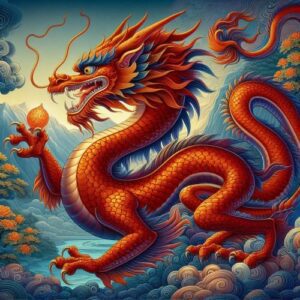
East Asian dragons reflect a very different interpretation. Rather than embodiments of evil, they are divine controllers of weather and water. Figures such as Ryujin govern oceans and tides, sustaining life rather than threatening it. In Chinese tradition, dragons symbolize imperial authority, prosperity, and cosmic harmony. Here, they are revered as sacred beings aligned with balance and natural order.

Norse mythology introduces the immense Jormungandr, a world-encircling being tied to apocalyptic fate. Though often described as serpent-like, Jormungandr functions symbolically as a dragon figure — a cosmic boundary marking the limits of the known world. In Mesoamerican belief, Quetzalcoatl combines avian and dragon-like imagery to represent knowledge, wind, and creation.

In Mesopotamian myth, chaos itself can take dragon-like form, as seen in Tiamat, whose defeat establishes order in the cosmos. Across cultures, dragons frequently embody primordial forces that precede structured civilization. Whether feared, worshipped, or challenged, they consistently represent power beyond human control. They guard sacred treasures, command storms, encircle worlds, and test heroes. Some must be slain to restore balance. Others must be honored to maintain harmony.

Exploring dragons across cultures reveals how civilizations understood power, transformation, and the raw forces of existence. They are not merely fantasy creatures. They are mythic embodiments of energy itself — sometimes destructive, sometimes protective, always extraordinary.
Fire Breathers, Sky Guardians, and Cosmic Forces

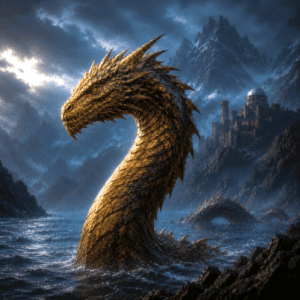
Image of Al-Tinnin, the mythical water dragon from Middle Eastern folklore.

Al Tinnin : The Ancient Arabian Dragon of the Sea

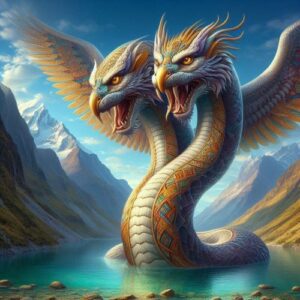
Image of Amaru, the mythical serpent-dragon of Andean mythology.
Amaru : The Inca Dragon

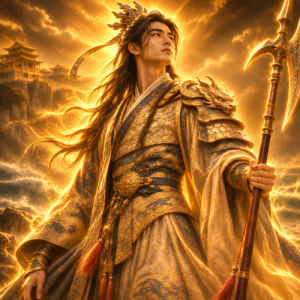
Ao Bing, the Dragon Prince of the East Sea from Chinese mythology, stands holding an ornate halberd

Ao Bing : The East Sea Dragon Prince in Chinese Mythology

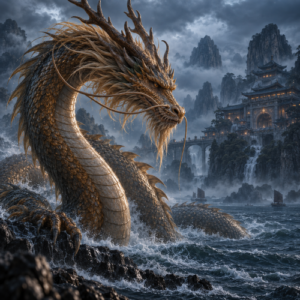
Ao Guang, the Chinese Dragon King of the East Sea, rising from stormy waters

Ao Guang : The Chinese Dragon King of the East

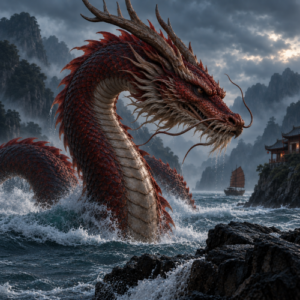
Ao Qin, the South Sea Dragon King, rising from dark ocean waves

Ao Qin : The Dragon King of the Southern Seas

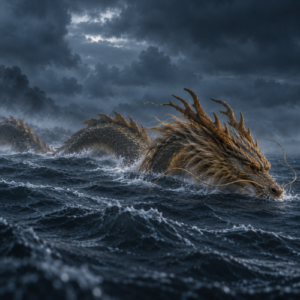
Ao Run, the Chinese Dragon King of the West Sea, swimming through a dark, stormy sea

Ao Run : Chinese Dragon King of the Western Seas

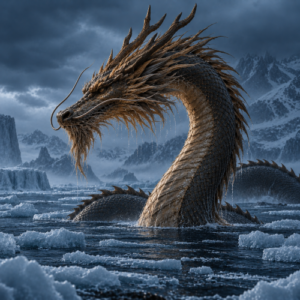
Ao Shun, the Chinese Dragon King of the North Sea, emerging from a semi-frozen sea surrounded by ice floes, glaciers, and misty mountains.

Ao Shun : The Chinese Dragon of Northern Seas

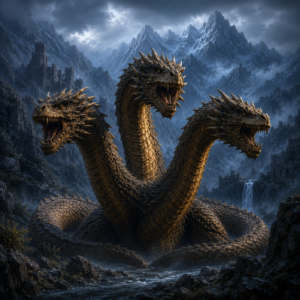
Azhdaya, the three-headed dragon of Slavic folklore

Azhdaya : The Three-Headed Dragon of Slavic Legends

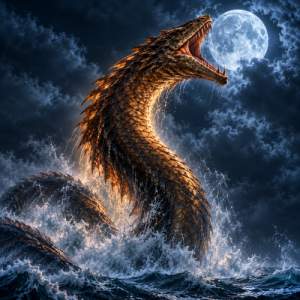
Bakunawa, the colossal sea serpent from Philippine folklore, rises from turbulent ocean waters

Bakunawa : The Moon-Eating Serpent of Philippine Folklore

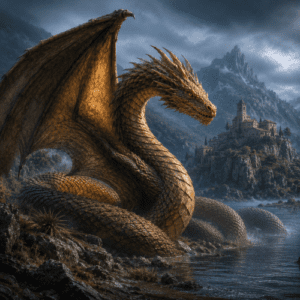
Cuélebre emerging from a mist-filled cave in northern Spain

Cuélebre : The Winged Serpent of Northern Spain

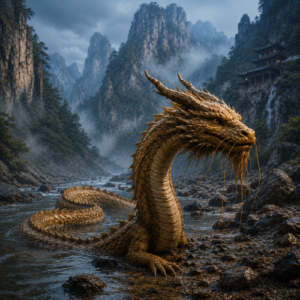
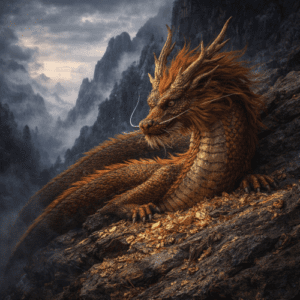
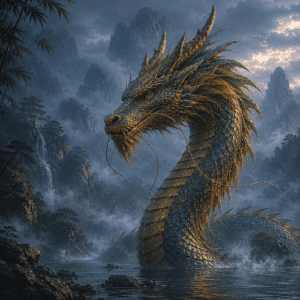
Dilong, the Chinese Earth Dragon, rises from a rocky mountain stream amid cool blue mist and towering peaks, its warm bronze-gold scales contrasting with the landscape.

Dilong : The Earth Dragon of China’s Hidden Realms

Image of Druk, the thunder dragon of Bhutanese mythology.

Druk : The Thunder Dragon

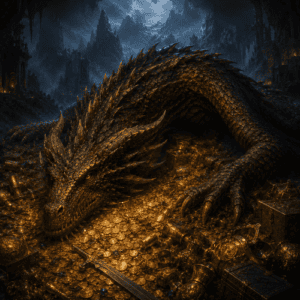
Fafnir, the legendary dragon of Norse mythology, resting atop the cursed treasure of Andvari inside a dark mountain cavern, surrounded by piles of gold, weapons, and ancient artifacts.

Fafnir : The Fearsome Norse Dragon of the Völsung Saga

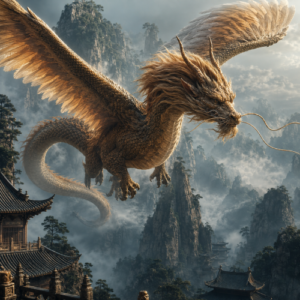
Feilong, the Flying Dragon of Chinese mythology, soaring above mist-covered mountains and traditional Chinese temples.

Feilong : China’s Majestic Winged Dragon of the Sky

Image of Fuzanglong, Chinese dragon deity associated with hidden treasures and the underworld.

Fuzanglong : The Chinese Dragon That Guards Hidden Treasures

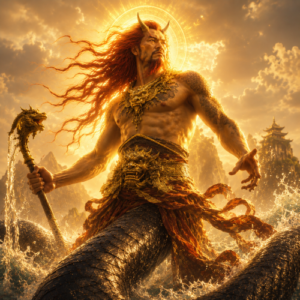
Gonggong, the Chinese water deity, rises from turbulent waters with a serpentine body & red hair

Gonggong : The Cataclysmic Water Deity of Chinese Mythology

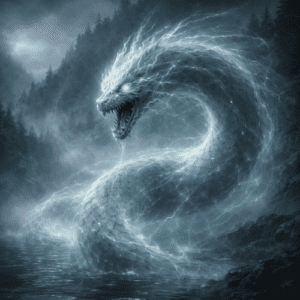
Gveleshapi, a colossal serpent-dragon emerging from a mist-covered mountain lake in the Caucasus

Gveleshapi : The Serpent Dragon of Georgian Waters

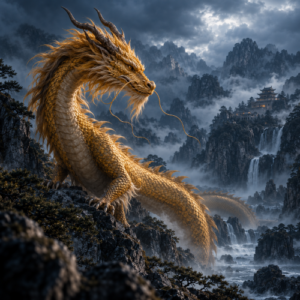
Huanglong, the Yellow Dragon of Chinese mythology, towering over a misty mountain valley

Huanglong : The Chinese Yellow Dragon of the Cosmic Center

Image of Illuyanka, the serpentine dragon from Hittite mythology symbolizing chaos and cosmic struggle.

Illuyanka : The Serpent Dragon

Image of Imugi, the lesser serpent-like dragon from Korean mythology.

Imugi : The Lesser Dragon

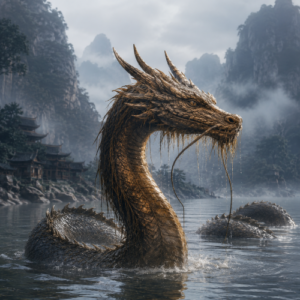
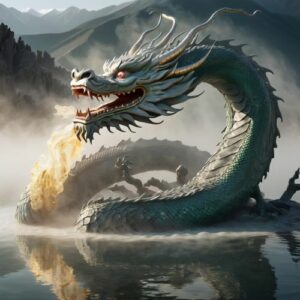
Jiaolong, a Chinese water dragon emerging from a misty mountain lak

Jiaolong : The Ancient Chinese Dragon of Rivers and Storms

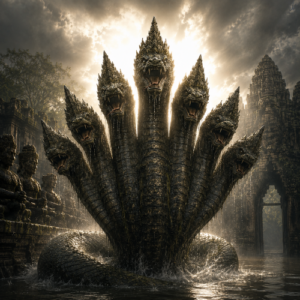
Khmer Dragon (Naga) with seven serpent heads fanned like a cobra hood,

Khmer Dragon : The Sacred Naga of Cambodian Tradition

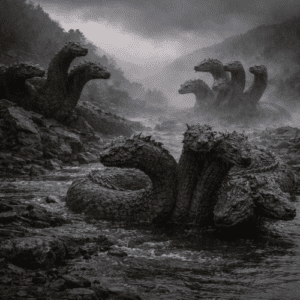
Kucedra, the mythical serpentine creature known for its destructive power and dark presence.

Kucedra : The 7 headed dragon

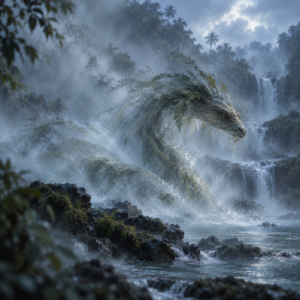
Kuna, the supernatural moʻo of Hawaiian mythology, emerges as a translucent reptilian spirit from a mist-covered river

Kuna : The Powerful Water Spirit of Hawaiian Mythology

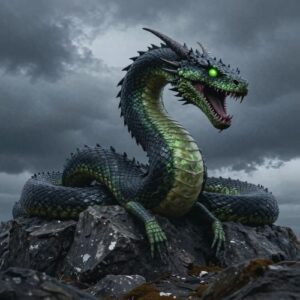
Linnormr from Norse legend, colossal serpent-dragon with two forelegs and no hind legs

Linnormr : The Deadly Serpent Dragon of Norse Legend

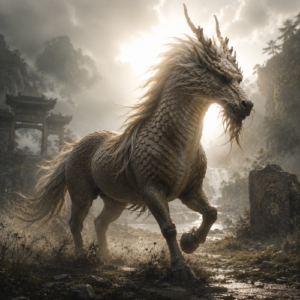
Longma, the Chinese dragon horse, striding through a misty mountain valley

Longma : The Ancient Dragon Horse of Chinese Lore

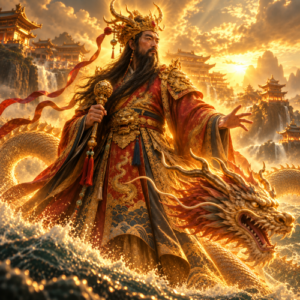
Longwang, the Chinese Dragon King, standing amid crashing waves in ornate red-and-gold robes

Longwang : The Chinese Dragon King of Water and Rain

"Luu, the Water Dragon, gliding through with glistening scales."

Luu : The Water Dragon

Naga Tasik Chini mythical lake dragon

Naga Tasik Chini : The Lake Dragon

The Ninki Nanka in a dense Gambian forest

Ninki Nanka : The Serpent of the Swamps

The Olmec Dragon in traditional Olmec attire

Olmec Dragon : The Primordial Earth Monster of Mesoamerica

akhangba the divine serpent-dragon god of Manipur emerging from the sacred landscape of Kangla

Pakhangba : The Serpent Dragon God of Manipur

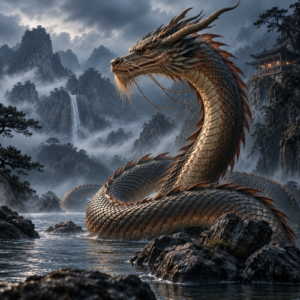
Panlong, the coiling Chinese water dragon, winding through a misty mountain lake

Panlong : The Coiling Dragon of Chinese Mythology

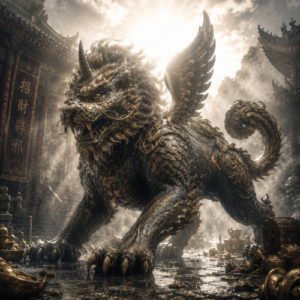
Pixiu, the Chinese mythical guardian beast, standing in a misty temple courtyard

Pixiu : The Chinese Mythical Guardian of Wealth and Protection

The Chinese Dragon of the East, Qinglong emerging from water

Qinglong : The Chinese Azure Dragon of the East

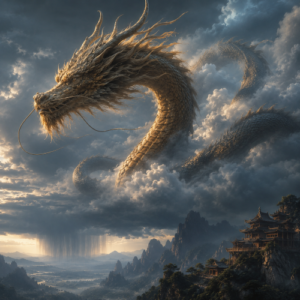
Shenlong, a Chinese dragon soaring through cool storm clouds above misty mountains

Shenlong : The Chinese Divine Dragon of Rain and Storms

Image of Tiamat, primordial chaos dragon goddess from Mesopotamian mythology.

Tiamat : The Primordial Sea Goddess of Babylonian Tradition

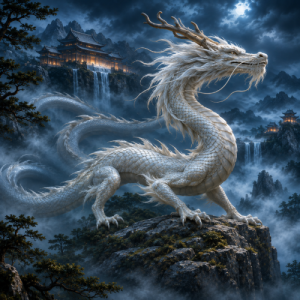
White celestial Tianlong with a long serpentine body, flowing mane, antler-like horns and intricate scales, overlooking a mist-covered Chinese mountain palace.

Tianlong : The Legendary Celestial Dragon of Chinese Mythology

A majestic Korean Dragon King, Yongwang, emerging from an underwater crystal palace.

Yongwang : Korea’s Legendary Dragon King

Try out our intense and sometimes mind numbing quizzes on mythology.

If you score 100% on any of our quizzes, you stand a chance to win an EXCLUSIVE gift from Mythlok!!

Mythlok
Privacy Overview

This website uses cookies so that we can provide you with the best user experience possible. Cookie information is stored in your browser and performs functions such as recognising you when you return to our website and helping our team to understand which sections of the website you find most interesting and useful.