


Cuélebre : The Winged Serpent of Northern Spain
At a glance
| Description | |
|---|---|
| Origin | Asturian Mythology |
| Classification | Animals |
| Family Members | N/A |
| Region | Spain |
| Associated With | Treasure guardianship, Caves, Immortality, Poison |
The Mythlok Perspective
From the Mythlok Perspective, the Cuélebre represents an elemental guardian rather than a simple monster. It embodies the ancient belief that wealth, water, and fertility are never freely given but must be approached with respect and courage. Like the dragons of Celtic Britain or the Nāga figures of South Asia, the Cuélebre stands at the threshold between abundance and annihilation. Across cultures, these serpent-guardians echo a shared human instinct to mythologize nature as both protector and threat, reminding us that power is never neutral.
Cuélebre
Introduction
The Cuélebre is one of the most enduring legendary beings of northern Spain, rooted in the folklore of Asturias and Cantabria. Described as a colossal winged serpent or dragon, it dwells in caves, fountains, forests, and liminal landscapes where the human world meets the unknown. The creature is best known as a relentless guardian of hidden treasure and as the jailer of xanas or anjanas, fairy-like female spirits associated with water and fertility.
Unlike many dragons that exist outside time, the Cuélebre is immortal yet subject to aging. As centuries pass, its scales thicken until no weapon can pierce them, and wings finally emerge, forcing the creature to abandon the land. At the end of its long existence, it flies westward to the mythical Mar Cuajada, a paradisiacal sea believed to be the final refuge of ancient beings. The legend reflects deep pre-Christian and Celtic layers of belief, where serpents symbolize both danger and guardianship, destruction and continuity.
Physical Traits
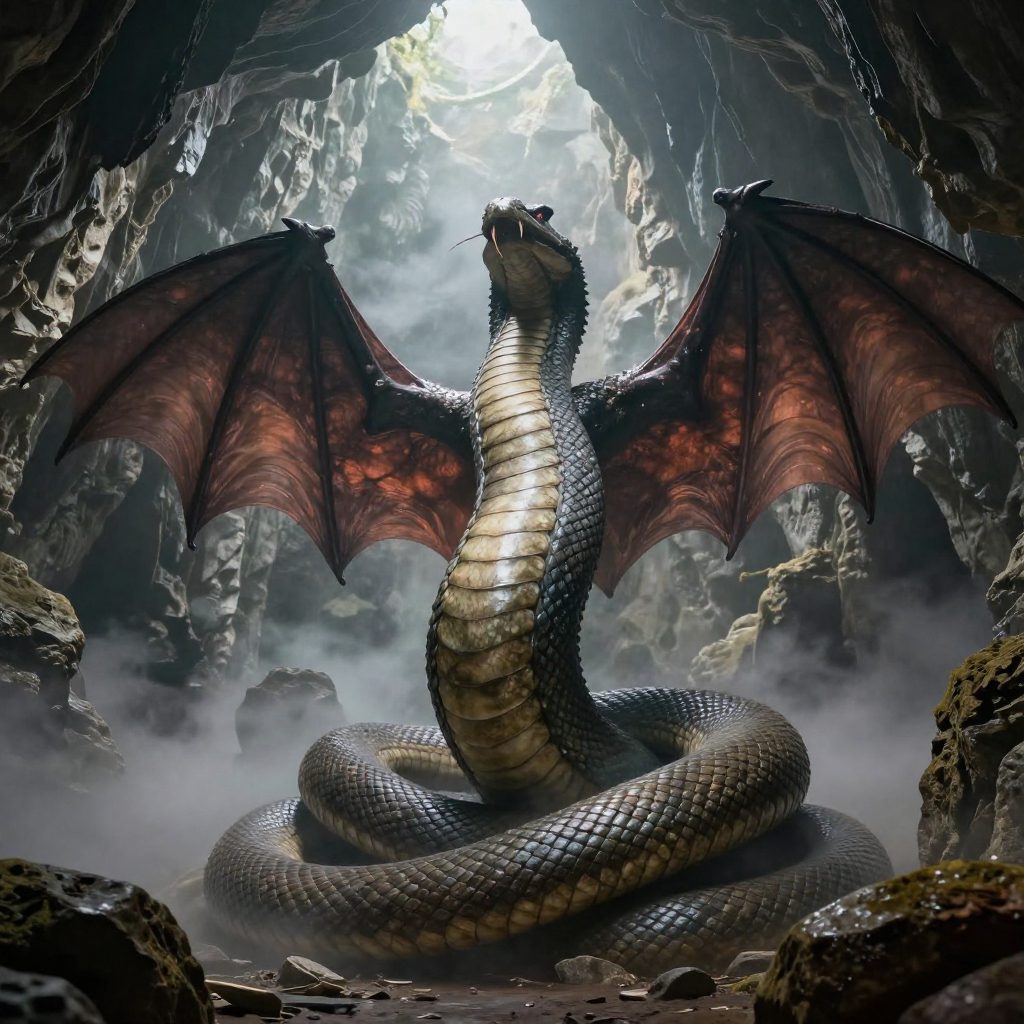
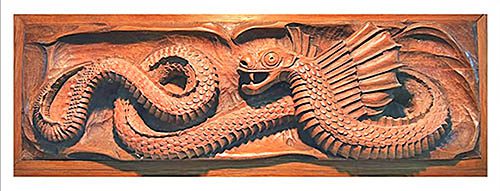
Folklore consistently portrays the Cuélebre as a gigantic serpent-dragon whose body coils through caves and ravines. Its scales are described as so dense that iron blades, arrows, and even later firearms are useless against them. Only the throat is sometimes named as a vulnerable point, a detail that reinforces its near-invincibility rather than offering a reliable weakness.
With age, the Cuélebre develops immense bat-like wings, granting it the power of flight. When airborne, it produces a shrill, whistling sound that can be heard across valleys, sending livestock into panic and warning villagers of its presence. Its eyes glow like embers, its teeth are needle-sharp, and its breath is foul and poisonous, often associated with sulfur or fire. Though capable of movement and flight, the creature is usually depicted as a patient sentinel, remaining still for long periods as it guards its domain.
Family
Asturian and Cantabrian traditions do not assign the Cuélebre a family structure. It is not born into a lineage, nor does it produce offspring. Instead, it exists as a solitary force tied to a specific place. Its interactions are primarily with humans and with the supernatural beings it imprisons, particularly xanas or anjanas.
Some regional tales mention encounters between the Cuélebre and other mythic figures such as nuberos, storm spirits said to steal its blood, but these figures are rivals or opportunistic entities rather than relatives. The Cuélebre’s immortality reinforces its isolation, presenting it as a singular presence rather than part of a generational cycle.
Other names
In Asturias, the creature is called Cuélebre, while in Cantabria it is commonly known as Culebre. Both names derive from the Latin coluber, meaning snake, highlighting its ancient serpentine identity. In broader Spanish references, it is sometimes described simply as the Asturian dragon or winged serpent. These linguistic variations reflect regional speech rather than distinct creatures, pointing to a shared mythic figure across northern Spain.
Powers and Abilities
The Cuélebre’s defining role is that of a guardian. It watches over hoards of gold, enchanted objects, and sacred waters, particularly springs and fountains believed to possess healing or fertility powers. Its presence alone is enough to deter intrusion, but it also actively attacks when threatened or hungry, preying on cattle and, in darker tales, humans.
Its scales grant near-total invulnerability, while its wings allow it to patrol vast territories. The creature’s breath is toxic and sometimes fiery, capable of killing animals and ruining crops. Folklore also credits its saliva with transforming into magical stones that can cure illnesses, suggesting a dual nature that balances destruction with hidden benefit.
Magical constraints govern the Cuélebre’s power. On the night of San Juan, linked to the summer solstice, its enchantments weaken. This is the only time when humans may challenge it, free captive xanas, and claim its treasure. Conversely, on the night of Saint Bartholomew, the Cuélebre’s fury reaches its peak, and storms or devastation may follow. Though immortal, age eventually compels it to depart for Mar Cuajada, ending its guardianship on land.
Modern Day Influence
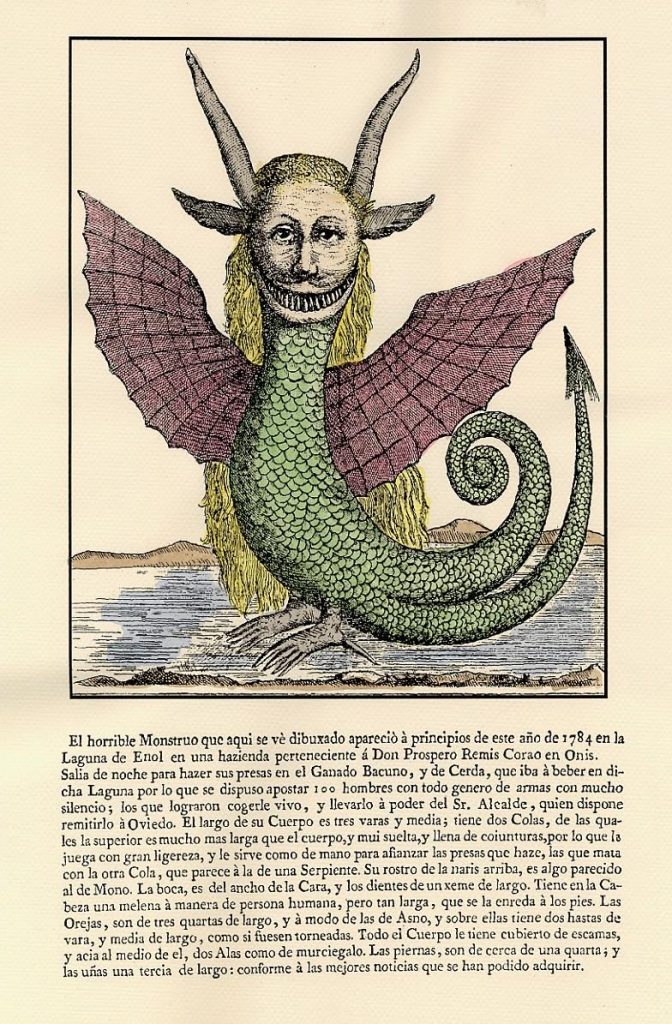
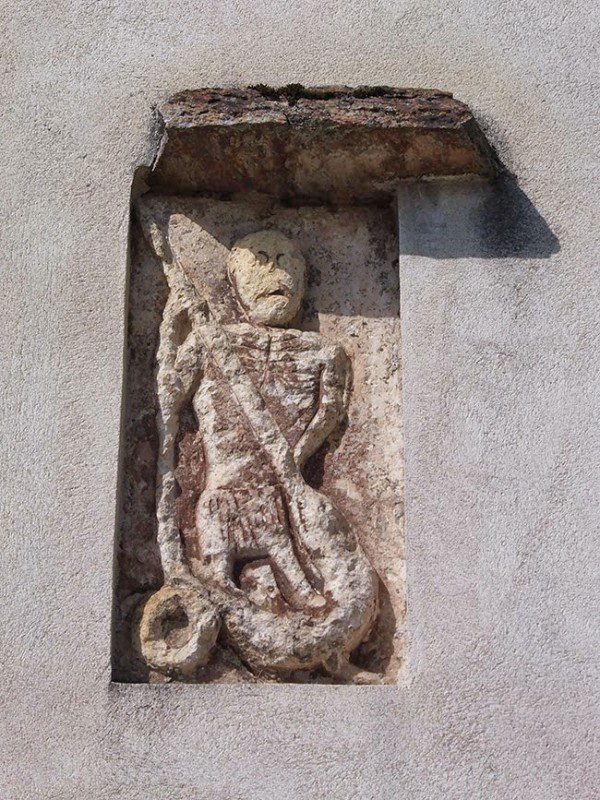
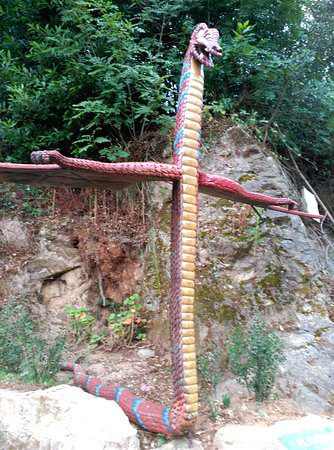
The Cuélebre remains a powerful symbol in contemporary Asturian and Cantabrian culture. Its image appears in church carvings, traditional embroidery, wood sculptures, and local architecture. Place names tied to caves, wells, and meadows preserve the memory of its supposed dwellings, weaving the legend directly into the physical landscape.
In modern times, the creature has become a marker of regional identity. Businesses, festivals, and cultural initiatives use the Cuélebre as an emblem of heritage and resilience. While it has not achieved widespread representation in global popular media, it thrives in regional storytelling, tourism narratives, and educational material, continuing to embody the tension between humans and the untamed natural world.
Related Images




Source
Cabrales, A. (n.d.). Mitología asturiana. Asturias Diario. https://asturiasdiario.es/mitologia-asturiana-la-leyenda-del-cuelebre-de-gijon/
Lliga Celta d’Asturies. (2017). Asturian mithology: The cuélebre (Asturian dragon). https://lligaceltadasturies.wordpress.com/2017/08/27/asturian-mithology-the-cuelebre-asturian-dragon/
Mitologicus. (2025). Cuélebre. https://mitologicus.com/asturiana/cuelebre/
National Geographic. (2025). Mysteries of a medieval kingdom. https://www.nationalgeographic.com/travel/article/paid-content-mysteries-of-a-medieval-kingdom
Sordo Sotres, R. (n.d.). Leyendas de Valle Baxu [As cited in Asturian folklore collections]. In Lliga Celta d’Asturies.
Wikipedia contributors. (2024). Cuélebre. Wikipedia. https://en.wikipedia.org/wiki/Cu%C3%A9lebre
Wacks, D. A. (2014). Some thoughts on Asturian mythology. University of Oregon. https://davidwacks.uoregon.edu/2014/12/12/asturian/
Asturian Mythology Compendium [Folklore publication]. (2020). Cuélebre. Compendium Iberica. https://compendiumiberica.wordpress.com/2020/04/22/cuelebre-herensuge/
Frequently Asked Questions
What is the Cuélebre in Spanish folklore?
The Cuélebre is a legendary winged serpent-dragon from Asturias and Cantabria, known for guarding treasure and sacred places.
Is the Cuélebre immortal?
Yes, it is considered immortal, though it ages and eventually leaves the land for the mythical Mar Cuajada.
What creatures does the Cuélebre imprison?
It commonly holds xanas or anjanas, fairy-like female spirits associated with water and fertility.
When can the Cuélebre be defeated?
Folklore states its powers weaken on the night of San Juan, making it vulnerable to human challengers.
Does the Cuélebre still influence modern culture?
Yes, it remains a strong symbol in regional art, place names, festivals, and Asturian cultural identity.
