


Yalafath : The Creator God of Yapese Mythology
At a glance
| Description | |
|---|---|
| Origin | Yapese Mythology |
| Classification | Gods |
| Family Members | Nemegai (Wife) |
| Region | Micronesia |
| Associated With | Creation, Rain, Protection against evil, Afterlife |
The Mythlok Perspective
In Mythlok’s Perspective, Yalafath represents a form of divinity rooted in survival, much like Lono in Hawaiian mythology, who is associated with agriculture, rainfall, fertility, and prosperity. While both deities connect divine power with the resources that sustain human communities, Yalafath’s traditions also emphasise protection against evil and the spiritual world beyond death. His presence in Yapese cultural memory highlights how mythology preserves a community’s relationship with nature, survival, and ancestral customs long after religious practices begin to change.
Yalafath
Introduction
Yalafath is a creator deity in Yapese mythology, traditionally associated with the island of Yap in the Caroline Islands of Micronesia. Regarded as a benevolent divine figure, he is connected with the creation and welfare of humanity, protection against evil forces, and the spiritual realm of the dead. He is also known as Bota-Sunumi, while Yälfaath and Yelafath are alternative spellings found in historical accounts.
Yapese mythology developed within an island society where the natural environment shaped everyday life. Rainfall, food, fertile land, and protection from natural disasters were essential to survival, and traditional stories often connected these necessities with divine powers. Yalafath reflects this relationship between the spiritual and material worlds, appearing in accounts concerned with human welfare and the restoration of life after catastrophe.
Historical descriptions portray Yalafath as benevolent but sometimes indifferent or inactive. Although he does not constantly intervene in human affairs, he is believed to possess the power to overcome evil when invoked. His heavenly dwelling, Falraman, is associated with the souls of the dead, extending his significance beyond creation and earthly existence.
Yalafath belongs to a wider Yapese spiritual tradition populated by deities, spirits, and supernatural beings with different responsibilities. His stories have survived through historical accounts and cultural traditions, including traditional performances that honour his association with life, customs, and resources. Together, these traditions establish Yalafath as an important figure in the religious heritage of Yap.
Physical Traits
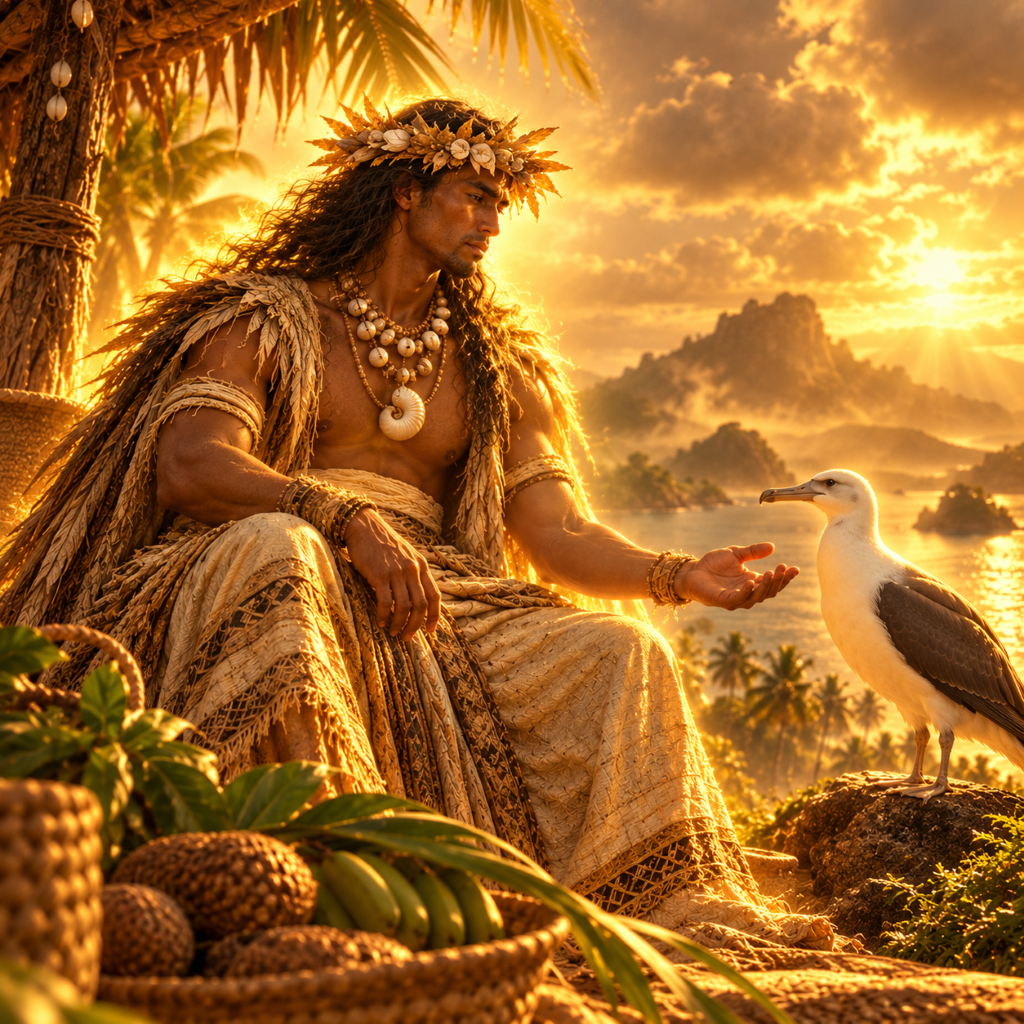
Yalafath does not have a consistently documented human appearance in the principal historical accounts. His identity is established primarily through his divine authority, heavenly residence, and relationship with the natural world. One of his most distinctive associations is the mui-bab, identified in historical references as an albatross. The bird serves as his divine messenger, connecting the heavenly realm with the island and its inhabitants. Its presence is particularly significant in stories concerning the restoration of Yap after a devastating flood.
In an account recorded by Frederick William Christian in 1899, Yalafath sends his wife, Mui-Bab, to investigate the condition of the island. She descends in the form of an albatross or, according to another version, a frigatebird. After discovering that the surviving inhabitants lack essential food plants, she returns to report their plight. Yalafath responds by providing vegetation that helps restore the island’s resources.
This association connects Yalafath with the skies, birds, and the renewal of life. Rather than relying on a fixed physical description, his mythology conveys his presence through the actions of his messenger and his influence over the world below. His residence, Falraman, provides another defining element of his identity. Described as the destination of departed souls, this heavenly abode connects Yalafath with the spiritual journey that follows death. His character therefore extends beyond the creation and protection of living beings to the wider relationship between humanity and the supernatural world.
Family
Nemegai is identified as Yalafath’s wife in historical mythology references. Although detailed accounts of their family life are limited, their relationship places Yalafath within the network of divine figures found in Yapese religious traditions. Another important name associated with his family is Mui-Bab. In Christian’s account of the flood tradition, Mui-Bab is Yalafath’s wife and divine messenger. She investigates the condition of the island after the waters recede and reports that the survivors need food-bearing plants to rebuild their lives.
The story gives the female divine figure an active role in restoring the island’s fertility. Her journey between the heavens and the earth connects the needs of the inhabitants with Yalafath’s ability to provide assistance.
The names Nemegai and Mui-Bab appear in different descriptions of Yalafath’s family, but the surviving accounts do not establish conclusively whether they represent the same figure. They should therefore be understood within their respective traditions rather than combined into a single, unquestioned genealogy. Yalafath’s wider family relationships are less clearly documented. His importance rests primarily on his position among the divine powers of Yap and his relationship with humanity, rather than on an extensive collection of family narratives.
Other Names
Yalafath appears under several names and spellings in accounts of Yapese religion. The most recognisable forms are Yalafath, Yälfaath, and Yelafath. These variations reflect the different ways Indigenous names were recorded in historical literature. Bota-Sunumi is another name associated with the creator deity. This alternative is particularly useful when exploring older references to Yapese religious traditions.
The name Yalfath also appears in cultural documentation of Yapese traditional dance. A recording preserved by the Yap State Historic Preservation Office and the International Information and Networking Centre for Intangible Cultural Heritage in the Asia-Pacific Region identifies Yalfath as a local god associated with life, customs, and resources.
Yalafath should also be distinguished from Olifat and Olofat, names associated with trickster figures in Micronesian traditions. Similar names and overlapping cultural connections can make these figures difficult to distinguish in secondary accounts, but their identities and roles should not automatically be treated as interchangeable.
Powers and Abilities
Yalafath’s powers centre on creation, the provision of essential resources, and the protection of humanity. His mythology presents divine authority as a force that sustains life and restores balance when communities face hardship. Creation and human welfare form the foundation of his identity. Yalafath is recognised as a creator deity in traditional Yapese accounts, and his name is associated with the giving of life, customs, and resources. His role reflects the importance of maintaining the conditions that allow human communities to survive and flourish.
Rain and natural forces are another part of his divine domain. Historical descriptions of Yapese religion associate Yalafath with rain, a vital element in an island environment where agriculture and freshwater availability influence everyday life. This connection places him among the divine figures whose powers relate directly to the natural world.
Protection against evil is an important aspect of his character. Although described as benevolent yet sometimes inactive, Yalafath is believed to overcome evil demons when invoked. His power is therefore not defined by constant displays of strength but by his ability to respond to spiritual threats. Restoration and nourishment feature prominently in the flood narrative recorded by Christian. After learning that the surviving inhabitants of Yap have lost many of their food-bearing plants, Yalafath sends down useful vegetation, including bananas, yams, and other crops. His intervention helps restore the island’s ability to support human life.
Connection with the afterlife is expressed through Falraman, the heavenly dwelling associated with departed souls. This gives Yalafath a place within traditional understandings of death and spiritual existence, connecting the fate of humanity with the wider structure of the supernatural world. Together, these powers portray Yalafath as a deity whose authority is expressed through the creation, protection, and continued sustenance of life.
Modern Day Influences
Yalafath continues to appear in the cultural record of Yap through traditional performance, historical research, and the preservation of Indigenous stories. One notable example is a traditional men’s standing dance documented in the Yapese intangible cultural heritage collection maintained by the Yap State Historic Preservation Office and the International Information and Networking Centre for Intangible Cultural Heritage in the Asia-Pacific Region. The dance honours Yalfath, whose association with life, customs, and resources forms part of its cultural significance. The recording features performers from Gagil municipality during the 2007 Yap Day celebrations.
This connection between mythology and performance demonstrates how traditional stories can remain meaningful through community practices. Dance, chants, and oral narratives preserve cultural knowledge and provide ways for younger generations to encounter the spiritual traditions of their ancestors. Yap’s religious landscape has changed considerably since the arrival and spread of Christianity. Catholicism has become an important part of contemporary religious life, while historical accounts and cultural studies continue to document Indigenous beliefs and practices. Yalafath’s place in traditional dance and folklore provides a way to explore this heritage without assuming that historical worship continues unchanged today.
His mythology also contributes to wider discussions of Micronesian culture. Stories about rainfall, food, birds, and the restoration of life reveal how traditional communities connected their environment with spiritual authority. These themes remain valuable for understanding the relationship between mythology, cultural identity, and the natural world. For Yapese heritage, Yalafath represents more than a creator deity recorded in historical texts. His presence in cultural documentation illustrates how a mythological figure can continue to be remembered through performance and storytelling, preserving a connection between ancestral traditions and contemporary cultural expression.
Related Images




Source
Christian, F. W. (1899). The Caroline Islands: Travel in the sea of the little lands. Charles Scribner’s Sons.
Furness, W. H. (1910). The island of stone money: Yap of the Carolinas. J. B. Lippincott.
Lindstrom, L., & White, G. M. (Eds.). (n.d.). Summoning the powers beyond: Traditional religions in Micronesia. Micronesian Seminar. https://www.micsem.org/pubs/books/Summoning-the-Powers-Beyond.pdf
Luomala, K., & Rynkiewich, M. A. (2005). Micronesian religions: Mythic themes. In L. Jones (Ed.), Encyclopedia of religion (2nd ed.). Encyclopedia.com.
https://www.encyclopedia.com/environment/encyclopedias-almanacs-transcripts-and-maps/micronesian-religions-mythic-themes
Müller, W. (1917). Yap: Ergebnisse der Südsee-Expedition 1908–1910 (Vol. 2). L. Friederichsen.
Mythology.net. (n.d.). Yalafath. https://pantheon.org/articles/y/yalafath.html
UNESCO International Information Networking System in Intangible Cultural Heritage in the Asia-Pacific Region. (n.d.). Yapese traditional dances I. https://archive.unesco-ichcap.org/eng/ek/sub2018-12mc/mcosub9.html
Walleser, S. (1967). Religious beliefs and practices of the inhabitants of Yap. Jesuit Bureau.
Frequently Asked Questions
Who is Yalafath in Yapese mythology?
Yalafath is a creator deity in Yapese mythology, associated with the welfare of humanity, rain, protection against evil, and Falraman, the destination of departed souls.
What is Yalafath the god of?
Yalafath is associated with creation, rain, human welfare, and protection against evil forces. His stories also connect him with the provision of food and the afterlife.
Who is Yalafath's wife?
Nemegai is identified as Yalafath’s wife in one historical reference. Another account names Mui-Bab as his wife and divine messenger in a story about restoring Yap after a flood.
What are Yalafath's other names?
Yalafath is also known as Bota-Sunumi. Yälfaath, Yelafath, and Yalfath appear as alternative spellings in historical and cultural records.
Is Yalafath still worshipped today?
Yalafath remains part of documented Yapese cultural heritage, including traditional dance. However, the extent of his active worship in contemporary religious life is not clearly established.


