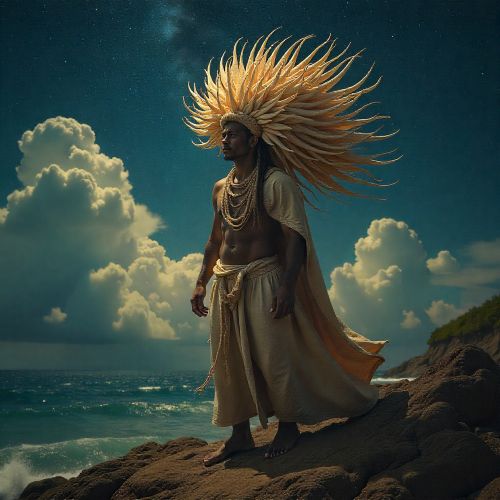
Yapese & Ifaluk Mythology
Yapese and Ifaluk mythology reflects the spiritual traditions of two communities in the Caroline Islands of Micronesia. Although Yap is a larger island group while Ifaluk is a small coral atoll, both cultures developed traditions deeply shaped by the ocean, ancestral relationships, and the natural environment. Their myths have been preserved through oral storytelling, songs, ceremonies, and customary practices.
In Yapese traditions, the natural world is closely connected with the spirit realm. Ancestral beings and supernatural forces are associated with particular places, including forests, stones, shorelines, and other significant landscapes. These traditions reinforce the importance of respecting the environment and maintaining proper relationships between families, communities, and the unseen world.
The ocean occupies a particularly important place in Yapese life. Navigation, fishing, and inter-island travel historically required extensive environmental knowledge. Traditional stories connect voyages with ancestral knowledge and supernatural guidance, reflecting the idea that survival depends upon understanding the sea rather than attempting to control it.
Yapese mythology also includes important culture heroes and legendary voyagers. Tagar, appearing in traditions from the wider region, is associated with extraordinary journeys and supernatural abilities in some accounts. Such stories preserve ideas about courage, knowledge, social responsibility, and the relationship between humans and the forces surrounding them.
On Ifaluk, mythology is similarly intertwined with the environment and community life. The small atoll’s lagoon, reefs, winds, and surrounding ocean form an important part of its cultural worldview. Stories and traditions explain relationships between people, ancestors, and supernatural beings while reinforcing the responsibilities required to maintain harmony within a small island community.
Ifaluk traditions are particularly notable for their emphasis on emotional and social behavior. Anthropological accounts of Ifaluk culture have documented concepts surrounding emotions, morality, and appropriate conduct. Anger, cooperation, generosity, and social responsibility are understood within a broader cultural framework in which individual behavior affects the wellbeing of the community.
For both cultures, ancestors remain important links between the past and present. Ritual practices, oral traditions, and customary knowledge help preserve these relationships. Sacred places and natural features can carry ancestral significance, making the landscape itself part of cultural memory.
Christianity and other outside influences have transformed religious life across Micronesia, but traditional knowledge has not disappeared. Stories, customs, navigation practices, ceremonies, and relationships with the land and sea continue to contribute to Yapese and Ifaluk cultural identity.
Yapese and Ifaluk mythology ultimately presents the ocean not as an empty space separating communities, but as a living environment filled with history, knowledge, and spiritual meaning. Their traditions show how mythology can function as both a spiritual worldview and a guide to community life, connecting people to their ancestors, environment, and generations yet to come.