


Si : The Supreme Moon God of the Moche Civilization
At a glance
| Description | |
|---|---|
| Origin | Moche Mythology |
| Classification | Gods |
| Family Members | N/A |
| Region | Peru |
| Associated With | Moon, Seasons, Weather, Tides, Fishing, Fertility, Agriculture |
The Mythlok Perspective
In Mythlok’s Perspective, Si is one of the most intriguing lunar deities in world mythology because the Moche granted the moon greater authority than the sun—a striking reversal of traditions seen in cultures that worshipped solar gods like Ra or Inti. Rather than representing darkness or mystery alone, Si embodied order, survival, and the predictable rhythms that sustained an entire civilization. The deity reminds us that power is defined by influence rather than brilliance. Sometimes the quiet force that guides life’s cycles leaves a deeper mark than the one that shines the brightest.
Si
Introduction
The ancient Moche civilization flourished along the northern coast of present-day Peru between approximately 100 and 800 CE. Living in one of the driest deserts in the world, the Moche transformed their environment through sophisticated irrigation systems and built a powerful society whose survival depended on understanding the rhythms of nature. Their religion reflected this dependence, with gods representing the forces that shaped everyday life.
Among these deities, Si occupied a uniquely important position as the moon deity. Unlike many ancient civilizations that placed the sun above all other celestial bodies, the Moche appear to have regarded the moon as the greater cosmic power. The moon’s ability to shine during both the day and the night made it a constant presence in the sky, symbolizing authority over the natural world. Archaeological evidence, particularly from ceremonial sites such as Huaca de la Luna, suggests that lunar worship played a central role in Moche religious life, although the civilization left no written texts explaining its myths.
Because the Moche recorded their beliefs through pottery, murals, and architecture instead of writing, much of what historians know about Si comes from archaeological interpretation. While some details remain debated, Si is widely recognized as one of the most influential deities in Moche mythology, embodying the celestial rhythms that governed both nature and society.
Physical Traits
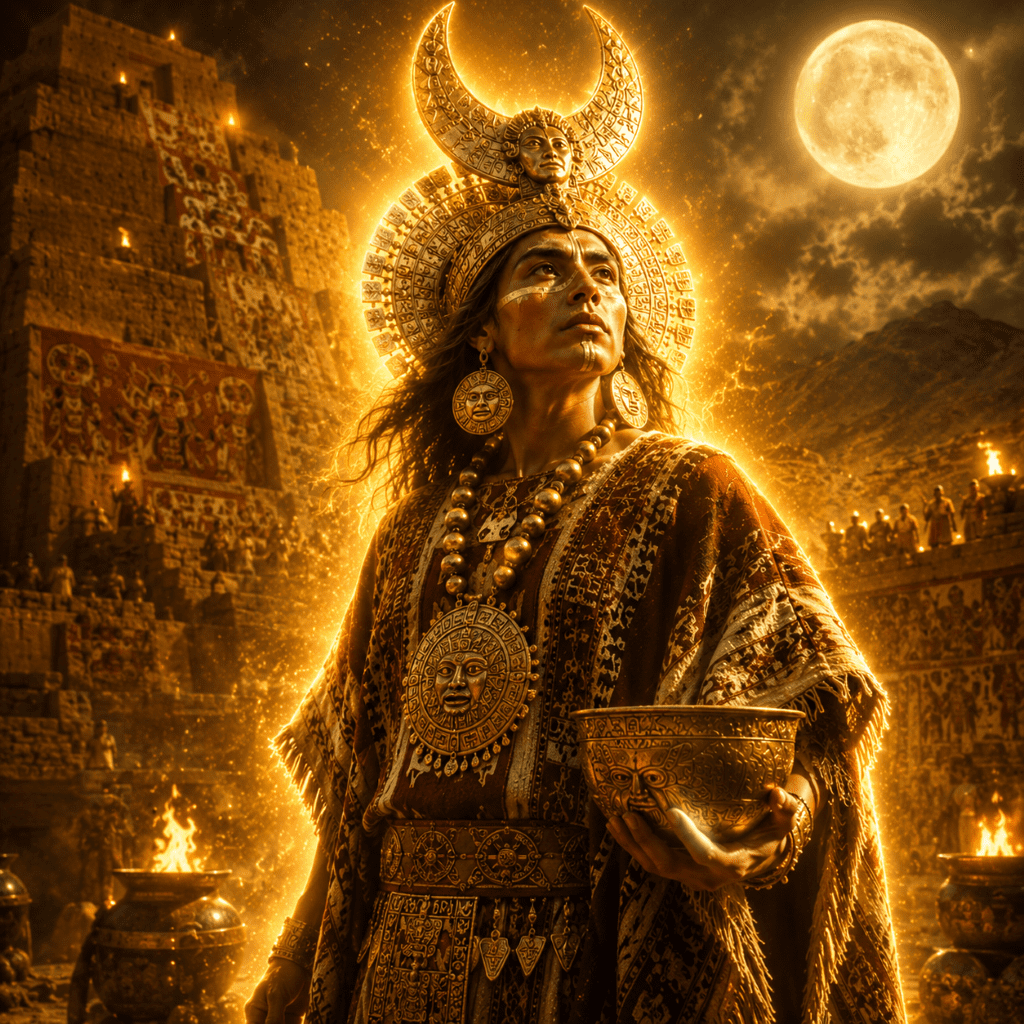
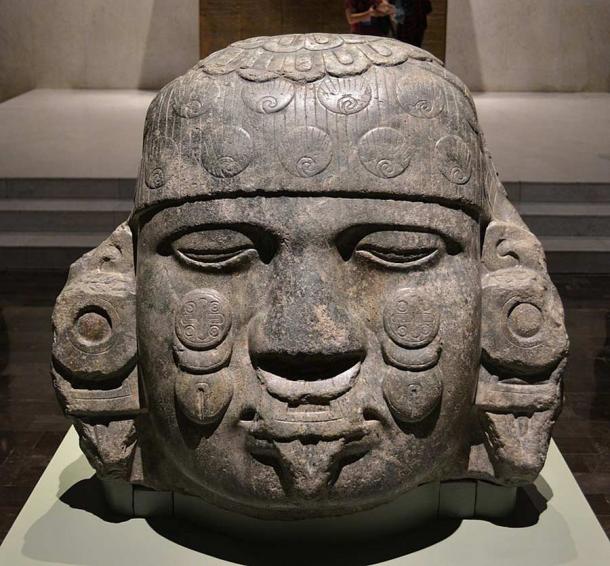
Unlike many mythological figures whose appearances are described in written legends, Si has no universally accepted visual representation. Since the Moche civilization did not develop a writing system, scholars rely on artistic depictions found on ceramics, murals, and temple walls to identify their deities. As a result, assigning a specific image to Si remains challenging.
Many researchers believe Si may have been represented with an intentionally ambiguous or androgynous appearance, reflecting the moon’s changing phases and its role as a force that transcended simple human categories. Rather than emphasizing a distinct human form, Moche artists often used lunar symbolism to express the deity’s identity.
Silver was closely associated with Si because its cool, reflective surface resembled moonlight. This contrasted with gold, which symbolized the sun. Some artistic representations linked to lunar worship also feature radiant motifs surrounding the figure, although scholars continue to debate whether these images depict Si specifically or another supernatural being. This uncertainty highlights both the richness and the mystery of Moche religious art.
Family
Very little is known about Si’s family or relationships within the Moche pantheon. Unlike Greek or Norse mythology, which preserved detailed genealogies of their gods, Moche mythology survives almost entirely through archaeology rather than written narratives.
Some modern interpretations compare Si with Ai Apaec, one of the most prominent figures in Moche religion, suggesting that the two deities may have represented complementary cosmic forces. However, there is no archaeological evidence confirming that they were relatives, spouses, or rivals. Such connections remain speculative.
Instead of emphasizing divine family trees, Moche religion appears to have focused on maintaining balance between natural forces. Deities represented the cycles that sustained life, including agriculture, fertility, rainfall, fishing, and seasonal change. Within this worldview, Si functioned as one of the principal powers governing the order of the universe rather than as part of a clearly defined divine lineage.
Other names
The moon deity is most commonly known today as Si, although variations such as Shi and Siwa occasionally appear in academic literature discussing the Muchik (Yunga) language spoken by the Moche and later Chimú peoples. These spellings largely reflect differences in linguistic reconstruction rather than distinct mythological identities.
Some scholars have suggested that the name may have been connected to a Muchik word implying wisdom or all-encompassing knowledge, although this interpretation remains uncertain. Likewise, modern descriptions sometimes refer to Si as either a moon goddess or an androgynous moon deity because the surviving archaeological evidence does not clearly establish the deity’s gender. Despite these variations, Si remains the standard name used by historians, archaeologists, and mythology scholars when referring to the supreme lunar deity of Moche mythology.
Powers and Abilities
Si’s influence extended across nearly every aspect of Moche life. Living on Peru’s arid northern coast meant that successful farming depended on predictable environmental cycles, making the moon’s perceived control over nature essential for survival.
The deity was believed to govern the changing seasons, weather patterns, and storms that affected agriculture. Because irrigation sustained Moche civilization, maintaining harmony with these natural forces carried enormous religious significance. Si was also closely associated with fertility, symbolizing both the renewal of crops and the continuation of human life.
The moon’s connection with the ocean made Si especially important to fishing communities. Coastal waters supplied much of the Moche diet, and lunar cycles naturally influenced tides and marine activity. This strengthened the belief that Si protected fishermen and regulated the sea itself.
Beyond controlling nature, Si also served as a guardian of time. Lunar phases provided a reliable calendar for scheduling ceremonies, agricultural activities, and communal rituals. In this way, Si helped establish the rhythm of both religious and civic life. The deity’s authority over celestial cycles reinforced the legitimacy of priests and rulers, who organized festivals and ceremonies according to the movements of the moon.
Modern Day Influence
Although the Moche civilization disappeared over a thousand years ago, Si continues to play an important role in understanding ancient Peru. Archaeological discoveries have transformed the study of Moche religion, allowing researchers to reconstruct aspects of a belief system that was never written down.
The ceremonial complex of Huaca de la Luna remains one of Peru’s most significant archaeological sites. Its murals, architecture, and ritual spaces provide valuable insight into Moche religious practices and demonstrate the importance of lunar worship within the civilization.
Museums around the world preserve thousands of Moche ceramics depicting ritual scenes, supernatural beings, and celestial symbols. These artworks continue to shape scholarly debates about Si’s identity and the broader structure of Moche mythology.
Si also stands out in comparative mythology because the Moche elevated the moon above the sun, reversing a pattern found in many other ancient civilizations. This distinctive worldview has attracted growing interest from historians, archaeologists, and mythology enthusiasts alike, making Si one of the most fascinating deities of pre-Columbian South America.
Related Images

Source
Cartwright, M. (2014, August 19). Moche civilization. World History Encyclopedia. https://www.worldhistory.org/Moche_Civilization
History Hit. (2022, August 25). Who were the Moche, northern Peru’s ancient civilisation? History Hit. https://www.historyhit.com/who-were-the-moche-northern-perus-ancient-civilisation
McEwan, G. F. (1998). The Incas: New perspectives. W. W. Norton.
Reisner, G. A. (n.d.). Moche religion. Retrieved 2026, June 30, from http://moche.tripod.com/Moche_Rel.html
Study.com. (n.d.). The Moche civilization’s religion & culture. Study.com. Retrieved 2026, June 30, from https://study.com/academy/lesson/moche-religion-culture-writing.html
World History Encyclopedia. (n.d.). Si (Moche mythology). In Godchecker: Encyclopedia of gods. Retrieved 2026, June 30, from https://www.godchecker.com/inca-mythology/SI/
Quilter, J. (2002). The Moche of ancient Peru: Media and messages. Peabody Museum Press.
Donnan, C. B. (1978). Moche art of Peru: Pre-Columbian symbolic expression. UCLA Museum of Cultural History.
Benson, E. P. (2012). The world of the Moche. Dumbarton Oaks Research Library and Collection.
Frequently Asked Questions
Who is Si in Moche mythology?
Si is the supreme moon deity of Moche mythology, believed to govern the moon, seasons, weather, fertility, tides, and agricultural cycles.
Why was Si considered more powerful than the sun?
The Moche believed the moon was more powerful because it could be seen during both the day and the night, giving it greater influence over the natural world than the sun.
Was Si a god or a goddess?
The surviving archaeological evidence is inconclusive. Some scholars interpret Si as a moon goddess, while others describe the deity as androgynous or gender-neutral.
What powers did Si possess?
Si was believed to control the seasons, storms, tides, fertility, agriculture, fishing, and the lunar calendar that regulated religious ceremonies.
How do historians know about Si?
Since the Moche left no written records, historians reconstruct Si’s role through archaeological evidence, including temple murals, ceramics, metalwork, and ceremonial sites such as Huaca de la Luna.
