Moche Mythology
Moche mythology refers to the religious beliefs and supernatural narratives reconstructed from the art, architecture, ceramics, metalwork, and archaeological remains of the ancient Moche civilization of northern Peru. Flourishing along Peru’s North Coast from approximately 200 to 850 CE, the Moche created one of the most visually sophisticated artistic traditions in pre-Columbian South America. Because the Moche left no known surviving written mythology, much of what is understood about their religious world comes from recurring images and scenes preserved on vessels, murals, temples, ornaments, and other archaeological objects. These works reveal a world populated by humans, supernatural beings, animals, warriors, and powerful forces associated with sacrifice, warfare, fertility, water, and the natural environment.
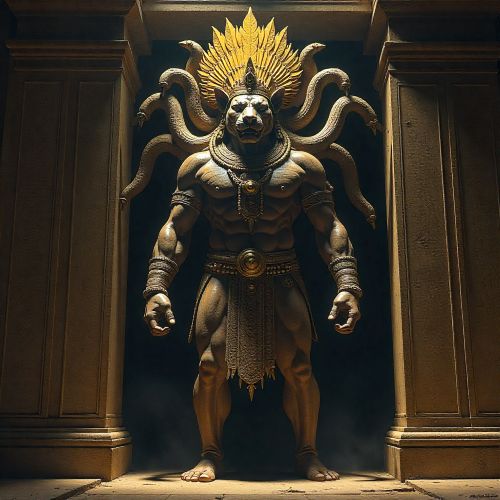
Among the best-known figures in Moche iconography is the Decapitator, a supernatural figure frequently shown holding a trophy head and a ceremonial crescent-bladed knife known as a tumi. The figure sometimes displays features associated with spiders, including radiating forms interpreted by scholars as spider legs. The exact identity and meaning of the Decapitator remain subjects of scholarly discussion, and interpretations of the imagery range from associations with sacrifice and predation to seasonal and water-related symbolism.
Another important supernatural figure is commonly identified in modern scholarship as Ai Apaec, although the original Moche names of individual supernatural figures are not known with certainty. Moche artists repeatedly represented powerful beings combining human and animal characteristics, including feline, serpent, bird, owl, and other features. Figures such as the Wrinkle Face supernatural being appear in scenes involving combat, sacrifice, ritual, and interactions with other supernatural creatures. The recurrence of these figures across different forms of Moche art suggests that they were part of an interconnected religious and symbolic system, although the exact stories associated with them have largely been lost.
Ritual sacrifice was an important element of Moche religious life and is represented extensively in their art. The famous Sacrifice Ceremony depicts elaborately dressed figures involved in the presentation of human victims, while archaeological excavations have uncovered evidence of actual ritual sacrifice. At Huaca de la Luna, for example, archaeologists discovered the remains of numerous sacrificed individuals. These discoveries demonstrate that at least some of the violent rituals represented in Moche art were enacted in the physical world, although their precise religious, political, and environmental purposes remain subjects of scholarly interpretation.
The natural world also played an important role in Moche religious imagery. Mountains, rivers, the ocean, agricultural landscapes, and animals appear repeatedly in their visual narratives. Marine creatures were especially significant to communities living along the Pacific coast, while agricultural life depended upon water arriving from the Andes. Moche artists represented animals such as owls, spiders, felines, snakes, birds, and marine creatures in both naturalistic and supernatural forms. Their precise symbolic meanings are not always known, reminding us that Moche mythology must be reconstructed carefully from archaeological evidence rather than treated as a fully preserved body of written stories.
Today, Moche mythology survives primarily through the archaeological heritage of northern Peru. Monumental sites such as Huaca de la Luna, along with thousands of decorated ceramics, murals, textiles, and metal objects, provide remarkable evidence of the religious imagination of Moche society. Although many of the original stories behind these images have been lost, archaeologists and historians continue to reconstruct aspects of the Moche supernatural world by comparing recurring characters, symbols, rituals, and archaeological contexts. Moche mythology therefore offers a rare glimpse into an ancient Andean culture where art, ritual, political authority, and the supernatural world were deeply interconnected.