

Vali : The Indian Vanara King Who Could Not Defeat Destiny
At a glance
The Mythlok Perspective
In Mythlok’s Perspective, Vali stands alongside figures like Heracles and Cú Chulainn as one of mythology’s greatest warriors, but his legacy is far more morally complex. His unmatched strength never truly fails him, his judgment does. Unlike heroes who fall to stronger enemies, Vali is undone by pride, anger, and the inability to see justice beyond his own perspective. That is why his story continues to resonate. The debate over Rama’s actions is really a debate about leadership itself: should justice always be direct, or can extraordinary circumstances demand extraordinary choices? Vali’s life reminds us that true greatness is measured not only by power, but by the wisdom to wield it responsibly.
Vali (Bali)
Introduction
Vali, also known as Bali, is one of the most powerful and complex characters in the Ramayana. As the king of Kishkindha and the son of Indra, he was blessed with extraordinary strength that made him nearly invincible in battle. His courage, leadership, and victories over powerful enemies earned him immense respect among the Vanaras, the forest-dwelling beings who became crucial allies of Rama.
Despite his heroic reputation, Vali’s story is remembered as much for his tragic flaws as for his unmatched strength. A bitter misunderstanding with his younger brother Sugriva led to a family conflict that eventually drew Rama into the affairs of Kishkindha. Rama’s decision to kill Vali from concealment remains one of the most debated episodes in Hindu mythology, prompting centuries of discussion about justice, kingship, and the true meaning of dharma. Through his rise and fall, Vali embodies the idea that even the mightiest rulers must remain accountable to righteousness.
Physical Traits
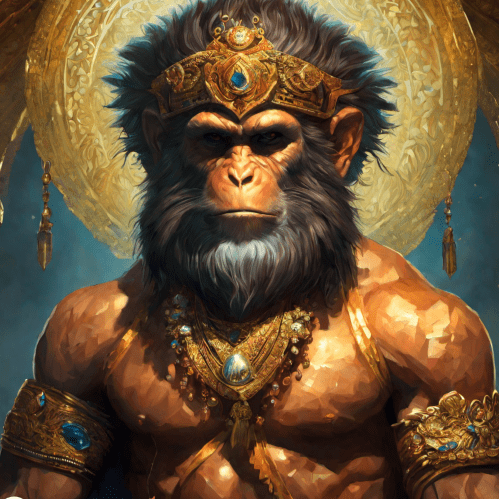
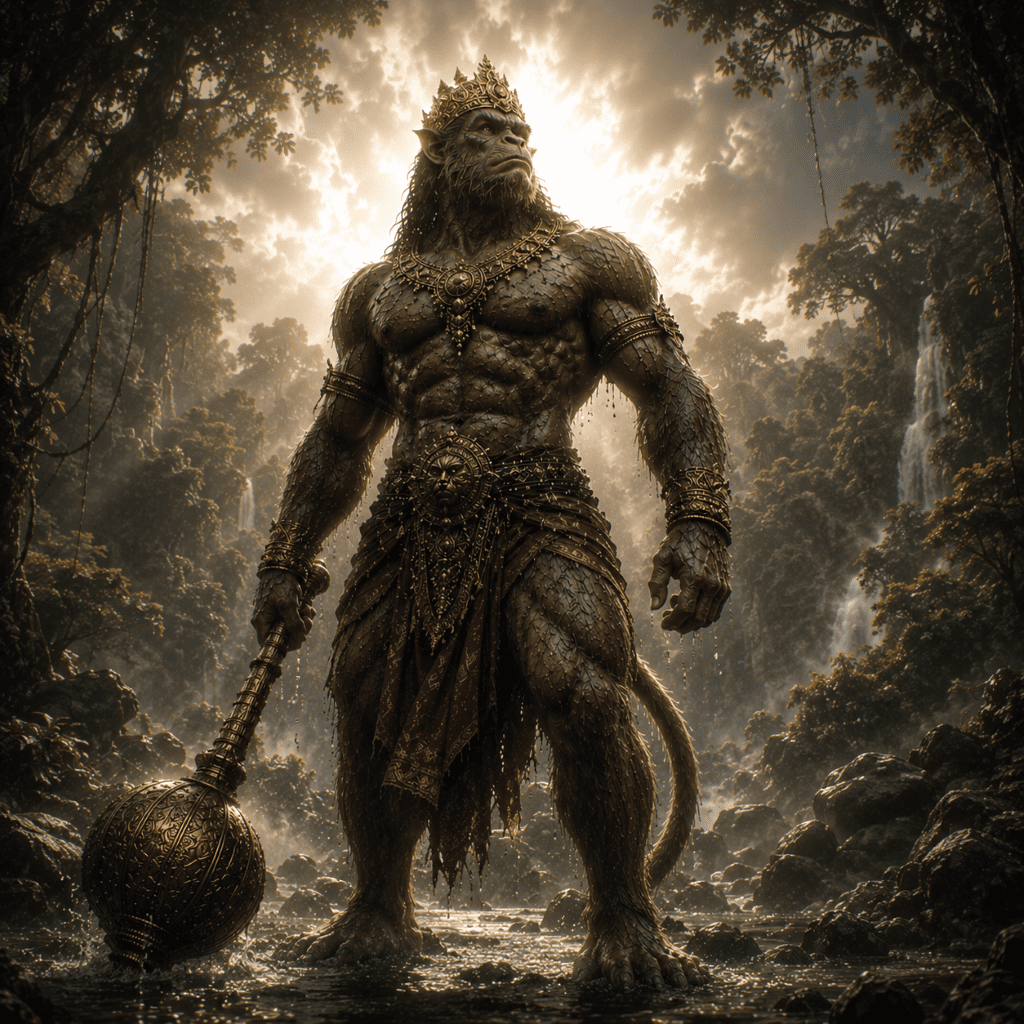
Vali possessed a commanding presence that reflected both his royal status and divine heritage. The Valmiki Ramayana describes him as an immensely powerful Vanara with a radiant appearance and exceptional physical strength. His muscular build, remarkable agility, and boundless stamina allowed him to perform feats that few beings could match.
One of his defining features was the celestial golden garland gifted by his father, Indra. More than a royal ornament, the garland enhanced his vitality in battle and symbolized his divine lineage. Combined with his natural strength, it made him one of the most formidable warriors in the epic.
Vali’s immense power is demonstrated when he kills the demon Dundubhi and hurls the massive corpse so far that it lands near the hermitage of Sage Matanga. This feat not only showcases his incredible strength but also sets in motion events that later shape Sugriva’s exile. Throughout the Ramayana, Vali is portrayed as a warrior whose physical abilities were unmatched among the Vanaras.
Family
Vali’s origins are closely tied to the divine creation of the Vanaras. According to the Valmiki Ramayana, the first Vanara, Riksharaja, underwent a miraculous transformation after entering a celestial lake. During this event, the divine energies of Indra and Surya gave rise to two extraordinary children. From Indra’s energy was born Vali, while Sugriva was born from the energy of Surya. Although they were sons of different gods, the brothers were raised together by Riksharaja.
As the elder brother, Vali inherited the throne of Kishkindha and ruled with confidence and authority. Sugriva served as his trusted companion until a misunderstanding involving the demon Mayavi drove the brothers apart. Believing that Sugriva had abandoned him, Vali exiled his younger brother and claimed Sugriva’s wife, Ruma. This act was later regarded by Rama as a serious violation of dharma.
Vali’s wife, Tara, is one of the wisest queens in the Ramayana. She repeatedly urged her husband to avoid unnecessary conflict with Sugriva and warned him that Rama’s presence could alter the outcome of their dispute. Although Vali respected Tara’s intelligence, he ignored her advice.
Their son, Angada, inherited both courage and leadership. After Vali’s death, Angada became one of Rama’s most trusted Vanara commanders and played an important role during the search for Sita and the war against Ravana.
Other names
Vali is widely known by the alternate name Bali, particularly in many Indian languages and regional retellings of the Ramayana. In Sanskrit, his name is written as Vāli (वाली), while “Bali” became the more common pronunciation in several vernacular traditions.
As the Ramayana spread beyond India, Vali’s name evolved to suit local languages while preserving his identity. Indonesian versions often refer to him as Subali, while Thai, Khmer, Lao, and Malay adaptations feature similar variations. Despite these linguistic differences, he consistently appears as the mighty Vanara king whose extraordinary strength and tragic fate remain central to the story.
Powers and Abilities
Vali’s greatest advantage in battle came from a divine boon granted by Brahma. The boon allowed him to absorb half the strength of any opponent who confronted him directly. As his enemy weakened, Vali grew correspondingly stronger, making him almost impossible to defeat in a conventional duel.
His immense physical power was complemented by exceptional speed, agility, endurance, and mastery of hand-to-hand combat. He effortlessly defeated powerful adversaries, including the demon Dundubhi, and was regarded as the greatest warrior among the Vanaras.
Vali also benefited from the celestial golden garland bestowed upon him by Indra. While the Ramayana does not portray the garland as granting immortality, it enhanced his vitality and reinforced his formidable presence in battle.
Later Ramayana traditions further elevate Vali’s reputation by recounting his encounter with Ravana. In these versions, Vali subdues the future king of Lanka with ease, demonstrating that even one of mythology’s greatest warriors could not match the Vanara king’s strength. Although this episode does not appear in the earliest recension of the Valmiki Ramayana, it became popular in several regional retellings and helped cement Vali’s legendary status.
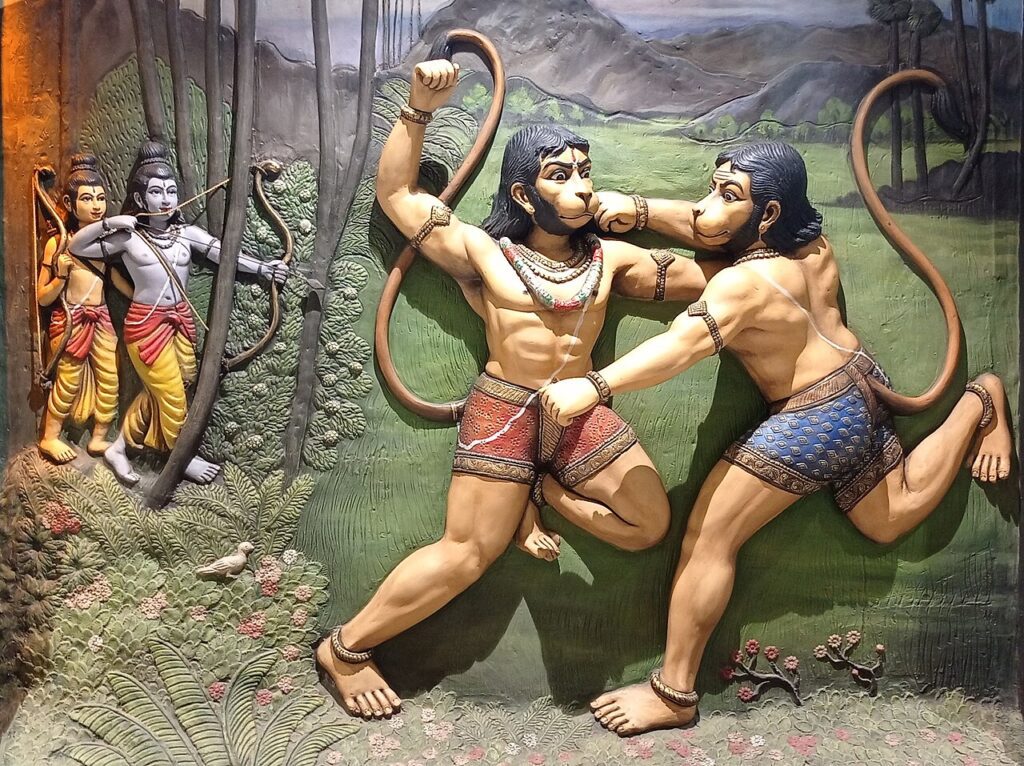
Because of Brahma’s boon, Rama chose not to engage Vali in direct combat. Instead, he struck him with an arrow while Vali fought Sugriva. Rama later defended his decision by arguing that Vali had violated dharma by taking his brother’s wife and abusing his royal authority. Their dialogue after the battle remains one of the Ramayana’s most profound discussions on justice and kingship.
Modern Day Influence
Vali continues to be one of the most recognizable figures in Ramayana traditions across South and Southeast Asia. His story is regularly performed in Ramlila, Kathakali, Yakshagana, and numerous regional theatre traditions, where his duel with Sugriva and his final conversation with Rama form some of the most emotionally charged scenes.
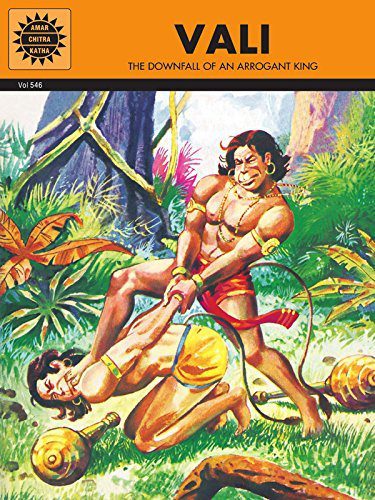
Beyond live performances, Vali appears in television serials, animated adaptations, graphic novels, children’s books, and the popular Amar Chitra Katha comics. These retellings often emphasize both his extraordinary strength and the consequences of allowing pride to overshadow wisdom.
His story also occupies an important place in academic discussions of Hindu philosophy. Scholars continue to examine the ethical questions surrounding Rama’s actions, exploring themes such as just warfare, royal responsibility, punishment, and the complexities of dharma. Rather than offering simple answers, the episode invites readers to consider how justice should be applied when personal duty, political authority, and moral law come into conflict.
Across India and much of Southeast Asia, Vali remains a symbol of heroic strength tempered by human imperfection. His life reminds audiences that even the greatest warriors are ultimately judged not only by their victories but also by the choices they make.
Related Images



Source
Apam‑Napat. (2024). Vali – The king of monkeys – Indian mythology. Retrieved June 30, 2026, from https://apam-napat.com/vali/
Amar Chitra Katha Editorial. (2022, July 5). Vali and Sugriva. Amar Chitra Katha. Retrieved June 30, 2026, from https://www.amarchitrakatha.com/mythologies/vali-and-sugriva/
Goldman, R. P. (Trans.). (1984). The Ramayana of Valmiki: An epic of ancient India, Volume III: Aranyakāṇḍa (and relevant Kishkindhā material). Princeton University Press.
Litcharts. (2017). Vali: Character analysis in The Ramayana. LitCharts. Retrieved June 30, 2026, from https://www.litcharts.com/lit/the-ramayana/characters/vali
Sattar, A. (2018). The Ramayana: A shortened modern prose version. Penguin Books.
Thapar, R. (2002). The Ramayana: A historical perspective. In R. Thapar, Early India: From the origins to AD 1300 (pp. 253–270). University of California Press.
“Vali (Ramayana).” (n.d.). In Wikipedia. Retrieved June 30, 2026, from https://en.wikipedia.org/wiki/Vali_(Ramayana)
Narayan, R. K. (1972). The Ramayana: A Shortened Modern Prose Version of the Indian Epic. Penguin Classics.
Menon, R. (2001). The Ramayana. HarperCollins.
Frequently Asked Questions
Who was Vali in the Ramayana?
Vali, also known as Bali, was the mighty Vanara king of Kishkindha, the son of Indra, and the elder brother of Sugriva. He was one of the strongest warriors in the Ramayana.
Why did Rama kill Vali from hiding?
Rama believed Vali had violated dharma by taking Sugriva’s wife and abusing his authority as king. Since Vali also possessed a boon that made direct combat nearly impossible, Rama chose to strike him from concealment.
What boon did Vali receive?
Vali received a boon from Brahma that allowed him to absorb half the strength of anyone who fought him face-to-face, making him nearly invincible in battle.
Was Vali stronger than Ravana?
According to several later Ramayana traditions, Vali defeated Ravana in combat. However, this episode does not appear in the earliest version of the Valmiki Ramayana and belongs to later regional retellings.
Who became king after Vali's death?
After Vali’s death, his younger brother Sugriva became the king of Kishkindha, while Vali’s son Angada remained a respected prince and later served as one of Rama’s leading Vanara warriors.