


Samudra Manthan : The Churning of the Ocean of Milk
| Description | |
|---|---|
| Origin | Indian Mythology |
| Epics/Texts | Bhagavata Purana, Vishnu Purana, Mahabharata, Ramayana |
| Key Characters | Devas, Asuras, Vishnu, Shiva, Vasuki, Dhanvantari |
| Type of Event | Cosmic churning for Amrita |
| Symbolism | Duality of good/evil, Perseverance, Enlightenment |
Mythlok Perspective
In Mythlok’s View, Samudra Manthan represents more than a quest for the nectar of immortality. It is a story about transformation, where cooperation between opposing forces produces both extraordinary treasures and deadly poison. The churning reveals that creation and destruction can emerge from the same process, making the myth as much about confronting consequences as pursuing rewards. Similar ideas appear in other cultures, such as the Norse quest for the mead of poetry and Greek stories surrounding the pursuit of divine power. Yet Samudra Manthan differs in making the very process of cooperation between rivals the engine through which cosmic treasures, danger and renewal emerge.
Samudra Manthan
Introduction
Samudra Manthan, traditionally known as the Churning of the Ocean of Milk, is one of the most dramatic stories in Indian sacred literature. It brings devas and asuras together for a task neither side could accomplish alone: churning the cosmic Ocean of Milk to obtain Amrita, the nectar associated with immortality.
The story is far more than a contest for a magical drink. As the ocean is churned, unexpected things emerge, including extraordinary treasures, divine beings, the goddess Lakshmi and a deadly poison capable of destroying creation. Vishnu provides the crucial support needed to keep the cosmic process moving, while Shiva intervenes when the poison threatens the universe.
The power of Samudra Manthan lies in this contrast. The same process that produces wealth, beauty, health and immortality also produces destruction. In that sense, the myth presents transformation as something unpredictable: what lies hidden beneath the surface can include both extraordinary rewards and dangerous consequences. The episode remains one of the most recognisable narratives associated with Indian mythology and continues to appear in religious art, temple sculpture, literature, television, performance and popular culture.
Source Texts
Samudra Manthan does not belong to a single version of the tradition. Its story appears in several Sanskrit texts, with differences in emphasis, sequence and the treasures that emerge from the ocean. One of the most extensive accounts occurs in the Bhagavata Purana, Canto 8, particularly Chapters 5–12. These chapters cover the alliance between devas and asuras, the churning itself, Shiva’s encounter with the poison, the emergence of Lakshmi and Dhanvantari, and Vishnu’s appearance as Mohini.
The Vishnu Purana also contains an important account, while the Mahabharata and Ramayana preserve versions of the episode as well. Other Puranic traditions, including the Kurma Purana, also develop the story. This variation is important because the familiar modern list of the fourteen ratnas, or treasures, is not identical in every ancient source. Some texts enumerate different objects or combine certain appearances differently. Treating one popular list as universally fixed can therefore obscure the diversity of the tradition.
Key Characters
The story brings together some of the most important figures in Indian mythology. The devas and asuras are temporary allies despite being traditional rivals. Both want Amrita, giving them a shared objective even though their relationship remains fundamentally adversarial. Vishnu is central to the success of the undertaking. When Mount Mandara begins to sink into the ocean, Vishnu takes the form of Kurma, the cosmic tortoise, and supports the mountain. Later, when the asuras gain possession of Amrita, Vishnu appears as Mohini and takes control of its distribution.
Shiva enters the story when the churning releases Halahala, the deadly poison. He consumes it and holds it in his throat, becoming associated with the name Neelakantha, meaning “blue-throated.” Indra, king of the devas, is involved in the circumstances that lead to their loss of power in several versions, including the account involving the sage Durvasa. Vasuki, the serpent king, becomes the churning rope, while Mount Mandara serves as the churning rod. Dhanvantari, the divine physician, emerges carrying Amrita in the later stage of the episode. Other important figures and beings associated with the treasures include Lakshmi, Airavata, Uchchaishravas, Kamadhenu, the Apsaras, Varuni, Chandra and the Kaustubha jewel. The exact inventory varies between textual traditions.
Narrative Summary
The story begins with the devas weakened and unable to withstand the power of the asuras. In the Bhagavata Purana, the devas enter into an agreement with their rivals to churn the Ocean of Milk and recover Amrita. The enormous Mount Mandara is selected as the churning rod and Vasuki as the rope. The task proves impossible when the mountain begins to sink. Vishnu therefore assumes his Kurma form beneath the mountain, providing the foundation necessary for the churning to continue.
The process produces something neither side expected: Halahala, an immensely destructive poison. Its appearance threatens all existence, forcing the devas and asuras to seek Shiva’s help. Shiva consumes the poison and retains it in his throat, preventing it from spreading further. The churning then continues. A succession of extraordinary beings and treasures emerges from the cosmic ocean. Among them are Lakshmi, the goddess of prosperity; Airavata, the celestial elephant; Uchchaishravas, the divine horse; the Kaustubha jewel; celestial beings; and other objects of divine significance.
Eventually, Dhanvantari appears carrying the pot of Amrita. The asuras seize the nectar, threatening to claim immortality for themselves. Vishnu responds by assuming the form of Mohini, whose beauty and intelligence allow him to take possession of the nectar and distribute it to the devas. In the Bhagavata tradition, the episode continues with Svarbhanu, who disguises himself among the devas and drinks some of the nectar. Vishnu cuts him down, resulting in the figures later known as Rahu and Ketu. The churning therefore ends not simply with the discovery of Amrita, but with a restoration of the devas’ position and the continuation of cosmic order.
Symbolism
Samudra Manthan has inspired layers of interpretation because almost every major element of the story can be read symbolically. The Ocean of Milk can represent an immense, hidden reservoir from which both nourishment and danger emerge. The churning becomes an image of sustained effort: something valuable is not simply discovered but brought to the surface through struggle.
The mountain provides the axis around which the entire process operates, while Vasuki supplies the tension required to keep it moving. Kurma represents stability, creating a foundation beneath a process that would otherwise collapse. The appearance of Halahala before the treasures is particularly significant. Transformation does not immediately produce something desirable. The first result can instead be something destructive that must be confronted before progress can continue.
Shiva’s intervention introduces another dimension: power is not represented merely by conquest. His willingness to contain the poison becomes an image of sacrifice and responsibility. Modern spiritual interpretations often use the story as a metaphor for inner transformation. The ocean becomes the mind, the churning becomes disciplined effort, and the poison represents difficult emotions, attachments or unresolved conflicts that may surface before clarity is reached. These are interpretive readings rather than literal explanations offered uniformly by the ancient texts.
Comparative Mythology
Samudra Manthan can be compared with myths from other cultures that explore conflict, cooperation, cosmic transformation or the pursuit of extraordinary substances. Greek mythology contains several stories concerning struggles between divine generations, particularly the Titanomachy, in which Zeus and the Olympians battle the Titans for control of the cosmos. The comparison is useful at the level of cosmic conflict, although the stories have very different structures and meanings.
The Norse tradition offers another interesting parallel through the mythology surrounding the mead of poetry, a precious substance associated with extraordinary knowledge and pursued through deception and conflict.
There are also broader mythological patterns involving celestial battles, dangerous substances, magical treasures and attempts to obtain immortality. However, Samudra Manthan has a distinctive feature: opposing forces must cooperate to produce the desired result, only to become rivals again once the prize appears. Rather than claiming that these myths derive from one common story, comparative mythology is more useful here when it identifies recurring narrative concerns while preserving the cultural differences between them.
Cultural Impact
Few Indian myths have had an artistic afterlife as extensive as Samudra Manthan. Its imagery has travelled far beyond the texts in which the story is preserved. One of the most famous representations is the monumental Samudra Manthan relief at Angkor Wat in Cambodia, where devas and asuras are shown pulling the serpent around the mountain. The relief demonstrates the movement of Indian religious and artistic traditions across Southeast Asia and their incorporation into local sacred architecture.
The story also appears extensively in Indian temple sculpture, painting, devotional art and performance traditions. Vishnu as Kurma, Shiva as Neelakantha, Lakshmi’s emergence and the struggle over Amrita have all become recognisable visual subjects.
Samudra Manthan is also traditionally connected with the Kumbh Mela. According to the associated legend, drops of Amrita fell at Prayagraj, Haridwar, Ujjain and Nashik during the struggle over the nectar. These four locations subsequently became associated with the Kumbh tradition. This is a religious and mythological explanation for the sacred geography of Kumbh rather than a claim about the historical origin of the festivals themselves.
Modern Influence
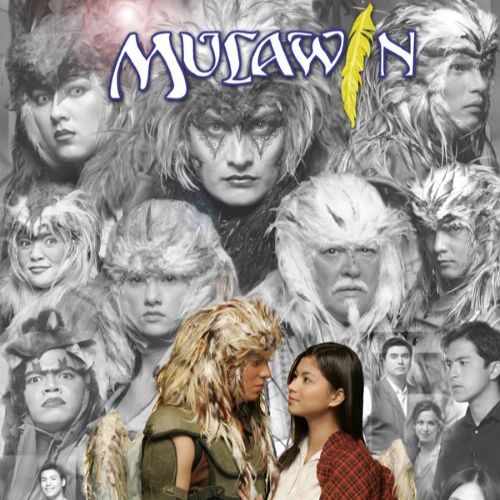
Samudra Manthan continues to evolve as a cultural story rather than remaining confined to religious literature. Television serials, animation, comics, illustrated books and digital media have repeatedly adapted the narrative, introducing characters such as Kurma, Mohini, Dhanvantari, Rahu and Shiva to new generations. Its visual structure also makes it particularly suitable for contemporary storytelling: a cosmic ocean, a mountain, an enormous serpent, divine treasures and a struggle over immortality provide an immediately recognisable narrative framework.
The metaphor has also entered modern intellectual and public discourse. The idea of “churning” is frequently used to describe periods of turbulence in which competing forces generate significant change. In this interpretation, the value of the metaphor lies not in suggesting that conflict is inherently beneficial, but in recognising that transformation can be messy, unpredictable and consequential.
Contemporary spiritual teachers likewise interpret Samudra Manthan as a story of self-examination. The poison becomes what must first be confronted, while Amrita represents the deeper understanding that emerges after sustained effort. What makes the myth endure is its refusal to present transformation as simple. The ocean does not yield its treasures easily. It produces poison before prosperity, conflict before resolution and cooperation that eventually collapses back into rivalry. Samudra Manthan therefore remains a powerful story about what happens when opposing forces are brought together and something hidden is forced to the surface.


Sources
Britannica. (2026, March 13). Samudra Manthana | Churning of the Ocean of Milk, Devas, Asuras.
https://www.britannica.com/topic/churning-of-the-ocean-of-milk
Divine Aarti. (2026, July 25). Samudra Manthan: The Churning of the Ocean | Complete Story.
https://www.divineaarti.com/blog-samudra-manthan
Times of India. (2024, December 3). The deeper meaning of Samudra Manthana: Symbolism and spiritual lessons from the churning of the ocean of milk. https://timesofindia.indiatimes.com/religion/hindu-mythology/the-deeper-meaning-of-samudra-manthana-symbolism-and-spiritual-lessons-from-the-churning-of-the-ocean-of-milk/articleshow/115925555.cms
Exotic India Art. (2008, November 15). Samudra Manthan: Spiritual Lessons from the Churning of the Ocean. https://www.exoticindiaart.com/article/samudramanthan/
Bhaktivedanta Swami Prabhupada, A. C. (1972). Śrīmad Bhāgavatam: Canto Eight – Chapters 1–12 (pp. 5–12: Samudra Manthan narrative). Bhaktivedanta Book Trust.
Wilson, H. H. (Trans.). (1864). The Vishnu Purana: A system of Hindu mythology and tradition (Book I, Chapters 9–10). Trübner & Co.
Mohan, C. R. (2013). Samudra Manthan: Sino-Indian rivalry in the Indo-Pacific. Oxford University Press.
Pathak, S., & Dwivedi, R. (2023). Samudra Manthan 2023: National Oceanography Scholars’ Meet. Journal of Geological Society of India, 99(12), 1783. https://doi.org/10.1007/s12594-023-2536-1
Frequently Asked Questions
What is Samudra Manthan?
Samudra Manthan is the traditional story of the Churning of the Ocean of Milk, in which devas and asuras work together to obtain Amrita, the nectar associated with immortality.
Why did Shiva drink the poison during Samudra Manthan?
When the churning produced the deadly Halahala poison, Shiva consumed it to prevent it from destroying creation. Because he held the poison in his throat, he became known as Neelakantha, or the blue-throated one.
What came out of Samudra Manthan?
The churning produced numerous divine beings and treasures, including Lakshmi, Dhanvantari, Airavata, Uchchaishravas, the Kaustubha jewel, celestial beings and Amrita. The exact list of the traditionally described treasures varies between texts.
Who used Mount Mandara and Vasuki in Samudra Manthan?
Mount Mandara was used as the churning rod and the serpent Vasuki as the rope. Vishnu appeared as Kurma, the tortoise, to support the mountain from below.
How is Samudra Manthan connected to Kumbh Mela?
A traditional Kumbh Mela legend says that drops of Amrita fell at Prayagraj, Haridwar, Ujjain and Nashik during the struggle over the nectar. These four places subsequently became associated with the Kumbh tradition.


