


God of War Ragnarök : The Norse Mythology Behind Kratos and Atreus
Mythlok Perspective
In Mythlok’s Perspective, God of War Ragnarök stands apart from adaptations that attempt to preserve mythology closely. Where a traditional retelling follows the Eddas, the game reshapes their gods and stories around fate, family and personal transformation. Its greatest strength is this balance between recognition and reinvention: Odin, Thor and Loki remain familiar, yet their journeys become distinctly modern. Compared with literal retellings, Ragnarök demonstrates how mythology can evolve without losing its power.
God of War Ragnarök
Introduction
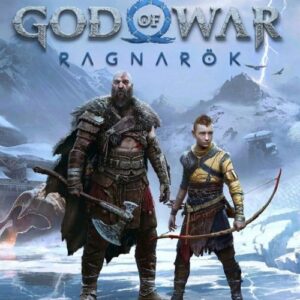
God of War Ragnarök is the second game in Santa Monica Studio’s Norse saga and the ninth main installment in the wider God of War series. Released on November 9, 2022, for PlayStation 4 and PlayStation 5, it continues the story of Kratos and his son Atreus as they confront the growing threat of Ragnarök. The PC version followed on September 19, 2024, developed with support from Jetpack Interactive.
Rather than simply retelling Norse mythology, God of War Ragnarök uses it as the foundation for a story about fate, family, grief and personal change. The result is a modern interpretation in which familiar gods, monsters and prophecies are reshaped around Kratos and Atreus. Fimbulwinter, the Nine Realms and the coming destruction of Asgard provide the mythological setting, while the emotional centre remains the relationship between a father trying to change and a son trying to understand who he is.
Game Overview
God of War Ragnarök is an action-adventure game built around exploration, close-quarters combat, environmental puzzles and character-driven storytelling. Players primarily control Kratos, using the Leviathan Axe, Blades of Chaos and a variety of shields, while Atreus becomes playable during specific sections of the story. The game expands considerably on the world introduced in God of War (2018), allowing players to explore all Nine Realms and encounter new environments, creatures and characters.
The story takes place during Fimbulwinter, the catastrophic winter that traditionally precedes Ragnarök. Kratos and Atreus travel across the realms seeking answers about prophecy while Odin and the forces of Asgard prepare for the final conflict. The game also introduces greater environmental variety, optional exploration and expanded combat abilities, giving players more freedom in how they approach encounters.
God of War Ragnarök became a major commercial success. It sold 5.1 million copies during its first week, making it the fastest-selling first-party launch in PlayStation history at the time. By November 19, 2023, it had sold more than 15 million copies worldwide across PS4 and PS5.
Mythological Inspirations
The mythology of God of War Ragnarök draws primarily from medieval Icelandic sources, especially the Poetic Edda and Prose Edda. The game uses figures such as Odin, Thor, Freya, Tyr, Heimdall, Freyr and Baldur alongside creatures including Jörmungandr, Fenrir and Surtr.
One important distinction is that the Poetic Edda is not a work compiled by Snorri Sturluson. The Prose Edda is associated with Snorri and was written in the 13th century, while the Poetic Edda is an anonymous collection preserved primarily in the Codex Regius. Together, these sources provide much of what is known about the surviving medieval Norse mythological tradition.
Ragnarök in traditional myth is a sequence of catastrophic events involving battles, natural disasters and the deaths of major gods. Odin is killed by Fenrir, Thor dies after defeating Jörmungandr, and the world is eventually renewed after destruction. God of War Ragnarök adapts these ideas but rearranges their chronology and meaning to create a character-focused narrative.
The game also incorporates Fimbulwinter, Yggdrasil, the Nine Realms and the prophetic roles of figures such as Sköll and Hati. However, its cosmology should be understood as an artistic reconstruction rather than a literal representation of surviving Norse texts.
Characters
Kratos remains the central figure of God of War Ragnarök, but his role is very different from that of the younger, vengeance-driven warrior seen in the Greek-era games. He is now a father attempting to prevent Atreus from repeating the destructive patterns that shaped his own life.
Atreus is revealed as Loki, reflecting one of the game’s most significant reinterpretations of Norse mythology. In traditional mythology, Loki is associated with the giantess Angrboda and has several monstrous children, including Fenrir, Jörmungandr and Hel. In the game, however, Atreus is the son of Kratos and the giantess Laufey, known as Faye, making the character’s identity deliberately different from the surviving myths.
Odin is presented as a calculating ruler whose desire for knowledge is inseparable from his fear of death and Ragnarök. Thor, meanwhile, becomes a tragic figure whose immense physical power is contrasted with emotional damage and his complicated relationship with Odin.
Freya’s story centres on grief, anger and eventual transformation following Baldur’s death. Tyr, Freyr, Heimdall and other mythological figures are similarly reworked to serve the game’s broader themes. Brok and Sindri are inspired by the dwarf smiths Brokkr and Eitri of Norse tradition, while Angrboda is reimagined as a young giantess who becomes important to Atreus’s understanding of his heritage.
Symbolism & Gameplay Mechanics
The weapons of God of War Ragnarök carry meaning beyond their combat functions. The Leviathan Axe connects Kratos to Faye and his new life in the Norse realms, while the Blades of Chaos remain a physical reminder of his Greek past. The Draupnir Spear, created with the help of the dwarves, represents a new stage in Kratos’s development: a weapon he chooses and learns to use rather than one inherited from his violent history.
The central symbolic conflict is between fate and choice. Prophecies appear to establish what Kratos, Atreus and other characters are destined to become, yet the story repeatedly questions whether knowing a future makes it inevitable. The Norns reinforce this idea by suggesting that characters are not simply trapped by fate but are often trapped by their own predictable behaviour.
Gameplay supports this theme through progression and cooperation. Atreus’s increasing independence changes his relationship with Kratos, while combat encourages players to combine different weapons, abilities and defensive techniques. Exploration also turns mythology into something interactive, with ruins, murals, creatures and environmental details gradually expanding the player’s understanding of the Nine Realms.
The Valhalla DLC, released for free in December 2023, continues this symbolic journey. It functions as an epilogue in which Kratos confronts aspects of his Greek past, making the expansion less a continuation of the main conflict than a reflection on guilt, identity and redemption.
Cultural Impact
God of War Ragnarök became one of the most influential modern adaptations of Norse mythology in popular entertainment. Its success introduced millions of players to names, creatures and concepts drawn from medieval Scandinavian tradition, even though the game substantially changes their original stories.
Its cultural impact also comes from its treatment of themes that extend beyond mythology. Kratos’s relationship with Atreus turns the familiar heroic journey into a story about fatherhood, emotional restraint and breaking cycles of violence. Characters such as Thor and Odin similarly challenge simplified ideas of mythological heroism by presenting power as something complicated by fear, family and responsibility.
The game was also recognised extensively at The Game Awards 2022, winning six awards, including Best Narrative, Best Action/Adventure, Best Score and Music, Best Audio Design, Best Performance for Christopher Judge, and Innovation in Accessibility.
Its continued popularity demonstrates how mythology can remain culturally relevant when ancient material is adapted around contemporary emotional concerns. God of War Ragnarök does not function as a historical guide to Norse religion, but it can serve as a gateway into the myths that inspired it.
Creative Liberties
The most obvious creative liberty is Kratos himself. He is not a figure from Norse mythology and his presence transforms the traditional Ragnarök narrative into a story seen through the perspective of an outsider god.
The game also significantly changes Loki. Traditional Loki is not the son of Odin or a Greek god; his parentage and relationships differ from the game’s version of Atreus. Similarly, the game creates a new connection between Atreus and Fenrir, Jörmungandr and other mythological figures that allows familiar myths to become part of his personal story.
The treatment of Ragnarök is equally inventive. The surviving Norse sources describe a cosmic catastrophe in which the world is devastated and major gods die. The game instead concentrates the destruction largely around Asgard while allowing other realms and characters to continue beyond the battle.
Fenrir and Garm provide another clear example. In Norse mythology they are distinct figures, whereas the game connects them through the transfer of Fenrir’s soul into Garm. This is a narrative invention rather than a feature of the original mythology.
These departures are not mistakes in the context of the game. God of War Ragnarök is deliberately a reinterpretation. Its achievement lies in taking recognizable mythological structures and transforming them into a story about choice, consequence and identity. It preserves enough of the original mythology to remain recognisable while changing enough to create a distinctly modern mythic world.
Sources
Barlog, C. (2018). Examining ‘God of War’s’ reinterpretation of Norse mythology. Variety. https://variety.com/2018/gaming/features/god-of-war-norse-mythology-1202823019/
CBR. (2024). How God of War Ragnarök compares to actual Norse mythology. https://www.cbr.com/god-of-war-ragnarok-compares-actual-norse-mythology/
GameSpot. (2022). Best of 2022: God of War Ragnarök’s twist on Norse mythology is an excellent subversion. https://www.gamespot.com/articles/god-of-war-ragnaroks-twist-on-norse-mythology-is-an-excellent-subversion/1100-6510121/
GamePressure. (2022). God of War Ragnarok: Protagonists and antagonists. https://www.gamepressure.com/god-of-war-ragnarok/protagonists-and-antagonists/z5100c1
God of War Wiki. (2025). God of War Ragnarök. Fandom. https://godofwar.fandom.com/wiki/God_of_War_Ragnar%C3%B6k
God of War Wiki. (2025). Ragnarök. Fandom. https://godofwar.fandom.com/wiki/Ragnar%C3%B6k
Screen Rant. (2022). How GoW Ragnarök’s story is different from actual mythology. https://screenrant.com/god-war-ragnarok-mythology-accuracy-kratos-loki-odin/
Wikipedia. (2025). God of War Ragnarök. https://en.wikipedia.org/wiki/God_of_War_Ragnar%C3%B6k
Frequently Asked Questions
What mythology is God of War Ragnarök based on?
God of War Ragnarök is primarily based on Norse mythology, drawing inspiration from sources including the Poetic Edda and Prose Edda. It features gods, giants, creatures and cosmological concepts from medieval Scandinavian tradition but substantially reinterprets them.
Is God of War Ragnarök based on the real Ragnarök?
God of War Ragnarök is inspired by the Norse myth of Ragnarök, but it is not a direct retelling. The game changes the chronology, relationships and outcomes of many mythological events to fit the story of Kratos and Atreus.
Is Atreus really Loki in Norse mythology?
No. Atreus is a fictional character created for the God of War series. The game reimagines him as Loki, but his parentage and personal history differ substantially from traditional Norse mythology.
Are Odin and Thor accurate in God of War Ragnarök?
Odin and Thor retain important characteristics from Norse mythology, but their personalities, relationships and story arcs are heavily fictionalised. The game presents its own interpretations of both gods rather than historically accurate portrayals.
What happens to Ragnarök in God of War Ragnarök?
The game reinterprets Ragnarök as a conflict centred on the destruction of Asgard and the defeat of Odin. Unlike the traditional myth, its conclusion leaves several realms and major characters alive, reflecting the game’s themes of choice, survival and renewal.


