


Mundilfari : The Norse Father of the Sun and Moon
At a glance
| Description | |
|---|---|
| Origin | Norse Mythology |
| Classification | Mortals |
| Family Members | Sól, Máni (Children), Glenr (Son-in-law) |
| Region | Norway, Sweden, Denmark, and parts of Iceland |
| Associated With | Celestial cycles, Ancestry of the Sun and Moon |
The Mythlok Perspective
In Mythlok’s Perspective, Mundilfari demonstrates that mythology often reserves its greatest influence for characters who remain almost invisible. Unlike Odin, who shapes destiny through action, Mundilfari shapes it through lineage. His story suggests that true significance sometimes lies not in personal glory but in the generations that carry one’s legacy across the heavens. In many ways, he reminds us that the foundations of a civilisation are often laid by figures history barely remembers. His quiet presence reinforces a timeless truth: those who shape the future are not always the ones who stand at its centre.
Mundilfari
Introduction
Mundilfari is one of the most mysterious figures in Norse mythology. Although he appears only briefly in the surviving Old Norse texts, his place in the cosmic story is surprisingly important. He is best known as the father of Sól, the personification of the Sun, and Máni, the personification of the Moon. Through his children, Mundilfari becomes directly connected to the creation of the daily cycle that governs life across the Nine Realms.
His name is recorded in both the Poetic Edda, specifically Vafþrúðnismál, and Snorri Sturluson’s Prose Edda, Gylfaginning. These works preserve the earliest surviving references to him and establish his role within Norse cosmology. Despite this, they reveal very little about his own life, leaving scholars to piece together his significance through his relationship with his children.
The meaning of the name Mundilfari remains debated. Many linguists associate it with movement, turning, or travelling according to fixed times, making it closely connected with the orderly motion of the heavens. This interpretation fits perfectly with the myth in which his children become the celestial beings responsible for marking day, night, and the passage of time.
Some modern writers classify Mundilfari as a giant (jötunn), but the surviving Eddic sources never explicitly identify him as one. As a result, his exact race remains uncertain, making him one of the more enigmatic characters in Norse mythology.
Physical Traits
The surviving Norse sources provide no physical description of Mundilfari. Unlike Odin, Thor, or Loki, whose appearances and equipment are occasionally described, Mundilfari exists almost entirely through his genealogical role.
No ancient text mentions his height, clothing, age, weapons, or distinctive features. There are also no known archaeological depictions or medieval illustrations that can confidently be identified as representing him. His absence from visual descriptions reflects his limited role in surviving myths rather than a lack of importance.
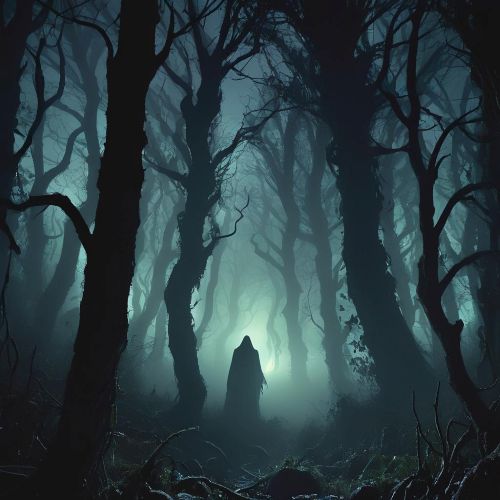
Because the Eddas remain silent about his appearance, modern artistic interpretations vary considerably. Some portray him as an elderly nobleman, while others imagine him as an ancient cosmic being. These depictions are entirely speculative and should not be considered part of the original Norse tradition. Instead of defining him through physical characteristics, the mythology presents Mundilfari as a symbolic ancestor whose importance lies in the cosmic legacy carried forward by his children.
Family
Mundilfari’s greatest importance comes from his family. According to both the Poetic Edda and the Prose Edda, he was the father of Sól and Máni, who would later become the divine drivers of the Sun and Moon. Snorri Sturluson explains that Mundilfari considered his children so exceptionally beautiful that he named them after the heavenly bodies themselves.
The gods viewed this act as excessively proud. In response, they took Sól and Máni from their earthly lives and assigned them permanent places in the sky. Sól was ordered to drive the chariot of the Sun across the heavens, while Máni became the guide of the Moon.
Sól’s chariot is pulled by the horses Árvakr and Alsviðr, whose speed carries the Sun across the sky each day. Máni, meanwhile, is accompanied by the children Bil and Hjúki, whom he rescued from Earth while they were drawing water from a well. Their story became one of the traditional Norse explanations for the markings visible on the Moon.
The Prose Edda also states that Sól was married to Glenr, although he plays no further role in the surviving myths. Interestingly, the Eddas never mention Mundilfari’s spouse, leaving the identity of Sól and Máni’s mother unknown.
Other names
Mundilfari’s name survives in several manuscript spellings, all referring to the same figure. The most common modern spelling is Mundilfari, while Old Norse manuscripts also preserve forms such as Mundilföri and Mundilfœri. These differences reflect variations in medieval spelling rather than separate identities.
Unlike many major Norse gods, Mundilfari is not known by numerous titles or poetic epithets. No surviving source assigns him honorific names or alternative identities. His name itself has attracted considerable scholarly attention. While there is no universally accepted translation, many experts interpret it as referring to someone who moves, turns, or travels according to fixed times. This interpretation aligns closely with his connection to the orderly movement of the Sun and Moon and reinforces his symbolic association with cosmic timekeeping.
Powers and Abilities
The surviving myths do not credit Mundilfari with supernatural abilities or heroic feats. He is never described fighting monsters, using magic, or possessing divine weapons. His importance instead comes from his place within the structure of Norse cosmology.
By fathering Sól and Máni, Mundilfari becomes the ancestor of the celestial beings responsible for regulating the passage of time. Their journeys across the sky determine the rhythm of day and night, making his family central to the Norse understanding of the natural world.
The story also carries a moral lesson about pride. Naming his children after the Sun and Moon was viewed by the gods as an act of excessive ambition. Rather than punishing Mundilfari directly, the gods transformed his children into cosmic servants whose movements would forever maintain the order of creation.
Although Mundilfari himself performs no supernatural acts, his descendants become indispensable to the functioning of the universe. His influence is therefore symbolic rather than magical, representing ancestry, cosmic order, and the origins of celestial time.
Modern Day Influence
Despite appearing only briefly in Norse mythology, Mundilfari continues to influence modern culture. His most notable legacy is found in astronomy. In 2000, astronomers discovered one of Saturn’s irregular retrograde moons and later named it Mundilfari, continuing the tradition of using names from Norse mythology for Saturn’s satellites. The naming reflects his association with celestial movement and cosmic cycles.
Mundilfari also appears regularly in academic discussions of Norse religion, particularly those examining early Scandinavian ideas about time, cosmology, and the personification of celestial bodies. His name is frequently analysed by linguists studying Old Norse etymology and the symbolic relationship between mythology and the movements of the heavens.
Within modern Ásatrú and other contemporary Norse pagan traditions, Mundilfari is occasionally remembered as a symbolic ancestor connected with the orderly progression of time rather than as an object of widespread worship. His role serves as a reminder that even relatively obscure figures helped shape the mythological explanation of the universe.
Today, although he remains overshadowed by Odin and Thor, Mundilfari continues to fascinate readers because his brief appearance reveals how deeply the Norse understood the Sun and Moon as living participants in the cosmic order.
Related Images



Source
Encyclopaedia Mythica. (n.d.). Mundilfari. https://pantheon.org/articles/m/mundilfari.html
NASA Science. (2017, December 4). Mundilfari. https://science.nasa.gov/saturn/moons/mundilfari/
Open Book Publishers. (2022). The Poetic Edda: Vafþrúðnismál. https://books.openbookpublishers.com/10.11647/obp.0308/ch3.xhtml
Simek, R. (2007). Dictionary of northern mythology (A. Hall, Trans.). D. S. Brewer.
Lindow, J. (2001). Norse mythology: A guide to the gods, heroes, rituals, and beliefs. Oxford University Press.
Byock, J. (Trans.). (2005). The prose Edda. Penguin Classics.
Orchard, A. (1997). Dictionary of Norse myth and legend. Cassell.
Bellows, H. A. (Trans.). (1936). The poetic Edda. The American-Scandinavian Foundation.
Wikipedia contributors. (2026). Mundilfari. In Wikipedia. Retrieved from https://en.wikipedia.org/wiki/Mundilfari
Kindred Asatru. (2026). Mundilföri: Father of the Sun and the Moon. Retrieved from https://kindredasatru.org/mundilfori
Frequently Asked Questions
Who is Mundilfari in Norse mythology?
Mundilfari is the father of Sól, the Sun, and Máni, the Moon. He appears in both the Poetic Edda and the Prose Edda and is associated with the origins of the celestial cycles.
Is Mundilfari a god?
No surviving Norse source explicitly describes Mundilfari as a god. In the Prose Edda, he is presented as the father of Sól and Máni, while his exact race is never clearly identified.
What does the name Mundilfari mean?
Although scholars disagree on its exact meaning, the name is generally linked with movement or travelling according to fixed times, symbolising the orderly progression of the heavens.
Why did the gods take Mundilfari's children?
According to Snorri Sturluson, the gods believed it was presumptuous for Mundilfari to name his children after the Sun and Moon. They therefore placed Sól and Máni in the sky to guide the celestial bodies.
Is there a moon named after Mundilfari?
Yes. One of Saturn’s irregular moons, discovered in 2000, is named Mundilfari in honour of the Norse mythological figure.


