


War of the Sun and Moon : The Mentawai Legend of a Celestial Battle
| Description | |
|---|---|
| Origin | Indonesian Mythology |
| Epics/Texts | Oral folklore |
| Key Characters | Sun, Moon, Stars, Humans |
| Type of Event | Cosmic battle |
| Symbolism | Balance of heat/coolness, Human aid |
Mythlok Perspective
In Mythlok’s View, the War of the Sun and Moon is more than a story about celestial rivalry. It reflects the struggle to restore balance when the forces that sustain life become destructive through excess. The Moon’s deception and the Mentawai people’s intervention suggest that intelligence and collective action can challenge even the greatest natural powers. Similar ideas appear in the Chinese legend of Hou Yi, where an archer shoots down nine suns to save the Earth from unbearable heat.
War of the Sun and Moon
Introduction
The War of the Sun and Moon is a traditional creation story from the Mentawai Islands, located off the western coast of Sumatra, Indonesia. It tells how two celestial women, the Sun and the Moon, became enemies after a deception involving their children. Their conflict eventually transformed the heavens and made life on Earth more bearable by reducing the Sun’s overwhelming heat.
Unlike many celestial myths that explain eclipses or the changing phases of the Moon, the Mentawai story focuses on the origins of the Sun, Moon, stars, and the intensity of daylight. It also gives humans an unusual role in cosmic history. Rather than leaving the conflict entirely to supernatural beings, the people themselves take up weapons and help the Moon defeat the Sun.
The story is particularly interesting because it connects astronomy with everyday survival. It reflects how the Mentawai people understood their natural environment through a narrative involving maternal rivalry, deception, warfare, and the restoration of balance.
Source Texts
The War of the Sun and Moon does not originate from a single ancient written scripture. It belongs to the oral storytelling traditions of the Mentawai people, an Indigenous community inhabiting the Mentawai Islands in West Sumatra. One documented version appears under the title The Story of Pasaggangan ‘Laggo Samba Sulu: The Origin of the Sun, the Moon, and the Stars. It was compiled by Irma Indriana Hariawang of Langitselatan, an Indonesian astronomy communication organisation, as part of the Stars of Asia project.
The account was subsequently shared through educational astronomy initiatives, including the 365 Days of Astronomy project. These publications help preserve traditional celestial stories while introducing audiences to the cultural ways different communities interpret the night sky. The Mentawai narrative should be distinguished from other Indonesian traditions involving celestial conflict. For example, Javanese eclipse folklore associates the disappearance of the Sun or Moon with Batara Kala attempting to swallow either celestial body. These are separate traditions with different explanations for astronomical events.
Key Characters
The Sun is one of the central characters in the story. She is a female celestial being and the mother of numerous little suns. Their combined heat makes the early world almost impossible for humans to inhabit. The Moon is another female celestial being and the mother of the stars. Unlike the Sun, she feels sympathy for humanity and becomes determined to make the world more comfortable. Her intelligence and willingness to deceive the Sun eventually change the balance of the heavens.
The little suns are the Sun’s children. Their presence creates excessive heat, forcing people to remain indoors during the afternoon and conduct their agricultural activities at night. The stars are the Moon’s children. They disappear temporarily when their mother hides them as part of her plan to deceive the Sun. Their eventual return exposes the deception and triggers the celestial battle.
The Mentawai people are more than observers of the conflict. They eventually manufacture poisoned arrows and join the Moon in her struggle against the Sun. Kina Manua represents the sacred sky to which the Mentawai people traditionally direct their prayers. Rather than worshipping the Sun, they seek favourable weather and prosperity through their relationship with the sky.
Narrative Summary
In the beginning, the Sun and Moon were living beings who resembled humans. Both were women, and each had numerous children. The Moon’s children became the stars, while the Sun’s children were little suns that accompanied their mother across the heavens. The presence of so many suns made the world unbearably hot. People struggled to work outdoors during the afternoon, animals had to remain confined, and agricultural activities were largely restricted to nighttime. The Moon felt compassion for humanity and decided that something had to change.
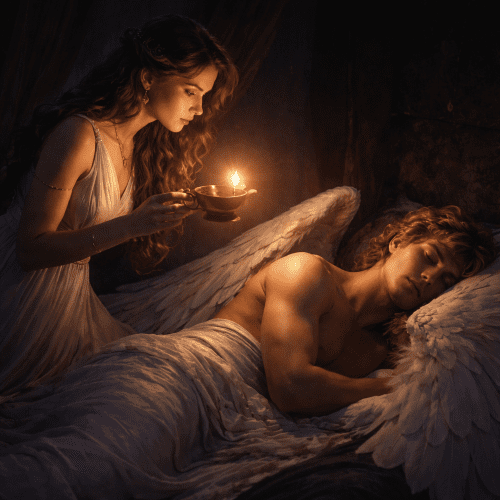
She devised a plan to reduce the Sun’s power. First, she hid all her children, the stars, so that they would no longer be visible in the sky. She then ate the soft outer skin of a young coconut until her lips became pink. Approaching the Sun, she displayed her coloured lips and claimed that she had eaten all her children because they were delicious. The Sun looked around and could not find any stars. Believing the Moon’s story, she decided to follow the same example and swallowed all her little suns.
When night arrived, the Moon brought her hidden children back into the sky. The Sun immediately realised that she had been deceived. Enraged by the trick, she attacked the Moon with a large knife, cutting her body into scattered pieces. The Moon retaliated with her own weapon, managing to remove small fragments from the Sun. According to the story, these fragments became the rays of sunlight visible shortly before sunrise and after sunset.
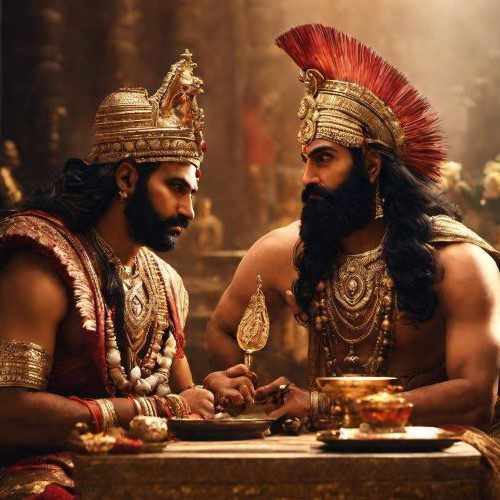
However, the Sun’s defeat was not enough to make the world comfortable. Although she had swallowed her children, the afternoon remained excessively hot. The Mentawai people therefore decided to help the Moon. They made numerous poisoned arrows and shot them towards the Sun until she finally surrendered and retreated. With the Sun’s overwhelming power reduced, people could once again work outdoors during the day. The world became cooler, and the separation between the Sun, Moon, and stars established the conditions of everyday life.
The story concludes with an explanation of the Mentawai people’s religious orientation. Having experienced the destructive power of the Sun, they directed their prayers towards Kina Manua, the sky, seeking good weather and success in life.
Symbolism
The War of the Sun and Moon explores the relationship between intelligence, power, and survival. The Sun represents overwhelming natural force, while the Moon embodies compassion and strategic thinking. Their conflict suggests that strength alone does not guarantee wisdom or the ability to maintain a sustainable world. The Sun’s many children represent excess. Their combined presence creates an environment where life becomes difficult, suggesting that even something essential to survival can become destructive when it exists without limits.
The Moon’s deception introduces another important theme: intelligence can overcome superior power. Rather than confronting the Sun directly, she uses observation and manipulation to achieve her objective. Her actions are morally complicated, but the narrative presents them as necessary to protect humanity. Human participation is perhaps the most distinctive element. The Mentawai people do not simply wait for the celestial beings to resolve their differences. They manufacture weapons and actively intervene. This gives humanity responsibility for shaping the natural environment and restoring a livable world.
The final separation of the Sun and Moon also represents the establishment of a more manageable cosmic order. Their conflict does not eliminate either celestial body but changes their relationship with the world.
Comparative Mythology
The War of the Sun and Moon shares interesting similarities with celestial conflict stories from other cultures, particularly those involving multiple suns and the threat of excessive heat. One of its closest parallels is the Chinese legend of Hou Yi, the legendary archer who shoots down nine of the ten suns that threaten to scorch the Earth. Both traditions describe a world suffering from excessive sunlight and resolve the crisis through the destruction or removal of additional suns. However, the Mentawai version features the Moon and the community working together, rather than a single legendary archer.
Another interesting comparison comes from Papua, Indonesia. The story of Breaking the Sun describes how a young man named Rangga shatters the Sun using magical spheres. Its largest fragment becomes the Moon, while smaller pieces become the stars. Although the narrative differs considerably, it shares the idea that the present arrangement of celestial bodies emerged through a violent transformation of the Sun.
Javanese eclipse traditions offer a different perspective. In these stories, Batara Kala attempts to swallow the Sun or Moon, producing an eclipse. Communities traditionally respond by making loud noises to frighten the giant into releasing the celestial body. Unlike the Mentawai narrative, which explains excessive heat and the origins of celestial arrangements, the Javanese tradition focuses on temporary darkness during eclipses.
These parallels demonstrate how different cultures have used conflict, transformation, and supernatural intervention to explain the behaviour of celestial objects. However, their similarities do not necessarily indicate a common origin or direct cultural borrowing.
Cultural Impact
The War of the Sun and Moon provides an important insight into how the Mentawai people understand their relationship with the natural environment. By connecting excessive heat with the Sun’s children, the story turns an environmental challenge into an explanation rooted in family relationships and cosmic conflict. Its most distinctive cultural feature is the relationship between the people and Kina Manua. The traditional account explains that the Mentawai people direct their prayers towards the sky rather than the Sun. They seek favourable weather and success in their everyday activities, reflecting the importance of environmental conditions to their livelihoods.
The narrative also highlights the importance of collective action. The Moon begins the struggle, but the people ultimately help bring it to an end. This makes the story more than a conflict between two celestial beings; it becomes a tale about a community working together to improve the conditions of its existence. Elsewhere in Indonesia, other celestial traditions have influenced local customs. In parts of Central Java, for instance, communities have traditionally beaten drums and household utensils during eclipses to drive away Batara Kala. These practices belong to a separate tradition, but they demonstrate the broader cultural importance of celestial folklore across the Indonesian archipelago.
Modern Influence
Today, the War of the Sun and Moon is primarily preserved through folklore documentation, educational initiatives, and astronomy communication. Its inclusion in projects such as Stars of Asia and 365 Days of Astronomy has introduced the Mentawai narrative to audiences beyond Indonesia. The story also offers an interesting way to connect traditional knowledge with modern astronomy education. By exploring how the Mentawai people interpreted the Sun, Moon, and stars, educators can demonstrate that astronomical observations have inspired remarkably different explanations across human societies.
Contemporary research into Indonesian eclipse traditions also shows that celestial folklore remains relevant to cultural identity. A study published in HTS Theological Studies in 2022 examined how communities in Central Java continue to preserve Batara Kala eclipse beliefs and associated rituals alongside their contemporary religious identities. Although this research concerns a different Indonesian tradition, it highlights the continuing importance of folklore in understanding how communities interpret the natural world.
The War of the Sun and Moon ultimately stands out as an example of Indigenous Indonesian storytelling in which the heavens are shaped by relationships, conflict, and human intervention. Its message is not simply about defeating the Sun but about transforming an environment that has become hostile to life. Through the combined actions of the Moon and the Mentawai people, the story explains how a world of unbearable heat became a place where humanity could flourish.

Sources
365 Days of Astronomy. (2021, July 31). Astro folklore – The battle of the Sun and the Moon. Planetary Science Institute. https://cosmoquest.org/x/365daysofastronomy/2021/07/31/jul-31st-the-battle-of-the-sun-and-the-moon/
The Jakarta Post. (2019, November 21). Indonesian artists take on myths and modernity in ‘Eclipse’. https://www.thejakartapost.com/news/2019/11/21/indonesian-artists-take-on-myths-and-modernity-eclipse.html
Instituto Geográfico Nacional. (n.d.). Eclipses in art and mythology. https://eclipses.ign.es/en/eclipses-en-el-arte-y-la-mitologia.html
Sacred Texts Archive. (n.d.). Oceanic mythology: Part III. Indonesia: Chapter I. Myths of the origin of the world. https://sacred-texts.com/pac/om/om16.htm
Dixon, R. B. (1916). Oceanic mythology. Marshall Jones Company.
Knappert, J. (1977). Myths and legends of Indonesia. Heinemann.
Geertz, C. (1960). The religion of Java. University of Chicago Press.
Izzuddin, A., Imroni, M. A., Imron, A., & Mahsun, M. (2022). Cultural myth of eclipse in a Central Javanese village: Between Islamic identity and local tradition. HTS Teologiese Studies/Theological Studies, 78(4), a7282. https://doi.org/10.4102/hts.v78i4.7282
Frequently Asked Questions
What is the War of the Sun and Moon in Indonesian mythology?
The War of the Sun and Moon is a Mentawai creation myth describing a celestial battle that explains how excessive sunlight was reduced to make Earth habitable.
Who are the main characters in the War of the Sun and Moon?
The main characters are the Sun, the Moon, their children (little suns and stars), the Mentawai people, and Kina Manua, the sacred sky.
Why did the Moon trick the Sun in the Mentawai legend?
The Moon wanted to protect humanity from excessive heat. She tricked the Sun into swallowing her own children, the little suns.
How did the War of the Sun and Moon end?
The Mentawai people helped the Moon by shooting poisoned arrows at the Sun, forcing her to retreat and reducing the world’s unbearable heat.
Is the War of the Sun and Moon an eclipse myth?
No. The Mentawai story explains excessive heat and celestial origins. Javanese eclipse mythology separately attributes eclipses to Batara Kala swallowing the Sun or Moon.


