


Batara Kala : The Indonesian God of Time and Destruction
At a glance
| Description | |
|---|---|
| Origin | Indonesian Mythology |
| Classification | Gods |
| Family Members | Batara Guru (Father), Dewi Uma / Batari Durga (Mother) |
| Region | Indonesia |
| Associated With | Time, Death, Fate, Destruction, Eclipses |
The Mythlok Perspective
In Mythlok’s Perspective, Batara Kala represents time not as a passive flow but as an active force that consumes existence. He is less a villain and more a reminder of inevitability. Unlike the Greek figure Cronos who devours his children out of fear, or the Indian concept of Kala tied to cosmic cycles, Batara Kala operates within ritual control. This balance between fear and appeasement makes him unique, blending cosmic law with human intervention.
Batara Kala
Introduction
stands as one of the most intense and symbolically rich figures in Indonesian tradition, especially within Javanese and Balinese belief systems. He is widely understood as the embodiment of time, destruction, and cosmic inevitability. Unlike purely evil beings, Batara Kala represents a force that is necessary yet feared. His presence explains why misfortune occurs and why time eventually consumes everything.
Myths describe his origin as deeply tied to divine imbalance. He is born from the uncontrolled desire of Batara Guru and Dewi Uma, an act that disrupts cosmic harmony. In some versions, his creation is even more abstract, emerging from divine essence cast into the ocean and swallowed by a creature. Regardless of variation, his birth always reflects disorder giving rise to a powerful entity.
Batara Kala’s defining trait is his endless hunger. He is believed to prey on those marked by fate, particularly individuals considered spiritually vulnerable. This belief shaped cultural practices like ruwatan, rituals designed to restore balance and protect people from his influence. At a deeper level, he represents time itself, a force that devours all existence without exception.
Physical Traits
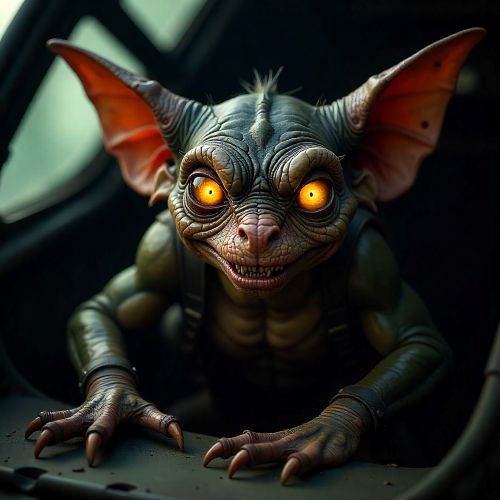
Batara Kala is consistently portrayed as a towering and terrifying being whose appearance reflects both his origins and his role. He takes the form of a giant ogre, often described in Javanese tradition as a buto, with exaggerated and intimidating features.
His face is the most striking element. He is shown with bulging eyes, sharp fangs, and a wide-open mouth that symbolizes his insatiable appetite. The expression is not merely aggressive but eternal, as though he is forever in the act of devouring. His skin is often depicted as dark and coarse, connecting him visually to the depths of the earth and the underworld.
In architecture and sacred art, his face appears as a protective motif above temple gateways. These carvings are not meant to invite fear alone but to serve as a reminder. Anyone entering a sacred space symbolically passes beneath time itself. This duality, where a frightening form also protects, defines his visual identity.
In performance traditions like wayang kulit, Batara Kala dominates the stage with a massive and shadow-heavy presence. His form is designed to overwhelm, reinforcing his nature as something larger than human understanding.
Family
Batara Kala’s lineage connects him directly to the highest divine order. His father, Batara Guru, is the supreme deity in Javanese cosmology, while his mother, Dewi Uma, embodies divine beauty and power. Their union, however, leads to transformation and consequence.
Following the events surrounding his birth, Dewi Uma is often transformed into Batari Durga, a fierce and fearsome goddess associated with the underworld. This transformation reshapes the family dynamic, placing Batara Kala within a lineage that bridges heaven and the darker realms.
In certain narratives, Batara Kala is given authority equal to other divine beings but is restricted by rules imposed by his father. These rules determine who he is allowed to consume, reinforcing the idea that even destructive forces must operate within cosmic law.
He is also associated with the underworld realm and sometimes linked with figures like Setesuyara, depending on the version of the myth. These relationships position him not as an isolated monster but as a structured part of a larger cosmic system.
Other names
Batara Kala is known by several names that reflect his layered identity across regions and traditions. Variations like Batara-Kala or Bhatara Kala appear in both Javanese and Balinese usage.
The name “Kala” itself comes from an ancient linguistic root meaning time, directly tying him to the universal concept of temporal power. This connection places him within a broader philosophical framework that extends beyond Indonesia.
He is also associated symbolically with figures like Kirtimukha, the devouring face seen in temple architecture across South and Southeast Asia. In Balinese tradition, parallels can be drawn with Bhoma, another guardian figure representing primal energy and protection. These names and associations show that Batara Kala is not just a local deity but part of a wider cultural exchange of ideas about time, destruction, and guardianship.
Powers and Abilities
Batara Kala’s primary domain is time, but his influence extends into death, fate, and cosmic balance. He is not simply a destroyer; he is a regulator of existence. One of the most well-known aspects of his power is his connection to eclipses. Traditional belief holds that he attempts to consume the sun or moon, temporarily plunging the world into darkness. These events are not seen as random but as moments where his hunger reaches the heavens.
He is also believed to target individuals considered unlucky or spiritually exposed. This idea gave rise to the concept of anak sukerta, people who require ritual protection. Through this, Batara Kala becomes a force that defines social and spiritual behavior.
Despite his destructive nature, he also plays a protective role. His image at temple entrances is meant to repel negative forces, suggesting that destruction and protection are not opposites but two sides of the same principle. In some traditions, he is even credited with aspects of creation, reinforcing the idea that destruction is necessary for renewal. His power is therefore cyclical, not purely catastrophic.
Modern Day Influence
Batara Kala remains deeply embedded in Indonesian cultural life, particularly through ritual and performance. The most significant expression of his continued relevance is the ruwatan ceremony. This ritual is performed to cleanse individuals of misfortune and protect them from his influence.
These ceremonies often involve wayang kulit performances, especially stories centered around Murwakala. The ritual is both artistic and spiritual, blending storytelling with purification practices like symbolic cleansing and offerings.
In architecture, his presence continues through Kala head carvings that adorn temples and sacred spaces. These carvings are still interpreted as protective symbols, showing how ancient beliefs remain integrated into modern environments.
Contemporary artists and scholars also revisit Batara Kala as a metaphor for time, change, and inevitability. He appears in modern visual art, literature, and digital media, often reinterpreted to reflect current existential themes. Even among those who no longer see him as a literal entity, Batara Kala persists as a cultural idea. He represents the understanding that time cannot be stopped, only respected.
Related Images



Source
Anderson, B. W. (1971). Mythology and the tolerance of the Javanese. Indonesia, 9, 124-126. https://www.jstor.org/stable/3350695
Danandjaja, J. (1986). Ruwatan: Sumber cerita, teks, dan lakon wayang orang ruwatan. Pustaka Sinar Harapan.
Hitipeuw, J. (2009). Kala Purbaka: Kisah Batara Kala dalam teks Sunda kuna. (With Agung Kriswanto). Academia.edu. https://www.academia.edu/5406565/With_Agung_Kriswanto_2009_Kala_Purbaka_Kisah_Batara_Kala_dalam_Teks_Sunda_Kuna
Monbaron, S. (n.d.). Symbolism of Batara Kala in Javanese mythology.
Rhodius, A. (1974). Tantu Panggelan: A kawya by Mpu Tanakung. Bibliotheca Javanica.
Wikipedia contributors. (2026). Batara Kala. Wikipedia. https://en.wikipedia.org/wiki/Batara_Kala
Winternitz, M. (1927). A history of Indian literature (Vol. 1). University of Calcutta.
Yampolsky, T. (Ed.). (1995). Theater and politics in Java. The Asia Society.
Frequently Asked Questions
Who is Batara Kala?
Batara Kala is an Indonesian deity representing time, destruction, and fate, known for devouring the unlucky and maintaining cosmic balance.
Why is Batara Kala feared?
He is feared because he targets those considered spiritually vulnerable and symbolizes unavoidable destruction through time.
What causes eclipses in Batara Kala myths?
Eclipses are believed to occur when Batara Kala attempts to swallow the sun or moon.
What is the ruwatan ritual?
Ruwatan is a traditional ceremony performed to protect individuals from Batara Kala’s influence and remove misfortune.
Is Batara Kala evil or protective?
He embodies both destruction and protection, acting as a necessary force that maintains balance in the universe.


