The Northman (2022) : Where Viking Legend Becomes Reality
| Description | |
|---|---|
| Country of Origin | United States of America |
| Language | English |
| Genre | Action |
| Cast | Alexander Skarsgård, Nicole Kidman, Anya Taylor-Joy, Ethan Hawke, Willem Dafoe |
| Directed by | Robert Eggers |
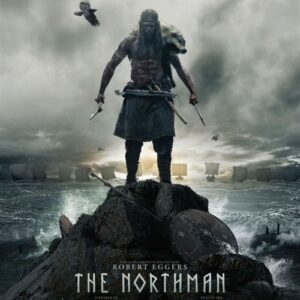
The Northman
Few modern historical films embrace mythology as completely as The Northman. Rather than using Norse legends as decorative references, the film treats myth as a living force that shapes every decision, vision, and act of violence. Directed by Robert Eggers, The Northman is not simply a Viking revenge story—it is a cinematic retelling of one of the oldest Scandinavian legends, the tale of Amleth, which later inspired Shakespeare’s Hamlet. The result is a film that feels less like historical fiction and more like stepping into the worldview of the Viking Age.
From its opening moments, The Northman establishes that fate is inseparable from reality. Prince Amleth witnesses the murder of his father, King Aurvandill, by his uncle Fjölnir. Escaping with a vow to avenge his father, save his mother, and kill his uncle, Amleth embarks on a journey driven not by justice but by destiny. This distinction is important because Norse mythology places enormous emphasis on fate. The Norns, the supernatural beings who weave the destinies of gods and humans alike, are never shown directly, yet their presence is felt throughout the story. Every vision, prophecy, and ritual reinforces the belief that Amleth cannot escape the path laid before him.
Unlike many fantasy films, The Northman never clearly separates reality from the supernatural. Visions of Valkyries, encounters with seers, magical rituals, and the haunting appearance of Odin can all be interpreted as literal events or as spiritual experiences rooted in Viking belief. Eggers deliberately avoids explaining these moments, allowing audiences to experience mythology through the eyes of those who genuinely believed in it. This approach makes the mythological elements far more immersive than flashy visual effects ever could.
One of the film’s strongest mythological sequences is Amleth’s encounter with the undead guardian protecting the magical sword Draugr. The scene draws heavily from Old Norse sagas in which heroes battle animated corpses to claim enchanted weapons. These encounters were never simply physical tests; they symbolized overcoming death itself to gain divine favor. Whether the battle occurs in reality or within Amleth’s mind is left ambiguous, reinforcing the film’s commitment to mythic storytelling rather than conventional fantasy.
The symbolism of Odin quietly permeates The Northman. Ravens repeatedly appear throughout the film, serving as reminders of Odin’s presence and guidance. In Norse mythology, Odin’s ravens Huginn and Muninn travel the world gathering knowledge before returning to their master. Their appearances in the film suggest that Amleth’s actions are constantly being witnessed by forces beyond human understanding. Rather than presenting Odin as an active character who intervenes directly, the film portrays him as an unseen influence whose will echoes through omens and symbols.
Equally compelling is the portrayal of Valkyries. Modern popular culture often depicts Valkyries as armored female warriors leading spectacular battles. The Northman instead presents them as eerie, otherworldly beings responsible for carrying fallen heroes to Valhalla. Their unsettling appearance reflects medieval Norse imagery far more closely than the glamorous interpretations common in fantasy films. The sequence serves as a reminder that Viking spirituality was both beautiful and terrifying.
The film also captures the importance of ritual in Norse religion. Ceremonial dances, shamanic practices, hallucinogenic experiences, sacrifices, and invocations are presented without modern judgment. These rituals were central to Viking society, blurring the boundaries between the physical and spiritual worlds. Rather than feeling like historical reenactments, they become essential expressions of the characters’ beliefs.
Another fascinating mythological layer lies in the relationship between humans and animals. Amleth frequently embraces wolf imagery, joining berserker-like warriors whose identities merge with predatory beasts. The berserkers of Norse tradition were legendary warriors believed to channel the strength and ferocity of wolves or bears during battle. The Northman portrays this transformation as both psychological and spiritual, reflecting historical theories about these feared Viking fighters.
The volcanic climax stands as perhaps the film’s most mythic sequence. Rather than ending with a conventional duel, the final confrontation unfolds amidst fire and lava, evoking Ragnarök—the prophesied end of the Norse cosmos when gods and giants destroy one another in an apocalyptic battle. The setting transforms personal revenge into something cosmic, suggesting that Amleth’s destiny extends beyond family vengeance into the realm of eternal legend.
Historical authenticity also strengthens the mythology. The costumes, architecture, weapons, burial customs, and religious practices feel grounded in archaeological research rather than Hollywood imagination. Because the historical world is so convincing, the supernatural moments become even more believable. Myth is never presented as separate from everyday life; it is woven naturally into the culture, just as it would have been for the people of the Viking Age.
Alexander Skarsgård delivers an intensely physical performance as Amleth, portraying a man shaped almost entirely by prophecy and vengeance. Anya Taylor-Joy’s Olga provides balance through her own spiritual knowledge and Slavic traditions, while Claes Bang and Nicole Kidman bring complexity to a family tragedy that constantly challenges expectations. Their performances elevate the mythological themes by grounding extraordinary events in deeply human emotions.
As a film, The Northman is uncompromising. It is violent, emotionally bleak, and intentionally slow in places, prioritizing atmosphere over spectacle. Viewers expecting a conventional action blockbuster may find its deliberate pacing challenging. However, those interested in mythology will discover one of the most authentic cinematic explorations of Norse belief ever produced. Instead of borrowing mythological imagery for entertainment, the film attempts to recreate an ancient worldview where gods, spirits, omens, and fate were inseparable from daily existence.
The Northman succeeds because it respects mythology rather than exploiting it. Its legends are not background decoration but the foundation upon which every character, decision, and tragedy is built. For anyone fascinated by Norse mythology, Viking religion, or the myths that inspired Shakespeare’s Hamlet, this film offers an experience that is both intellectually rewarding and emotionally unforgettable.