Brahmarakshasa : The Demon Born from Corrupted Knowledge
At a glance
| Description | |
|---|---|
| Origin | Indian Mythology |
| Classification | Spirits |
| Family Members | N/A |
| Region | India |
| Associated With | Cursed knowledge, Vedic mastery, Shape-shifting, Ritual disruption, Karmic punishment |
The Mythlok Perspective
In Mythlok’s Perspective, the Brahmarakshasa is less a monster and more a philosophical warning. It represents the collapse of wisdom when it is stripped of responsibility. Unlike many spirits driven by instinct, this being is shaped by intellect, making its fall more tragic than terrifying. It shows that knowledge alone does not elevate a person. Without discipline and humility, it can lead to ruin. Across cultures, similar ideas appear in figures like cursed scholars or fallen priests. The Brahmarakshasa stands alongside them as a uniquely Indian expression of this archetype, where learning is sacred but dangerous when misused. It reflects a universal truth. The higher one rises through knowledge, the deeper the fall if that knowledge is corrupted.
Brahmarakshasa
Introduction
The Brahmarakshasa is one of the most unsettling figures in Indian lore, representing what happens when knowledge loses its moral anchor. The word itself combines “Brahma,” referring to a learned Brahmin, and “Rakshasa,” a powerful and often malevolent being. This entity is not born a monster but becomes one through consequence. Ancient texts such as the Manusmriti and the Garuda Purana describe how a highly educated individual, especially one well-versed in sacred knowledge, may fall into this cursed state after death if they misuse their wisdom or act against dharma.
Unlike ordinary spirits, a Brahmarakshasa occupies a tragic middle ground between existence and liberation. It is neither fully free nor entirely bound to the mortal world. This state reflects unresolved karma, where intellect remains intact but is twisted by regret, anger, and spiritual corruption. The concept serves as a moral warning. Knowledge without humility and responsibility can become destructive, not just for others but for the self. At the same time, these beings are not beyond redemption. Rituals, compassion, or divine intervention can sometimes release them from their suffering, restoring balance to their existence.
Physical Traits
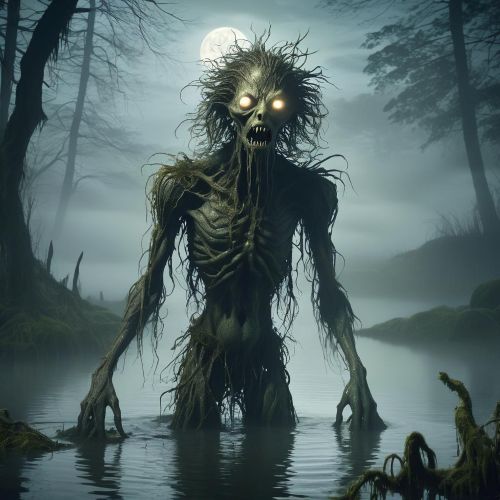
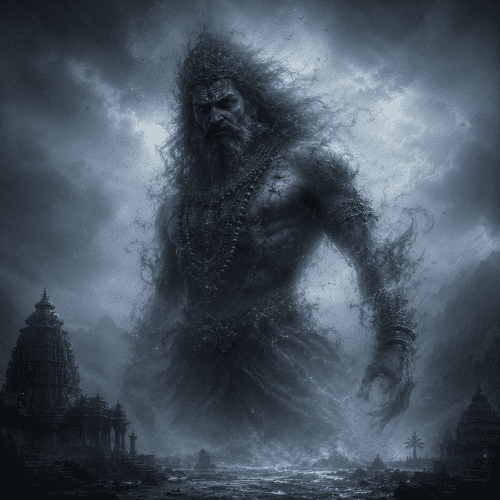
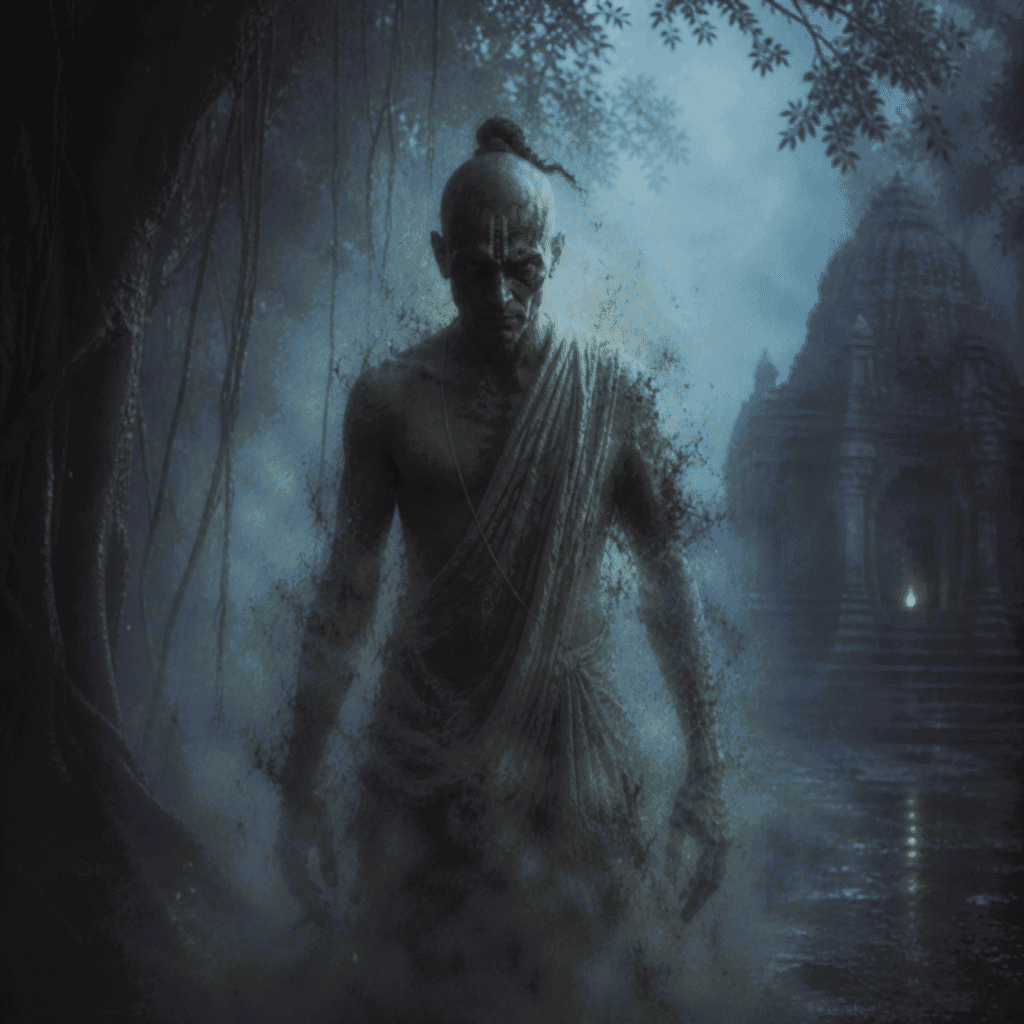
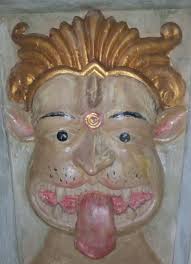
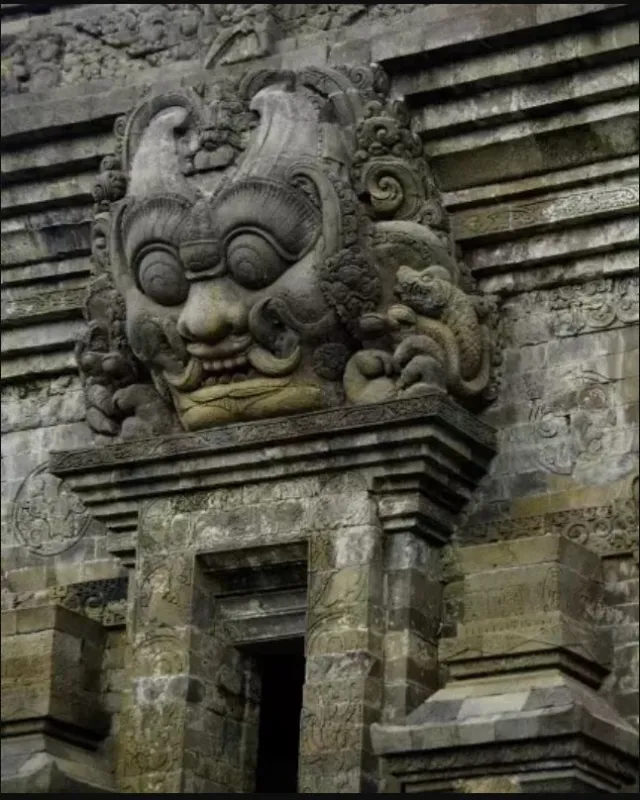
The appearance of a Brahmarakshasa reflects its inner torment. Traditional descriptions portray a grotesque, human-like figure distorted by suffering. It often has a skeletal or emaciated body, sunken cheeks, and unnaturally elongated limbs. Its eyes are uneven or glowing, and its teeth are sharp and widely spaced, giving it a terrifying expression. Some accounts mention yellow or flame-like hair, symbolising a restless and burning spirit.
Despite its monstrous form, traces of its former identity remain. It may still carry the sacred thread of a Brahmin or retain a shikha, the tuft of hair associated with Vedic scholars. This unsettling combination of sacred and corrupted elements is central to its imagery. Folklore often places Brahmarakshasas in liminal spaces such as banyan or peepal trees, cremation grounds, or abandoned temples. They are sometimes described as hanging upside down from branches, reinforcing their unnatural state.
Modern portrayals have experimented with exaggerated forms, but traditional depictions remain grounded in a distorted human anatomy rather than fantastical creatures. The horror lies not in alien features but in the recognition that this being was once human and learned.
Family
Brahmarakshasas do not belong to a lineage in the usual sense. They are not born into families or clans like other supernatural beings. Each one originates from an individual soul, typically a Brahmin who committed serious ethical or spiritual violations. Because of this, they exist as solitary entities, cut off from both their past life and any social structure.
Some traditions loosely connect them to the lineage of sages like Pulastya, who is regarded as an ancestor of many Rakshasas. However, this connection is symbolic rather than genealogical. Figures like Ravana are sometimes discussed in relation to Brahmarakshasas due to their mixed heritage of Brahmin knowledge and Rakshasa nature, though Ravana himself is not strictly classified as one.
In many stories, named individuals such as Somadatta or Gritsamada become Brahmarakshasas due to curses or moral failings. These narratives emphasise isolation. The transformation severs familial ties, leaving the being alone with its consequences.
Other names
The Brahmarakshasa is known by several variations across regions and languages. Common forms include Brahma Rakshasa and Brahmarakshas, which are widely used in modern Indian languages. The term Brahmana-Rakshasa appears in early Sanskrit literature as a more literal description.
In certain esoteric traditions, the entity is associated with forms of Bhairava, particularly as a manifestation connected to skull symbolism and transgressive energy. In simpler terms, it is sometimes described as a “Brahmin ghost,” highlighting its origin rather than its transformation.
Powers and Abilities
A Brahmarakshasa is far more dangerous than an ordinary spirit because it retains the knowledge it possessed in life. Its mastery of the Vedas and sacred rituals gives it a unique advantage. It can manipulate mantras, disrupt ceremonies, and exploit even minor flaws in rituals such as yajnas.
Shape-shifting is another defining trait. Like other Rakshasas, it can assume different forms to deceive or approach humans unnoticed. This ability makes it both cunning and unpredictable. It is also believed to possess immense physical strength and the power to influence its surroundings, including controlling elements or invoking curses.
Interestingly, these beings are not purely destructive. In several folktales, a Brahmarakshasa can grant boons if appeased or respected. Stories from texts like the Simhasana Dvatrimsika depict them rewarding wisdom or humility. This dual nature reflects their origin as learned individuals who have fallen, not inherently evil creatures.
Modern Day Influence
The Brahmarakshasa continues to hold a strong presence in modern Indian culture. It appears in classical literature such as the Panchatantra and Kathasaritsagara, where it often serves as a narrative device to explore morality and consequence. In the twentieth century, poet Gajanan Madhav Muktibodh used the Brahmarakshasa as a metaphor for the burdened intellectual, someone rich in knowledge but unable to act meaningfully.
Temples in parts of Kerala, Karnataka, and Maharashtra still feature shrines dedicated to Brahmarakshasas. In these contexts, they are not feared alone but also respected and appeased as protective spirits. Ritual offerings and lamps are used to calm their restless energy.
Popular media has also reimagined the figure. Films like Creature 3D transform the Brahmarakshasa into a cinematic monster, while television and folklore continue to reinterpret it for new audiences. Despite these adaptations, the core idea remains intact. It is a symbol of corrupted knowledge and the consequences of ethical failure.
Related Images

Source
Chauhan, S. (2022). Brahmarakshas. Vani Prakashan. https://www.exoticindiaart.com/book/details/brahmarakshas-ubk320/
Chelnokova, A., & Streltcova, L. (2017). Brahmarākshasa in modern Hindi literature. Rupkatha Journal on Interdisciplinary Studies in Humanities, 8(4). https://rupkatha.com/V8/n4/v8n416.pdf
Doniger, W. (2009). The Hindus: An alternative history. Penguin Press.
Manusmriti. (Trans. 2000). The laws of Manu. Penguin Classics. (Original work circa 200 BCE–200 CE)
Narada Purana. (Trans. 2010). Narada Purana. Motilal Banarsidass.
Pattanaik, D. (2003). Indian mythology: Tales, symbols, and rituals from the heart of the subcontinent. Inner Traditions.
Wikipedia contributors. (2026). Brahmarakshasa. Wikipedia. https://en.wikipedia.org/wiki/Brahmarakshasa
Wisdom Library. (2022). Brahmarakshasa. https://www.wisdomlib.org/definition/brahmarakshasa
Frequently Asked Questions
What is a Brahmarakshasa?
A Brahmarakshasa is a cursed spirit of a learned Brahmin who misused knowledge and became a powerful demonic entity after death.
Why does someone become a Brahmarakshasa?
It happens due to grave sins like abusing sacred knowledge, arrogance, or violating moral duties tied to learning and teaching.
Are Brahmarakshasas always evil?
Not always. While dangerous, they can grant boons or be redeemed through rituals and righteous intervention.
Where are Brahmarakshasas usually found?
They are often linked to banyan trees, forests, cremation grounds, and abandoned sacred spaces.
Do Brahmarakshasas appear in modern culture?
Yes, they feature in literature, temple traditions, and films, often symbolising corrupted intellect and karmic consequences.