
Nihon Shoki : Japan’s Ancient Chronicle of Gods and Emperors
At a glance
| Attribute | Description |
|---|---|
| Mythology | Japanese Mythology |
| Language Written | Classical Chinese |
| Age | Circa 720 CE |
| Author | Prince Toneri (editor), assisted by Ō no Yasumaro |
| Main Characters | Amaterasu, Susanoo, Izanagi, Izanami, Emperor Jimmu |
Mythlok Perspective
From the Mythlok perspective, the Nihon Shoki is less about recording history and more about shaping identity through myth. Rather than separating the sacred from the political, it weaves them into a single national story where divine ancestry legitimizes earthly rule. Comparable traditions appear elsewhere. Like the Aeneid, which connected Rome to the gods through Aeneas, or the Lebor Gabála Érenn, which traced Ireland’s origins through successive mythic peoples, the Nihon Shoki shows how civilizations transform mythology into collective memory, using sacred narratives to define both their past and their future.
Nihon Shoki
Introduction
The Nihon Shoki (日本書紀), often translated as the Chronicles of Japan and sometimes called Nihongi, is one of the most significant works in Japanese history and mythology. Completed in 720 CE, it is the oldest official chronicle commissioned by the Japanese imperial court and remains an indispensable source for understanding the country’s earliest traditions, political evolution, and religious beliefs. Together with the Kojiki, it forms the foundation of Japan’s mythological tradition, yet its purpose extends far beyond preserving legends.
Written entirely in Classical Chinese, the diplomatic language of East Asia at the time, the Nihon Shoki was designed to present Japan as an ancient, sophisticated, and legitimate kingdom to neighbouring states such as China and the Korean kingdoms. The chronicle traces events from the creation of the universe and the birth of the Japanese islands to the reign of Empress Jitō, ending in 697 CE.
Unlike many ancient mythological texts, the Nihon Shoki does not separate mythology from history. Instead, it presents them as parts of a continuous national narrative, linking the divine Age of the Gods with the emergence of Japan’s imperial state. It also preserves multiple versions of many myths, making it an invaluable source for historians, mythologists, and scholars studying how early Japan understood its own origins.
Historical Background
The Nihon Shoki was compiled during the Nara Period, a time when the Yamato court was transforming Japan into a highly centralized state inspired by the administrative systems of China’s Tang Dynasty. The project was originally ordered by Emperor Tenmu in 681 CE following the Jinshin War, a conflict that highlighted the need for a unified imperial history. Although Tenmu died before its completion, the work continued under his successors and was finally presented to Empress Genshō in 720 CE.
The editorial team was led by Prince Toneri, one of Emperor Tenmu’s sons, with contributions from several court scholars. Unlike the Kojiki, which was written in a Japanese style using Chinese characters, the Nihon Shoki adopted polished Classical Chinese, allowing it to resemble the official dynastic histories produced in China. This choice reflected Japan’s desire to establish itself as an equal among the great East Asian kingdoms.
The chronicle draws from a wide range of earlier sources, including oral traditions, clan genealogies, regional legends, diplomatic records, and court documents. Rather than presenting a single definitive version of every story, its editors frequently recorded alternative traditions using phrases such as “one account says.” This editorial approach preserved competing local traditions while reinforcing the authority of the imperial narrative.
Today, historians view the Nihon Shoki as both a historical document and a carefully constructed political text. While many of its earliest chapters belong to the realm of mythology, the later sections become increasingly reliable as historical records, particularly from the sixth and seventh centuries onward.
Synopsis & Themes
The Nihon Shoki consists of 30 volumes that chronicle Japan’s journey from cosmic creation to the establishment of an organised imperial state. It begins with the formation of heaven and earth, followed by the appearance of the first divine beings and the creation of the Japanese archipelago by the primordial deities Izanagi and Izanami.
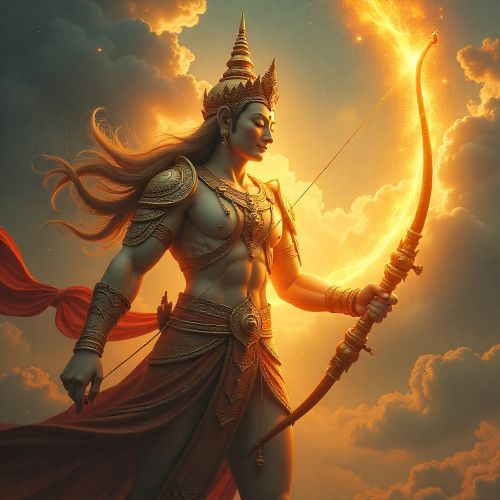
As the narrative progresses, the emergence of powerful kami establishes the spiritual landscape of Japan. Among them, Amaterasu, the sun goddess, becomes the central figure whose descendants are destined to rule the earthly realm. Her grandson, Ninigi-no-Mikoto, descends from heaven to govern Japan, providing the divine ancestry claimed by the imperial family.
One of the defining themes of the Nihon Shoki is divine legitimacy. The chronicle presents political authority as originating from the gods, portraying the emperor not merely as a ruler but as the earthly continuation of a sacred lineage. This connection between heaven and the imperial court became one of the most influential ideas in Japanese history.
Another distinctive feature is the inclusion of multiple versions of the same myth. Instead of eliminating contradictions, the editors preserved alternative traditions from different regions and clans. This makes the Nihon Shoki especially valuable because it offers insight into the diversity of early Japanese religious beliefs rather than presenting a single standardized mythology.
As the narrative moves into historical times, the focus gradually shifts from divine intervention to statecraft. The chronicle records diplomatic exchanges with China and the Korean kingdoms, the introduction of Buddhism in the sixth century, court reforms such as the Taika Reforms, military campaigns, and the consolidation of imperial authority. By blending mythology with documented political events, the Nihon Shoki creates a continuous story of Japan’s emergence as a unified nation.
Key Characters
The Nihon Shoki introduces many of the most influential figures in Japanese mythology and early history, each playing a role in shaping the nation’s identity. Izanagi and Izanami are the primordial creator deities who bring the Japanese islands into existence. Their union gives birth to numerous kami, while Izanami’s <a class="wpil_keyword_link" href="https://mythlok.com/blogs/6-mortals-tricked-to-death-in-world-mythology/” title=”6 Mortals Tricked to Death in World Mythology” data-wpil-keyword-link=”linked” data-wpil-monitor-id=”48360″>death and Izanagi’s journey to the underworld establish themes of life, death, purity, and ritual that continue throughout Shinto tradition.
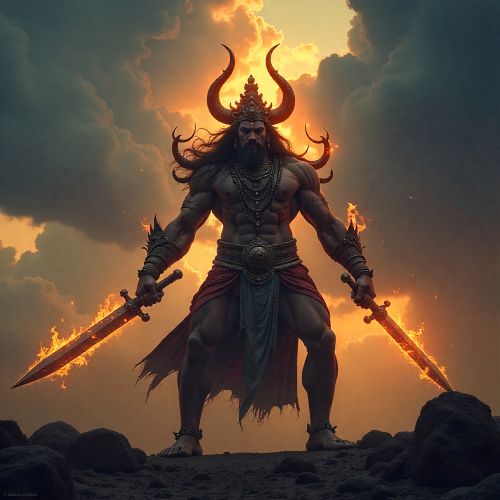
Amaterasu Ōmikami, the sun goddess, stands at the heart of the chronicle’s divine genealogy. Revered as the ancestor of the imperial family, she symbolizes light, harmony, and legitimate rule. Her myths remain among the most celebrated stories in Japanese religion and culture. Her brother, Susanoo-no-Mikoto, represents a more unpredictable force. Known as the storm deity, his turbulent relationship with Amaterasu creates one of Japanese mythology’s most famous episodes before his eventual redemption through the defeat of the eight-headed serpent Yamata no Orochi.
Among the human rulers, Emperor Jimmu occupies a unique place as Japan’s legendary first emperor. Although modern historians regard him as a semi-legendary figure rather than a historically verifiable monarch, his reign serves as the symbolic beginning of the imperial line.
The later historical chapters introduce influential figures such as Prince Shōtoku, remembered for promoting Buddhism and administrative reform, and Empress Jitō, whose reign marks the conclusion of the chronicle. Their inclusion illustrates the gradual transition from mythological narratives to documented political history.
Cultural & Religious Significance
Few texts have shaped Japanese cultural identity as profoundly as the Nihon Shoki. Alongside the Kojiki, it remains one of the primary literary sources for Shinto, preserving myths that explain the origins of the kami, sacred landscapes, ritual practices, and the divine ancestry of the imperial family.
The chronicle also played an important political role. By tracing the imperial house directly to Amaterasu, it strengthened the authority of the Yamato rulers and presented the monarchy as part of a sacred cosmic order. This narrative helped unify different regions under a shared national history during Japan’s formative centuries.
The Nihon Shoki also documents one of the most significant cultural transformations in Japanese history: the arrival of Buddhism. Rather than portraying Buddhism and native beliefs as mutually exclusive, the chronicle records their coexistence during the development of the Japanese state. This reflects the broader religious syncretism that would characterize Japanese culture for centuries.
Its influence extended well beyond the Nara Period. Medieval scholars, Shinto theologians, Confucian thinkers, and historians continually reinterpreted the work, while during the Edo and Meiji periods it became central to discussions about national identity and imperial tradition. Today, although historians distinguish between its mythological and historical sections, the Nihon Shoki remains an essential source for understanding Japan’s religious heritage, political development, and cultural memory.
Modern Adaptations
Although written more than thirteen centuries ago, the Nihon Shoki continues to shape modern interpretations of Japanese mythology. It remains a cornerstone of academic research in history, archaeology, literature, religion, and East Asian studies, with scholars examining its language, multiple narrative traditions, and political context.
Numerous translations have introduced the chronicle to international audiences, with William George Aston’s English translation, first published in 1896, remaining one of the most influential. Modern annotated editions and digital archives have further expanded access, allowing readers around the world to explore one of Japan’s foundational texts.
The myths preserved in the Nihon Shoki also continue to inspire popular culture. Characters such as Amaterasu, Susanoo, and Yamata no Orochi regularly appear in novels, manga, anime, films, and video games. Titles including Ōkami, Naruto, and Jujutsu Kaisen incorporate names, symbols, or mythological concepts rooted in traditions preserved by the chronicle, even when they reinterpret them for modern audiences.
Shrines across Japan also continue to draw upon stories recorded in the Nihon Shoki to explain local traditions, festivals, and sacred sites. In this way, the chronicle remains a living cultural resource rather than simply an ancient historical document. More than thirteen centuries after its completion, the Nihon Shoki continues to connect mythology, history, religion, and national identity, ensuring its place as one of the world’s most enduring chronicles.


Source
Aston, W. G. (1896). Nihongi: Chronicles of Japan from the earliest times to A.D. 697. Japan Society.
Britannica Editors. (n.d.). Nihon shoki. Encyclopaedia Britannica. https://www.britannica.com/topic/Nihon-shoki
Columbia University. (2017). Rewriting the past: Reception and commentary of Nihon shoki, Japan’s first official history. Academic Commons. https://academiccommons.columbia.edu/doi/10.7916/D86978X2
Library of Congress. (n.d.). Chronicle of Japan, volumes 1 and 2. https://www.loc.gov/item/2021666419/
Nihon Shoki copyright information. (n.d.). Japan Historical Text Initiative. https://jhti.studentorg.berkeley.edu/Nihon%20Shoki%20editions%20and%20copyrights.html
The Editors of World History Encyclopedia. (2017, May 15). Nihon Shoki. World History Encyclopedia. https://www.worldhistory.org/Nihon_Shoki/
Watson, B. (Trans.). (2003). The Nihon shoki: Chronicles of Japan from the earliest times to A.D. 697. Columbia University Press.
Japanese mythology. (n.d.). Encyclopaedia Britannica. https://www.britannica.com/topic/Japanese-mythology
Frequently Asked Questions
What is the Nihon Shoki?
The Nihon Shoki is Japan’s oldest official historical chronicle, completed in 720 CE. It combines mythology, imperial genealogy, and early historical records from the creation of the world to the reign of Empress Jitō.
Who wrote the Nihon Shoki?
The chronicle was compiled under the supervision of Prince Toneri and presented to Empress Genshō in 720 CE. It was commissioned by the imperial court following plans initiated by Emperor Tenmu.
What is the difference between the Nihon Shoki and the Kojiki?
While both preserve Japanese mythology, the Kojiki focuses more on native storytelling and oral traditions, whereas the Nihon Shoki is written in Classical Chinese and presents a more formal historical chronicle intended to strengthen Japan’s political legitimacy.
Is the Nihon Shoki historically accurate?
The earliest sections are mythological, but the later chapters become increasingly reliable historical sources, particularly for events from the sixth and seventh centuries. Historians use it alongside archaeological evidence and other records.
Why is the Nihon Shoki important today?
The Nihon Shoki remains one of the primary sources for Japanese mythology, Shinto traditions, and early Japanese history. It continues to influence academic research, cultural heritage, literature, anime, games, and shrine traditions.