

Dwaraka vs Atlantis : Ancient Cities That Vanished Without a Trace
The idea of entire civilizations swallowed by the ocean has fascinated humanity for centuries. Among the most compelling of these legends are Dwaraka and Atlantis. Though separated by geography, culture, and time, both stories echo a hauntingly similar theme: the rise of a powerful society and its sudden disappearance beneath the waves. The debate around Dwaraka vs Atlantis is not just about myth versus history, but about how different civilizations interpret loss, divinity, and memory.
Origins and Cultural Foundations
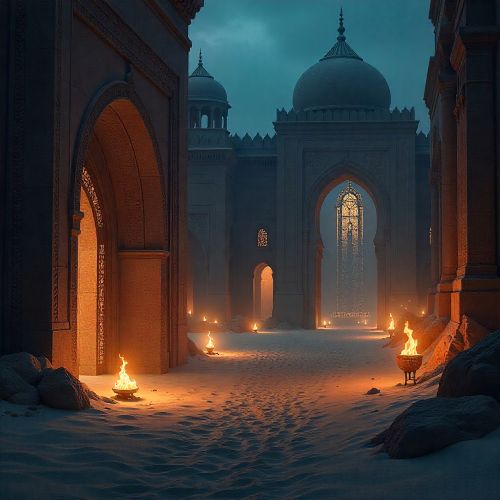
Dwaraka holds a unique position in Indian tradition. It is described in texts like the Mahabharata as the grand coastal kingdom ruled by Krishna. According to these accounts, Dwaraka was a magnificent city built with divine precision, featuring golden palaces, advanced urban planning, and strong maritime connections. Its end came not through human failure, but as part of a cosmic cycle. After Krishna’s departure from the world, the city is said to have been reclaimed by the sea, symbolizing the impermanence of even the most divine creations.
Atlantis, on the other hand, emerges from the writings of the Greek philosopher Plato, particularly in his dialogues Timaeus and Critias. Atlantis was portrayed as a technologically advanced and wealthy island civilization that existed beyond the Pillars of Hercules. Unlike Dwaraka, Atlantis met its end due to moral decay. Plato describes its people as having fallen into greed and corruption, leading the gods to punish them by sinking the island into the ocean in a single catastrophic event.
Destruction: Cosmic Cycle vs Moral Collapse
When comparing Dwaraka vs Atlantis, the most striking difference lies in their moral framing. Dwaraka’s submergence is not a punishment but a transition. It aligns with Indian philosophical ideas of cyclical time and cosmic order, where creation and destruction are part of a larger rhythm. Atlantis, however, represents a cautionary tale. Its destruction is explicitly tied to human arrogance, making it a moral allegory about the dangers of excess and hubris.
Evidence and Archaeological Debate
Another key distinction is the degree of historical and archaeological engagement. In recent decades, marine explorations off the coast of Dwarka have revealed submerged structures that some researchers believe could be linked to the ancient city described in texts. While debates continue, these findings have added a layer of tangible intrigue to Dwaraka’s story.
Atlantis, in contrast, remains elusive. Despite countless theories placing it in locations ranging from the Mediterranean to the Caribbean, no definitive evidence has been found to confirm its existence. This has led many scholars to interpret Atlantis as a philosophical construct rather than a historical reality.
Legacy and Modern Cultural Impact
Culturally, Dwaraka continues to live as a sacred space. The modern city of Dwarka is an important pilgrimage site, deeply embedded in spiritual practice. The legend is not just remembered; it is actively experienced through rituals, temples, and storytelling traditions. Atlantis, however, exists primarily in the realm of imagination and popular culture. It has inspired countless books, films, and speculative theories, evolving into a symbol of lost knowledge and forgotten technology rather than a site of worship.
The architectural and technological descriptions of both cities also reveal interesting contrasts. Dwaraka is depicted as a divine city, built with celestial guidance and infused with spiritual significance. Its grandeur reflects harmony between human life and cosmic forces. Atlantis, however, is often imagined as a marvel of engineering and innovation, representing human achievement at its peak. In modern interpretations, Atlantis is frequently associated with advanced technologies, sometimes bordering on science fiction, while Dwaraka remains rooted in sacred tradition.
Yet, despite these differences, the similarities between Dwaraka and Atlantis are too compelling to ignore. Both are described as prosperous coastal civilizations with advanced infrastructure. Both disappear beneath the sea in dramatic fashion. And both continue to captivate the human imagination, serving as reminders of how fragile even the greatest societies can be.
From a Mythlok perspective, the comparison of Dwaraka vs Atlantis is less about determining which is real and more about understanding what each story represents. Dwaraka embodies continuity, faith, and the idea that divinity persists even after physical structures vanish. Atlantis, in contrast, reflects human vulnerability and the consequences of moral failure. Together, they form a powerful dual narrative—one of sacred dissolution and one of cautionary collapse.
In the end, whether one views Dwaraka as history touched by divinity or Atlantis as philosophy wrapped in myth, both stories invite reflection. They challenge us to consider what defines a civilization’s legacy. Is it its physical achievements, its moral values, or the stories that survive long after it is gone? The enduring fascination with these lost cities suggests that the answer lies somewhere in between.



No posts were found.