

Jerusalem Before the Israel – Palestine Conflict : The Ancient Canaanite Story
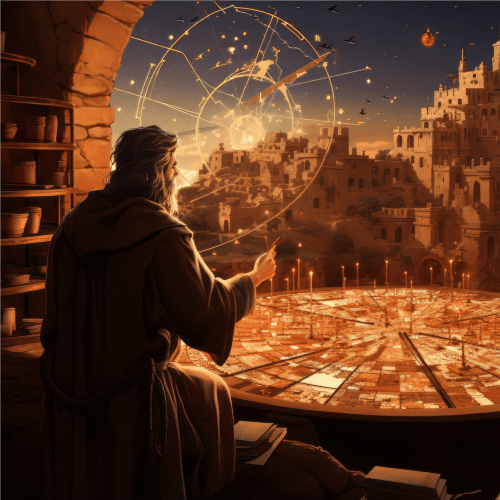
The modern debate surrounding Jerusalem often focuses on politics, borders, religion, and history from the last few thousand years. Yet long before the rise of Judaism, Christianity, or Islam, the land was already part of a deeply mythological world shaped by the Canaanites. Their gods, rituals, sacred mountains, and ideas about divine kingship formed one of the earliest spiritual foundations of the Levant.
Canaanite tradition does not provide a modern political answer to the Israel – Palestine conflict. However, it does reveal how ancient people understood the land, how sacred inheritance was framed, and how later civilizations evolved from earlier cultural layers. When viewed through mythology rather than modern nationalism, Jerusalem becomes less a single civilization’s possession and more a continuously evolving sacred center shaped by many interconnected peoples.
The Sacred Geography of the Ancient Levant
The Canaanites inhabited much of the Levant during the Bronze Age, including regions that today form Israel, Palestine, Lebanon, western Jordan, and parts of Syria. Their world was not organized around modern national identities. Instead, it revolved around city-states, local rulers, tribal alliances, and sacred territories tied to divine authority.
In Canaanite belief, land itself was holy. Mountains, rivers, springs, forests, and fortified cities were considered places where gods interacted with humanity. Jerusalem existed within this sacred landscape even before it became central to later Abrahamic traditions. The region was seen as part of a cosmic order maintained by divine powers such as El, Baal, Anat, Asherah, and Mot.
Unlike modern concepts of ownership based on borders and legal sovereignty, Canaanite tradition viewed land as sacred inheritance granted through divine order. Kings ruled not simply through military strength but through perceived approval from the gods. Fertility, rainfall, prosperity, and stability were all considered signs that the land remained spiritually balanced.
This worldview shaped how later civilizations in the Levant understood Jerusalem. The idea that the land carried divine promise, sacred memory, and spiritual destiny did not disappear with the decline of Canaanite religion. Instead, many of those concepts evolved into later traditions.
How Canaanite Tradition Evolved Into Later Religions
One of the most important aspects of Canaanite mythology is that it did not completely vanish. Instead, parts of it gradually evolved into newer religious systems across the Levant. Archaeology, linguistics, and comparative mythology reveal strong continuities between Canaanite belief systems and early Israelite religion.
The ancient Israelites emerged from within the broader cultural environment of Canaan rather than arriving as a completely unrelated civilization. Early Hebrew language itself belongs to the Canaanite language family. Many names, rituals, poetic structures, and symbolic themes in ancient Israelite tradition reflect older Levantine roots.
The Canaanite high god El, for example, shares linguistic and thematic similarities with the early Hebrew understanding of God. Certain descriptions of Yahweh in early biblical poetry resemble storm and warrior imagery previously associated with Baal. Archaeological evidence also suggests that folk worship involving figures like Asherah continued in parts of ancient Israel for centuries.
Over time, Israelite religion moved toward stronger monotheism and separated itself from neighboring traditions. Yet the transformation was evolutionary rather than instantaneous. The mythology of the region changed gradually across generations, absorbing older symbols while redefining them.
Christianity later inherited the sacred geography of Jerusalem through Jewish tradition, while Islam connected the city to prophetic history and divine revelation. In this sense, all three Abrahamic faiths inherited parts of a much older Levantine sacred world whose earliest foundations stretch back into Canaanite culture.
How Ancient Mythology Framed the Ownership of the Land
Modern political debates often treat ownership as a legal or military question. Ancient mythology approached it differently. In Canaanite tradition, land belonged ultimately to the divine realm. Human rulers acted as temporary custodians responsible for maintaining sacred order.
This concept deeply influenced later traditions in the region. The belief that a people could possess a covenantal or sacred connection to land became central to Israelite identity. Jerusalem eventually transformed into the symbolic heart of Jewish civilization, especially after the establishment of the kingdoms of Israel and Judah and later through the memory of the First and Second Temples.
At the same time, the broader Levantine population never disappeared completely. Across centuries, populations mixed, converted, migrated, and evolved culturally under Assyrian, Babylonian, Persian, Greek, Roman, Byzantine, Arab, Ottoman, and modern influences. Palestinian cultural identity emerged much later historically, but many historians acknowledge that modern Levantine populations likely contain ancestry connected to numerous ancient peoples of the region, including Canaanite-era inhabitants.
This makes the question of “original ownership” extremely complicated from a mythological and historical perspective. Ancient Levantine societies were rarely ethnically or culturally isolated. Identity shifted continuously across centuries.
From the perspective of mythology, Jerusalem was not merely property. It was a sacred center repeatedly inherited, transformed, rebuilt, and reinterpreted by different civilizations. Each era attached new meaning to the same land.
Who Preserves the Strongest Links to Canaanite Culture?
The question of who carries the strongest connection to ancient Canaanite tradition is highly debated and often politicized. Mythologically and culturally, the answer is not entirely exclusive to one modern group.
Jewish civilization preserves some of the clearest literary, linguistic, and religious continuities with the ancient Levantine world. Hebrew belongs directly to the Canaanite linguistic family, and many aspects of ancient Israelite tradition evolved from the same regional culture that produced Canaanite mythology. Jewish attachment to Jerusalem also remained remarkably continuous through centuries of exile, ritual practice, pilgrimage, and scripture.
At the same time, many Palestinians, especially Levantine Arab communities, likely carry significant ancestral continuity with the ancient populations of the region through long-term habitation and population mixing. Cultural memory in the Levant often survived through adaptation rather than complete replacement. Ancient peoples rarely vanished entirely. They transformed across languages, religions, and empires.
Lebanese identity has also occasionally drawn direct connections to Phoenician and broader Canaanite heritage, particularly because Phoenician civilization emerged from the same cultural world as the Canaanites.
From a mythological perspective, however, the strongest surviving inheritance may not be biological ancestry alone but continuity of sacred geography. Jerusalem remained spiritually central across multiple civilizations precisely because every era inherited part of the sacred imagination of the previous one. The city’s mythology evolved layer by layer rather than being erased and replaced completely.
In Mythlok’s Perspective, Canaanite tradition suggests that Jerusalem was never viewed as ordinary territory. It was sacred space long before modern nations existed. The myths of the Levant framed land as divine inheritance tied to memory, survival, and cosmic order rather than permanent political ownership. Similar ideas appear across many ancient cultures. Greek traditions connected cities to patron gods, while Indian traditions treated places like Kashi and Kurukshetra as eternally sacred landscapes. Jerusalem followed a comparable path, evolving from a regional sacred center into one of humanity’s most spiritually contested cities. The enduring conflict surrounding it reflects not only politics but also thousands of years of accumulated sacred meaning.
Ultimately, Canaanite mythology reveals that the story of Jerusalem did not begin with a single civilization. The city emerged from an ancient sacred landscape where cultures continuously evolved, absorbed one another, and redefined divine connection to the land. Modern identities may disagree over sovereignty and history, but the mythology of the region suggests that Jerusalem has always belonged as much to memory and belief as to kings and borders.

No posts were found.