

Radha and Krishna : The Story of Divine Love and Devotion
| Description | |
|---|---|
| Origin | Indian Mythology |
| Story Title | Radha-Krishna Leela |
| Main Characters | Radha, Krishna |
| Type of Ending | Unrequited |
| Symbolism | Soul’s longing for divine union |
Mythlok Perspective
In Mythlok’s View, Radha and Krishna represent a rare archetype where love is defined not by union but by transcendence. Their story shifts focus from possession to presence, from fulfillment to longing. This makes their narrative fundamentally different from conventional romantic traditions. Across cultures, similar patterns emerge. The Sufi tale of Layla and Majnun mirrors this longing-driven devotion, while in Greek thought, the relationship between Psyche and Eros reflects trials leading to divine union. Yet Radha and Krishna stand apart in how separation itself becomes sacred, turning love into a continuous spiritual state rather than a final destination.
Radha and Krishna
Introduction
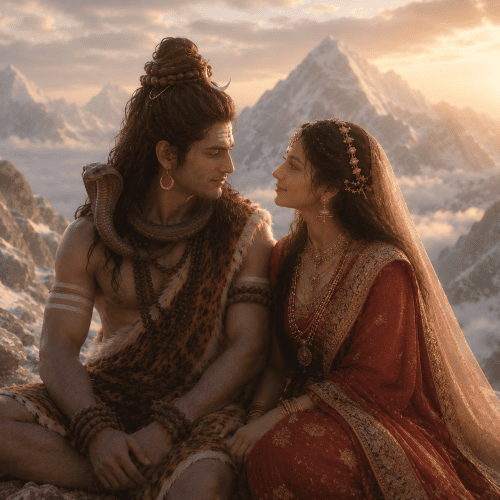
Radha and Krishna stand as one of the most profound expressions of divine love in Indian tradition, far beyond the boundaries of human romance. Their story is not simply about two lovers, but about the eternal relationship between the soul and the divine. Krishna, widely revered as an avatar of Vishnu, embodies cosmic intelligence and playful divinity, while Radha represents the highest form of devotion, often understood as divine feminine energy.
What makes Radha and Krishna timeless is the paradox at the heart of their relationship. They are inseparable in essence, yet often physically apart. This duality transforms their love into a spiritual metaphor. Radha becomes the longing soul, and Krishna the divine presence that both reveals and withdraws. Their story is therefore not about union alone, but about yearning, surrender, and realization.
Across centuries, poets, saints, and devotees have seen in Radha and Krishna the purest form of bhakti, where love exists without expectation, ownership, or worldly fulfillment. It is this depth that continues to inspire devotion, art, and philosophy even today.
Characters Involved
At the center of this narrative are Radha and Krishna, but their story unfolds within a larger spiritual landscape. Krishna is depicted as the charming cowherd of Vrindavan, whose flute enchants not just humans but nature itself. Though he later becomes a king and guide in the Mahabharata, his Vrindavan phase represents divine play, innocence, and emotional connection. His presence is magnetic, yet never possessive, allowing love to exist freely.
Radha, often described as the embodiment of divine energy or Shakti, represents devotion in its most refined form. While early texts like the Bhagavata Purana focus more on Krishna’s leelas, later traditions elevate Radha as the supreme devotee and even as Krishna’s eternal counterpart. In many Vaishnava traditions, she is not just a companion but the very source of Krishna’s bliss.
Supporting them are the gopis of Vrindavan, symbolic of countless souls drawn toward the divine. Figures like Lalita and Vishakha appear in later devotional literature, enriching the emotional and spiritual dynamics of the story. Together, these characters create a universe where love is both personal and cosmic.
Story Summary
The story of Radha and Krishna unfolds in the pastoral beauty of Vrindavan, where Krishna spends his youth among cowherds. It is here that he meets Radha, and their connection is immediate and profound. Their love develops through shared moments—glances, music, and the enchanting call of Krishna’s flute.
One of the most iconic episodes is the Rasa Lila, where Krishna dances with the gopis under the moonlight. In this mystical event, he multiplies himself so each devotee feels his exclusive presence. Yet Radha remains central, representing the highest state of devotion. This dance is not merely physical; it is symbolic of divine union experienced individually by every soul.
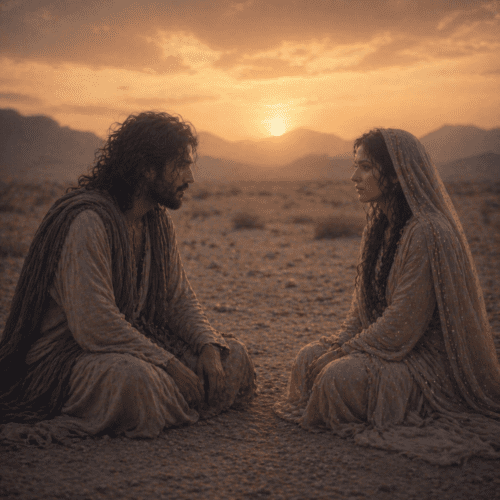
However, their story is marked by separation. Krishna eventually leaves Vrindavan to fulfill his destiny, including confronting Kamsa and later guiding the Pandavas. Radha remains behind, embodying the pain of separation known as viraha. This separation is not an end but a transformation. Krishna teaches that true union lies beyond physical presence, in realizing the divine within all existence. Thus, their love story does not conclude with reunion in the worldly sense. Instead, it evolves into a spiritual truth where separation intensifies devotion, making it eternal.
Epics & Poems
The Bhagavata Purana, particularly its tenth book, provides the foundational narrative of Krishna’s life in Vrindavan. While Radha is not explicitly named in early sections, she is later identified as the foremost among the gopis in interpretative traditions.
The text emphasizes Krishna’s divine play and the devotion of the gopis, presenting love as a path to spiritual liberation. The Rasa Lila described here becomes a central symbol of divine interaction with devotees.
The Gita Govinda by Jayadeva transforms the narrative into an intimate and emotional exploration of love. Written in the 12th century, it vividly portrays Radha’s longing, jealousy, and eventual reunion with Krishna. Unlike earlier texts, the Gita Govinda places Radha at the center, making her essential to understanding Krishna. The poem blends sensual imagery with deep spirituality, establishing a devotional aesthetic that influences music, dance, and temple rituals across India.
Symbolism
The story of Radha and Krishna is rich with layered symbolism. Radha represents the human soul, constantly seeking connection with the divine. Krishna represents the ultimate reality, both accessible and elusive.
Their separation symbolizes the spiritual journey, where longing becomes a form of devotion. The pain Radha experiences is not weakness but intensity, showing that true love deepens through absence. Their union, on the other hand, represents moments of divine realization, fleeting yet transformative.
Krishna’s flute is another powerful symbol. It is often interpreted as the divine call that draws souls away from worldly distractions toward higher truth. The Rasa Lila becomes a metaphor for the universe itself, where the divine interacts with each soul uniquely. Together, Radha and Krishna embody the relationship between Shakti and the divine consciousness, illustrating that creation itself is born from this union.
Cultural Variations
The story of Radha and Krishna evolves across regions and traditions, each adding its own interpretation while preserving the core theme of devotion. In North India, especially in Vrindavan and Barsana, festivals like Janmashtami and Holi bring their story to life through dramatic reenactments and rituals. The playful Lathmar Holi reflects the dynamic relationship between Radha and Krishna.
In Bengal, Gaudiya Vaishnavism, inspired by Chaitanya Mahaprabhu, emphasizes emotional devotion, often viewing Radha as supreme. In Odisha, the story is deeply connected to temple traditions and classical dance forms like Odissi.
Manipuri traditions present the Rasa Lila as a refined dance form, while global movements like ISKCON have carried Radha-Krishna devotion worldwide, adapting it for modern audiences without losing its spiritual essence.
Associated Practices
Devotion to Radha and Krishna is expressed through practices rooted in love and surrender. Festivals like Radhashtami celebrate Radha’s appearance, while Janmashtami honors Krishna’s birth. Bhajans and kirtans play a central role, allowing devotees to experience emotional connection through music. Chanting the Hare Krishna mantra is seen as a direct way to engage with their divine presence.
Temple worship often places Radha alongside Krishna, reinforcing the idea that devotion and divinity are inseparable. Pilgrimages to places like Vrindavan, Barsana, and Govardhan create a physical connection to their stories, turning geography into sacred memory. These practices are not merely ritualistic; they are experiential, designed to transform the devotee’s inner world.
Modern Influence
The influence of Radha and Krishna continues to shape modern culture in profound ways. Their story inspires visual art, music, literature, and even cinema. From classical paintings like Pattachitra and Madhubani to contemporary digital art, their imagery remains instantly recognizable.
In literature and music, their story has influenced generations of poets and composers, including Rabindranath Tagore. Modern reinterpretations often focus on the emotional depth of their relationship, making it relatable to contemporary audiences. In everyday life, Radha and Krishna symbolize ideal love. Their presence in homes, temples, and cultural expressions reflects not just devotion, but a desire to bring spiritual harmony into daily existence.
Sources
IndianShelf. (2026, March 10). Story of Radha Krishna in Indian mythology. https://www.indianshelf.in/story-of-radha-krishna-indian-mythology/
Wikipedia. (2006, July 6). Radha Krishna. https://en.wikipedia.org/wiki/Radha_Krishna
Exotic India Art. (2019, April 14). Unveiling the spiritual essence of Krishna and Radha. https://www.exoticindiaart.com/article/the-gita-govinda/
Radha Krishna Temple. (2025, November 18). Radha Krishna: The ultimate symbol of devotion and love.
https://www.radhakrishnatemple.net/blog/why-radha-krishnas-love-is-the-ultimate-symbol-of-devotion/
Jayadeva. (12th century). Gita Govinda (Sri Jayadeva Gosvami, Trans.). Giri Trading Agency Pvt. Ltd. (Original work published ca. 1200 CE)
Rupa Goswami. (1541). Bhakti-rasamrita-sindhu. Ras Bihari Lal and Sons. (Bhanu Swami, Trans.)
Brahma Vaivarta Purana. (ca. 7th-15th century). (Shree Jimin Shastri, Trans.). Motilal Banarsidass. (Original work published ca. 800-1500 CE)
Acharya, S. (2024). Emotional and symbolic role of Rukmini in the Radha Krishna narrative: Devotion, acceptance, and spirituality in Hindu mythology. International Journal of Research Publication and Reviews, 5(8), 3445-3449. https://ijrpr.com/uploads/V5ISSUE8/IJRPR32506.pdf
Frequently Asked Questions
Why is Radha and Krishna’s love considered divine?
Their love represents the connection between the human soul and the divine, going beyond physical or worldly relationships.
Did Radha and Krishna get married?
Most traditions state they did not marry, emphasizing that their love transcends societal structures.
What is the meaning of Rasa Lila?
It symbolizes the divine dance between God and devotees, where each soul experiences a personal connection with the divine.
Why did Krishna leave Radha?
Krishna left to fulfill his cosmic duties, highlighting the theme of separation as a path to deeper spiritual realization.
What does Radha symbolize in devotion?
Radha symbolizes pure, unconditional devotion and the soul’s longing for union with the divine.