


Gippsland Panther : The Elusive Big Cat of Victoria
| Description | |
|---|---|
| Origin | Australia |
| Classification | Cryptid |
| Demeanour | Elusive |
| Habitat | Forests |
| Status | Not Proven |
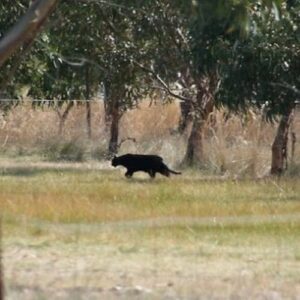
Mythlok Perspective
In Mythlok’s Perspective, the Gippsland Panther is most compelling not as an unproven animal, but as a modern Australian wilderness legend. Like the Beast of Gévaudan in European folklore, it transforms uncertain encounters with predators into a cultural story that grows with every retelling. The Panther also reflects Australia’s fascination with creatures that seem to exist just beyond the edge of ordinary knowledge, where dense wilderness and human imagination meet.
Gippsland Panther
Introduction
The Gippsland Panther is one of Australia’s best-known phantom cat legends, centred on the forests, farmland and remote bushland of Gippsland in Victoria. Witnesses have described seeing a large, dark feline moving through the Australian landscape, sometimes resembling a black panther, leopard or puma. The story forms part of a much wider Australian tradition of alleged “big cats”, with similar legends associated with the Blue Mountains, Grampians and other heavily forested regions.
The name “panther” can be misleading because it does not identify a distinct species. In reports of Australian mystery cats, it is generally used as a descriptive term for a large feline, particularly a dark or black animal. Scientific assessments have considered leopards, pumas and jaguars among the animals that could theoretically match some eyewitness descriptions, although none has been established as a wild species in Victoria.
The Gippsland Panther therefore occupies an unusual space between cryptozoology, local folklore and unexplained eyewitness testimony. Its story has survived not because a specimen has been confirmed, but because reports continue to appear and the idea of an unknown predator hidden in the Victorian bush remains culturally compelling.
Physical Attributes
There is no scientifically verified physical description of the Gippsland Panther. Instead, its appearance comes from eyewitness accounts, photographs of uncertain provenance and descriptions collected by researchers interested in Australian big-cat folklore.
The most common image is that of a large, muscular black cat with a low-slung body, substantial head, powerful legs and a long tail. Some witnesses have compared the animal to a panther, while others have described something more like a puma or leopard. Historical and modern accounts vary considerably in estimated size, making precise measurements unreliable.
The 2012 Victorian assessment noted that many reported animals were described as long, low-slung and dark, with a squared head, muscular legs, large feet and a long cylindrical tail. Such descriptions can resemble large exotic felines, particularly melanistic leopards or jaguars, but resemblance alone cannot establish species identity.
Claims of unusually large paw prints also feature in the folklore. However, tracks are difficult to authenticate in the field, particularly when impressions are incomplete or distorted by soil, mud and vegetation. Consequently, no physical characteristic currently distinguishes the Gippsland Panther from a known Australian animal with scientific certainty.
First Sighting/Reporting
The Gippsland Panther does not have a securely established “first sighting.” Reports of mysterious large cats in Australia extend back to the nineteenth century, well before the modern cryptid tradition developed. These stories were sometimes connected with escaped circus or exotic animals, although such explanations remain part of the historical speculation surrounding Australian phantom cats.
Gippsland subsequently developed its own collection of reports involving large cats. The region’s extensive forests, agricultural properties and relatively remote terrain created an environment in which fleeting encounters could easily become part of local storytelling.
By the twentieth century, reports of panther-like animals had become sufficiently widespread to attract government attention. In 2012, the Victorian Government commissioned an assessment of the evidence for alleged big cats. Researchers reviewed more than a century of reports and concluded that the existence of a wild population of large exotic cats in Victoria was highly unlikely. The assessment found that large feral domestic cats offered a more plausible explanation for many sightings. This does not erase the historical reports. Instead, it places them in context: the Gippsland Panther is well documented as a story and reporting phenomenon, but not as a confirmed animal.
Other Names
The Gippsland Panther is known by several overlapping names. Gippsland Phantom Cat is commonly used to emphasise the animal’s mysterious and elusive reputation, while black panther is often used by witnesses describing a dark, large feline.
The broader term Australian big cat places the creature within Australia’s wider phantom-cat tradition. Similar regional legends include the Blue Mountains Panther, Grampians Puma and other alleged exotic cats reported across southeastern Australia. The word “panther” itself has no precise zoological meaning. It is often used for large cats, particularly melanistic leopards or jaguars, which explains why reports can vary considerably in their descriptions.
Modus Operandi
The Gippsland Panther has no scientifically established behaviour because no confirmed animal has been studied. Reported behaviour is instead drawn from eyewitness accounts and local folklore. Most sightings describe a brief encounter: a dark animal crossing a road, moving through vegetation or disappearing into the bush before the observer can obtain a clear view. This fleeting quality is central to the legend and helps explain why the creature has remained difficult to verify.
Some accounts attribute attacks on livestock to the Panther, particularly sheep and other farm animals. However, identifying the predator responsible for livestock deaths is considerably more complicated than simply matching a carcass to a big-cat narrative. Dogs, foxes and other known predators can cause substantial livestock losses, and the 2012 Victorian assessment specifically noted that some alleged big-cat attacks were inconsistent with the behaviour of known large felines. Consequently, claims that the Gippsland Panther systematically stalks livestock or avoids humans should be treated as elements of the legend rather than established behavioural characteristics.
Pop Culture References
The Gippsland Panther has developed a life beyond individual sightings and has become part of Gippsland’s regional folklore. Its story has appeared in journalism, community storytelling, literature, radio and online media, ensuring that new generations continue to encounter the legend.
Research into Australian big-cat folklore has also preserved a substantial historical record. The Australian Animal Folklore Collection was used by historian David Waldron in research that contributed to Snarls from the Tea-tree: Big Cat Folklore, co-authored with Simon Townsend. The collection brings together material concerning Australian big-cat stories, folklore and cryptozoology.
Gippslandia has also embraced the legend through a series of imaginative articles following a fictionalised hunt for the Panther. These stories deliberately blur adventure, folklore and local mystery, demonstrating how the creature has become a cultural character rather than simply a claimed animal. The continuing appearance of alleged sightings in regional media and community discussions shows that the Gippsland Panther remains culturally alive even without scientific confirmation.
Current Status
The Gippsland Panther remains unconfirmed. There is no verified specimen, breeding population, authenticated DNA evidence or other conclusive biological evidence establishing that an exotic big cat lives wild in Gippsland.
The strongest official assessment came in 2012, when Victorian Government researchers concluded that wild pumas, leopards, jaguars or similar big cats were highly unlikely to be living in Victoria. The investigation reviewed more than 1,000 pieces of information and concluded that large feral cats were the most obvious explanation for many sightings.
That conclusion has not stopped reports. More recent accounts continue to circulate, including sightings in Gippsland and elsewhere in Victoria. A 2025 community report, for example, described continuing black-panther reports across the state while acknowledging that no conclusive evidence had confirmed such animals.
The mystery therefore persists in an interesting middle ground. The sightings themselves are part of the historical record, but the interpretation that they represent an undiscovered population of big cats remains unsupported by zoological evidence. For now, the Gippsland Panther is best understood as a cryptid and regional folklore figure, rather than an established species.
Its endurance says something important about the Australian landscape. Vast forests, fleeting glimpses and stories passed between generations can create powerful mysteries even when science finds no unknown animal behind them. Whether the Panther represents misidentified wildlife, isolated exotic animals, folklore, or something yet unexplained remains part of the fascination.


Source
Monstropedia. (2008). Phantom cat. https://monstropedia.org/index.php?title=Phantom_cat
Odd History. (2012). Mysterious animals of Gippsland. https://www.oddhistory.com.au/gippsland/mystery-animal-of-gippsland/
Northover, A. (2019). The initial encounter. https://www.andrewnorthover.com.au/gippsland-panther-01
Wikipedia. (2024). Phantom cat. https://en.wikipedia.org/wiki/Phantom_cat
Wikipedia. (2024). Blue Mountains panther. https://en.wikipedia.org/wiki/Blue_Mountains_panther
Mystery Atlas. (2026). Australian big cats: Are there black panthers loose? https://mysteryatlas.pulsaa.net/questions/are-there-black-panthers-in-australia
Unexplained Australia. (2024). Black panther sightings in the Hunter. https://www.unexplainedaustralia.com.au/2024/12/07/black-panther-sightings-in-the-hunter/
The Local Rag. (2023). Unpacking the myth of black panthers in Australia. https://thelocalrag.com.au/australian-panther/
Frequently Asked Questions
What is the Gippsland Panther?
The Gippsland Panther is an Australian cryptid said to be a large, dark-coloured cat living in Victoria’s Gippsland bushland. No scientific evidence has confirmed it as a distinct animal.
Is the Gippsland Panther a real animal?
The Gippsland Panther has never been scientifically confirmed. A Victorian Government assessment concluded that wild big cats in the state were highly unlikely, with large feral cats offering a more likely explanation.
What does the Gippsland Panther look like?
Witnesses usually describe the Gippsland Panther as a large, muscular, dark or black feline with a long tail. Reports vary widely in size, so there is no verified physical description.
Where is the Gippsland Panther said to live?
The Gippsland Panther is traditionally associated with forests, bushland and rural areas across Gippsland in Victoria, although similar phantom-cat reports occur elsewhere in Australia.
Has the Gippsland Panther ever been photographed or found?
There have been photographs, videos, tracks and alleged physical traces attributed to the Gippsland Panther, but none has provided conclusive evidence establishing an unknown big-cat population.


