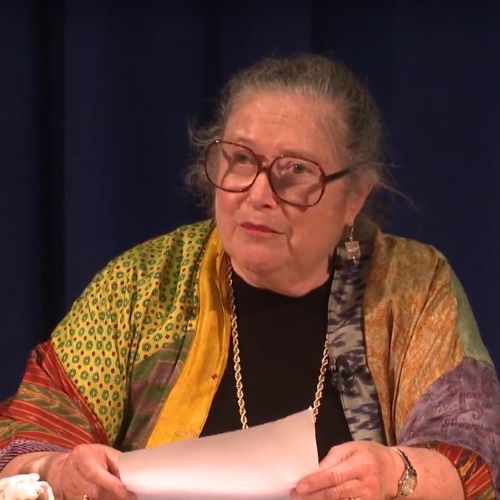

Devdutt Pattanaik : Interpreter of Indian Myth, Symbol, and Story
Mythlok Perspective
In Mythlok’s perspective, Devdutt Pattanaik occupies a rare space between scholarship and storytelling. His work does not seek to stabilise myth into doctrine but exposes its fluidity, contradictions, and psychological depth. By treating myth as a mirror rather than a manual, he reminds modern audiences that stories endure not because they are true, but because they are useful. Across cultures, his approach parallels how Greek myths, Norse sagas, and Indian epics functioned as frameworks for understanding human behaviour rather than historical records. In this sense, Pattanaik restores myth to its oldest role: a language for meaning, not belief.
Devdutt Pattanaik
Introduction
Devdutt Pattanaik is one of the most recognisable contemporary voices interpreting Indian mythic thought for modern audiences. An author, speaker, and cultural commentator, he has reshaped how ancient narratives are read outside strictly religious or academic settings. Rather than treating myths as sacred relics or historical puzzles, Pattanaik approaches them as living frameworks that reveal how societies think, behave, and assign meaning.
Across books, lectures, television, and corporate spaces, his work focuses on symbols, metaphors, and narrative patterns embedded in Indian epics and puranic traditions. His storytelling style blends accessibility with philosophical depth, allowing complex ideas from ancient texts to enter everyday conversations about identity, leadership, gender, and belief.
Area of Expertise
Devdutt Pattanaik’s expertise lies in Indian mythic traditions, particularly the interpretive reading of the Vedas, Upanishads, Puranas, Mahabharata, and Ramayana. Rather than reconstructing a single “correct” version of myth, his work emphasizes plurality, contradiction, and perspective. He frequently highlights how myths shift across regions, sects, and eras, reflecting social values more than historical fact.
A defining feature of his scholarship is the application of mythic thinking to contemporary life. Pattanaik draws parallels between ancient narratives and modern psychology, leadership structures, and cultural conflicts. He also engages in comparative mythology, pointing out resonances between Indian stories and mythic patterns found across the world, without collapsing them into uniform interpretations.
Books & Publications
With more than fifty books to his name, Devdutt Pattanaik is among the most widely read Indian myth writers of the modern era. His works range from retellings and commentaries to novels that use myth as a lens to explore social questions.
Myth = Mithya introduced many readers to the idea that myth conveys subjective truth rather than historical fact, reframing how Indian stories are understood. Jaya: An Illustrated Retelling of the Mahabharata remains one of the most accessible modern interpretations of the epic, emphasizing multiple viewpoints rather than moral absolutes. Sita retells the Ramayana through the inner world of its central female figure, while The Book of Ram explores Rama as a cultural ideal shaped by diverse traditions. The Pregnant King, his fictional work, uses mythic motifs to examine gender, duty, and societal boundaries.
Across genres, his writing is marked by clarity, symbolism, and an insistence that myths ask questions rather than deliver commandments.
Research & Contributions
Beyond publishing, Devdutt Pattanaik has played a significant role in public discourse on culture and belief. He has written extensively for newspapers, magazines, and digital platforms, often addressing how myth influences politics, business, and social behaviour. His corporate workshops are particularly notable, where he uses mythic narratives to discuss leadership, hierarchy, and organisational psychology.
Rather than positioning mythology as escapism, Pattanaik frames it as a diagnostic tool that reveals how humans interpret power, success, failure, and morality. This approach has brought myth into spaces traditionally dominated by management theory and modern psychology.
Awards & Recognitions
Devdutt Pattanaik’s work has received both literary recognition and broad cultural acknowledgment. Jaya received the Crossword Book Award, and his broader contribution to Indian myth studies has been recognised by multiple cultural and literary platforms. He is frequently cited among India’s most influential contemporary thinkers and commentators on tradition, belief, and narrative culture.
Social Media Profiles
Devdutt Pattanaik maintains an active digital presence where he shares reflections on Indian myth, symbolism, cultural behaviour, and contemporary social questions. His platforms extend his core philosophy that myth is a lens for understanding human thought rather than a fixed belief system.
He is particularly active on X (formerly Twitter), where he posts short myth-based commentaries on current events, leadership, and cultural debates. His Instagram presence focuses on visual storytelling, travel, symbols, and excerpts from his work. Through YouTube, he reaches a wider audience with talks, interviews, and thematic explanations of epic narratives. His official website serves as a central archive for books, articles, lectures, and professional engagements.
Bibliographic Sources
“Devdutt Pattanaik – Wikipedia.” https://en.wikipedia.org/wiki/Devdutt_Pattanaik
“Devdutt Pattanaik | Official Website.” http://www.devdutt.com




Frequently Asked Questions
Who is Devdutt Pattanaik?
Devdutt Pattanaik is an Indian mythologist, author, and speaker known for interpreting Indian mythic traditions for contemporary audiences.
What is Devdutt Pattanaik known for?
He is best known for books such as Jaya, Myth = Mithya, and Sita, which reinterpret Indian epics and symbols through cultural and psychological lenses.
Does Devdutt Pattanaik write about Indian epics?
Yes. Much of his work focuses on the Mahabharata, Ramayana, and puranic traditions, exploring their symbolic and philosophical dimensions.
How does Devdutt Pattanaik interpret mythology?
He views mythology as subjective truth rather than historical fact, emphasizing perspective, symbolism, and cultural context over literal interpretation.
Why is Devdutt Pattanaik influential today?
His work has brought mythological thinking into modern discussions on leadership, identity, gender, and culture, making ancient narratives relevant to contemporary life.