

Kupala Night : The Ancient Slavic Festival of Fire and Water
At a glance
| Description | |
|---|---|
| Location | Eastern Europe |
| Country | Poland, Ukraine, Belarus, and Russia |
| Dedicated To | Nature |
| Duration | 1 night |
| Time of Year | June |
Mythlok Perspective
In Mythlok’s Perspective, Kupala Night represents more than a seasonal festival. It embodies an ancient human desire to reconnect with nature during moments when the world feels charged with possibility. The search for the fern flower mirrors the universal quest for wisdom and hidden truths, while the union of fire and water symbolizes balance between opposing forces. Comparable traditions appear across many cultures. The Scandinavian celebration of Midsummer shares its focus on fertility and seasonal renewal, while Celtic solstice festivals similarly emphasize sacred landscapes and the power of nature. These parallels suggest that Kupala Night reflects a broader human fascination with the turning points of the natural world, making it both uniquely Slavic and universally meaningful.
Kupala Night
Introduction
Kupala Night is one of the oldest and most captivating seasonal festivals in Slavic tradition. Known as Noc Kupały, Ivan Kupala, or Kupalle, the celebration takes place during midsummer and marks the shortest night of the year. For centuries, communities across Eastern Europe have gathered around rivers, lakes, and bonfires to celebrate nature at its most vibrant moment.
The festival originated long before the arrival of Christianity among the Slavic peoples. It was closely connected to fertility, agricultural abundance, and the belief that nature possessed extraordinary power during midsummer. As Christianity spread through Eastern Europe, the celebration became associated with the feast of St. John the Baptist, leading to the popular name Ivan Kupala. Despite these later influences, many of the festival’s rituals remain rooted in ancient folk beliefs.
Today, Kupala Night continues to be celebrated as a colorful cultural event that combines folklore, romance, music, and traditional customs. Its enduring popularity reflects a deep connection between people and the natural world.
Connection with Mythology
Kupala Night occupies a special place in Slavic folklore because it represents a time when the ordinary world and the supernatural realm draw unusually close together. Traditional beliefs held that spirits, magical creatures, and hidden forces became more active during this midsummer night.
One of the most famous legends associated with the festival is the tale of the fern flower. According to folklore, a fern blooms only once each year at midnight on Kupala Night. Anyone fortunate enough to find this miraculous flower would gain wisdom, prosperity, and knowledge of hidden secrets. Since real ferns do not produce flowers, the story symbolizes humanity’s pursuit of the unattainable and the mysteries that lie beyond ordinary understanding.
The festival is also linked to the symbolic union of fire and water. These two elements are often portrayed as opposites, yet during Kupala Night they work together to create balance and renewal. Fire represents energy, passion, and purification, while water embodies healing, fertility, and transformation. Their union reflects a broader Slavic understanding of harmony within nature.
Some regional traditions connect the celebration with Kupala or Kupalo, a figure associated with fertility and summer abundance. However, historians continue to debate whether Kupala was originally a deity, a ritual figure, or a later folkloric creation. Regardless of the interpretation, the name remains inseparable from the festival itself.
Main Activities
The customs of Kupala Night are designed to celebrate renewal, strengthen community bonds, and invite good fortune. Many of these traditions have survived for centuries and continue to attract participants today.
The most recognizable feature of the festival is the lighting of large bonfires. People gather around the flames to sing, dance, and participate in rituals believed to cleanse the body and spirit. Jumping over the fire is considered a test of courage and a symbolic act of purification. Couples often leap together while holding hands, believing the act will strengthen their relationship and ensure lasting happiness.
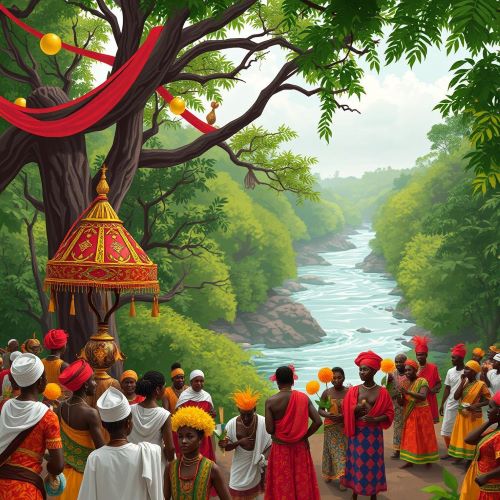
Water plays an equally important role in the festivities. Rivers and lakes become gathering places where participants bathe or wash themselves. In folk belief, midsummer water possesses special powers capable of bringing health, beauty, and protection from misfortune.
Young women traditionally weave flower wreaths decorated with herbs and ribbons. These wreaths are released into rivers, where their movement is interpreted as a sign of future romance. A wreath floating steadily downstream is often viewed as a positive omen, while one that quickly sinks may indicate delays in love or marriage.
The gathering of medicinal herbs is another significant tradition. Many communities believe that plants harvested during Kupala Night possess enhanced healing qualities. Herbs collected during this period are often dried and preserved for use throughout the year.
Perhaps the most romantic custom is the search for the mythical fern flower. Although everyone knows the flower cannot truly be found, the quest itself remains an important symbol of adventure, love, and discovery.
Importance in Cultural History
Kupala Night serves as a remarkable example of cultural continuity. Its origins likely stretch back more than a thousand years to the earliest Slavic communities, making it one of the oldest surviving seasonal festivals in Europe.
The celebration endured despite significant religious and political changes. As Christianity expanded across Eastern Europe, many traditional rituals were incorporated into the feast of St. John the Baptist rather than being completely abandoned. This blending of traditions allowed ancient customs to survive within a new cultural framework.
During later historical periods, including parts of the Soviet era, some traditional celebrations faced restrictions or discouragement. Nevertheless, local communities continued to preserve the customs through folk songs, storytelling, and family gatherings. As a result, Kupala Night became a symbol of cultural resilience and identity.
The festival also played an important social role. It provided opportunities for communities to gather, celebrate seasonal abundance, and strengthen interpersonal relationships. Many courtship traditions associated with the event helped young people meet and form connections within their communities. Today, Kupala Night remains an important part of Eastern European cultural heritage, preserving ancient folklore while adapting to modern society.
International Appeal
In recent decades, Kupala Night has attracted growing international attention. Travelers seeking authentic cultural experiences are increasingly drawn to festivals that preserve traditional customs and offer a glimpse into regional heritage.
Modern celebrations often combine historical reenactments with concerts, folk dancing, craft fairs, and theatrical performances. Visitors are drawn by the dramatic imagery of bonfires reflected in rivers, flower wreaths drifting through the water, and participants dressed in traditional clothing.
The festival’s themes have universal appeal. Love, renewal, transformation, and humanity’s connection with nature resonate across cultures, making the celebration accessible even to those unfamiliar with Slavic traditions.
Kupala Night has also inspired artists, writers, filmmakers, and game developers. The legend of the fern flower, in particular, continues to appear in literature and popular culture, helping introduce Slavic folklore to global audiences. As interest in cultural tourism and traditional festivals continues to grow, Kupala Night stands out as one of the most visually striking and meaningful celebrations of the European midsummer season.
Source
Advantour. (n.d.). Ivan Kupala traditions in Russia. https://www.advantour.com/russia/traditions/ivan-kupala.htm
Brendan-Noble.com. (2021, June 17). Noc Kupały/Kupala Night – Slavic summer solstice and Valentine’s Day. https://brendan-noble.com/noc-kupaly-kupala-night-slavic-summer-solstice-and-valentines-day/
Define Pagan. (2025, July 22). Ancient Slavic fire rituals: Kupala Night festival awakens sacred traditions. https://www.definepagan.com/featured-articles/ancient-slavic-fire-rituals-kupala-night-festival-awakens-sacred-traditions/
Belarus.by. (2008, December 31). Kupala Night in Belarus. https://www.belarus.by/en/travel/ethno-tourism/kupalle
Voevodyno.com. (2025, August 30). Ivan Kupala festival in the Carpathians: Hutsul traditions and rituals. https://voevodyno.com/en/blog/svyato-ivana-kupala-v-karpatah-guczulski-tradycziyi-ta-obryady/
Vzhe-vzhe.com. (2025, June 16). Ivan Kupala 2025: When we celebrate, traditions and rituals. https://vzhe-vzhe.com/en/blog/ivana-kypala/
Frequently Asked Questions
What is Kupala Night?
Kupala Night is an ancient Slavic midsummer festival celebrating nature, purification, fertility, and the symbolic union of fire and water.
Why do people jump over bonfires on Kupala Night?
Bonfire jumping is a traditional ritual believed to cleanse negative energy, bring good fortune, and strengthen romantic relationships.
What is the legend of the fern flower?
The fern flower is a mythical bloom said to appear only at midnight on Kupala Night, granting wisdom, luck, and hidden knowledge.
When is Kupala Night celebrated?
The festival is celebrated around the summer solstice, typically between June 21–24 or July 6–7 depending on regional traditions.
Which countries celebrate Kupala Night?
Kupala Night is primarily celebrated in Poland, Ukraine, Belarus, and Russia, with related traditions found throughout the Slavic world.