


Yamato Takeru : The Legendary Warrior Prince of Ancient Japan
At a glance
| Description | |
|---|---|
| Origin | Japanese Mythology |
| Classification | Mortals |
| Family Members | Emperor Keikō (Father), Harima no Inabi no Ōiratsume (Mother), Yamatohime-no-Mikoto (Aunt), Ototachibana-hime and Miyazuhime (Consorts), Emperor Chūai (Son) |
| Region | Japan |
| Associated With | Military conquest, Courage, Strategic intelligence |
The Mythlok Perspective
In Mythlok’s Perspective, Yamato Takeru shares an interesting parallel with the Greek hero Achilles. Both are celebrated warriors whose extraordinary abilities are overshadowed by tragic destinies. However, while Achilles is remembered for his pursuit of glory and the vulnerability that ultimately destroys him, Yamato Takeru represents the burden of imperial duty and unquestioning loyalty. Their stories reveal a recurring mythological truth: the greatest warriors are not necessarily masters of their own fate.
Yamato Takeru
Introduction
Yamato Takeru is one of the most celebrated warrior figures in Japanese mythology, remembered as a courageous prince whose military campaigns helped establish the legendary authority of the ancient Yamato court. His story combines battlefield victories, clever disguises, sacred weapons, personal tragedy and a remarkable transformation after death. Although traditionally presented as a son of Emperor Keikō, the twelfth emperor of Japan, Yamato Takeru is generally regarded by historians as a legendary or semi-legendary figure rather than a historically verified individual.
His adventures appear primarily in the Kojiki, completed in 712 CE, and the Nihon Shoki, completed in 720 CE. These early chronicles preserve different versions of his life, reflecting the political and cultural priorities of the period in which they were compiled. Both describe his campaigns against the Kumaso of southern Kyushu and communities in eastern Japan, while the Kojiki also includes his confrontation with the people of Izumo.
Yamato Takeru’s legend is particularly important because it connects the expansion of the Yamato polity with Japan’s sacred traditions. His association with Kusanagi-no-Tsurugi, the Grass-Cutting Sword, links his adventures to the Three Sacred Treasures of Japan. His eventual death and transformation into a white bird also give his story an unusually tragic and spiritual conclusion.
Physical Traits
The ancient descriptions of Yamato Takeru focus more on his exceptional abilities than on his physical appearance. However, the Nihon Shoki provides a description that presents him as an unusually impressive individual. It characterizes him as possessing a fierce and courageous disposition from childhood, while describing his adult appearance as exceptionally beautiful.
The chronicle also attributes extraordinary physical strength to him, including the ability to lift a heavy tripod. Such descriptions should be understood within the literary conventions of ancient heroic narratives rather than as reliable biological measurements. His appearance becomes particularly relevant during his campaign against the Kumaso. Yamato Takeru disguises himself as a woman to enter an enemy gathering without attracting suspicion. His ability to convincingly alter his outward presentation becomes one of the defining elements of his legendary identity.
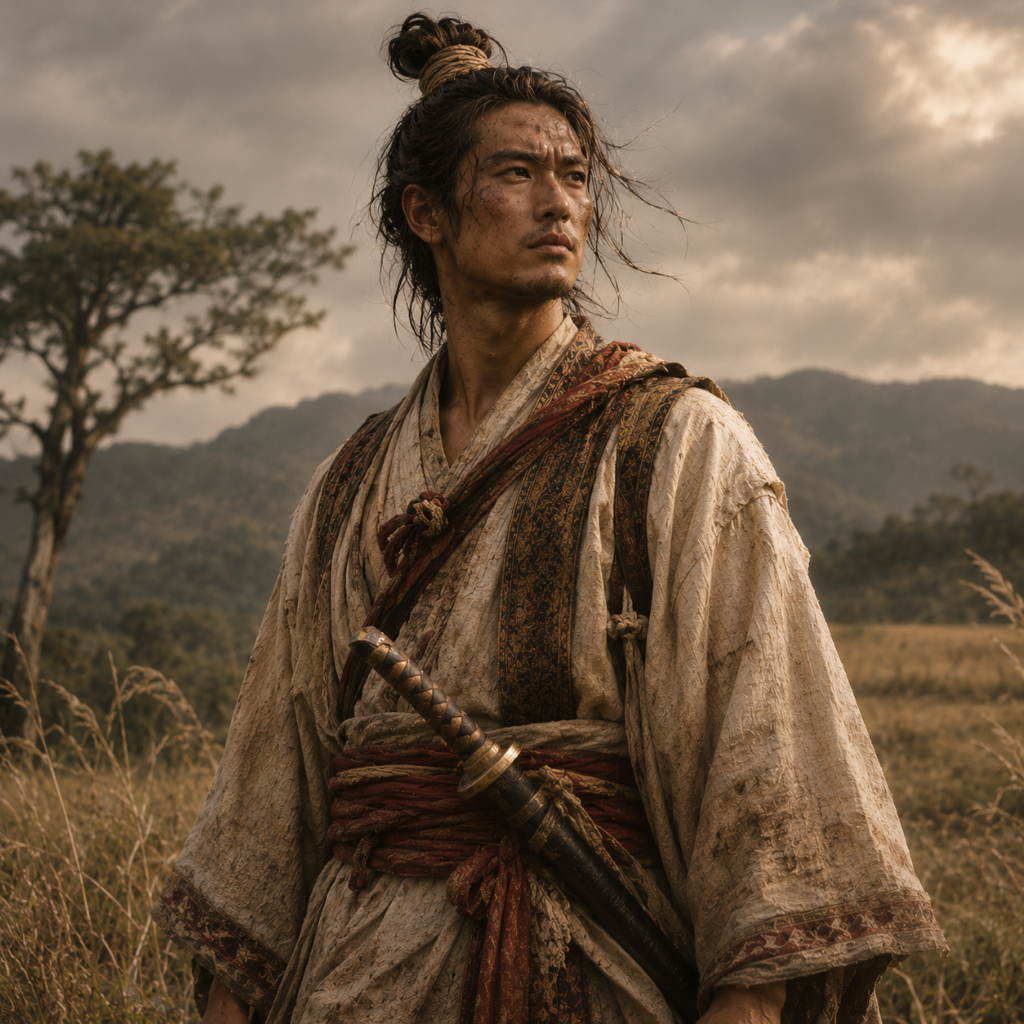
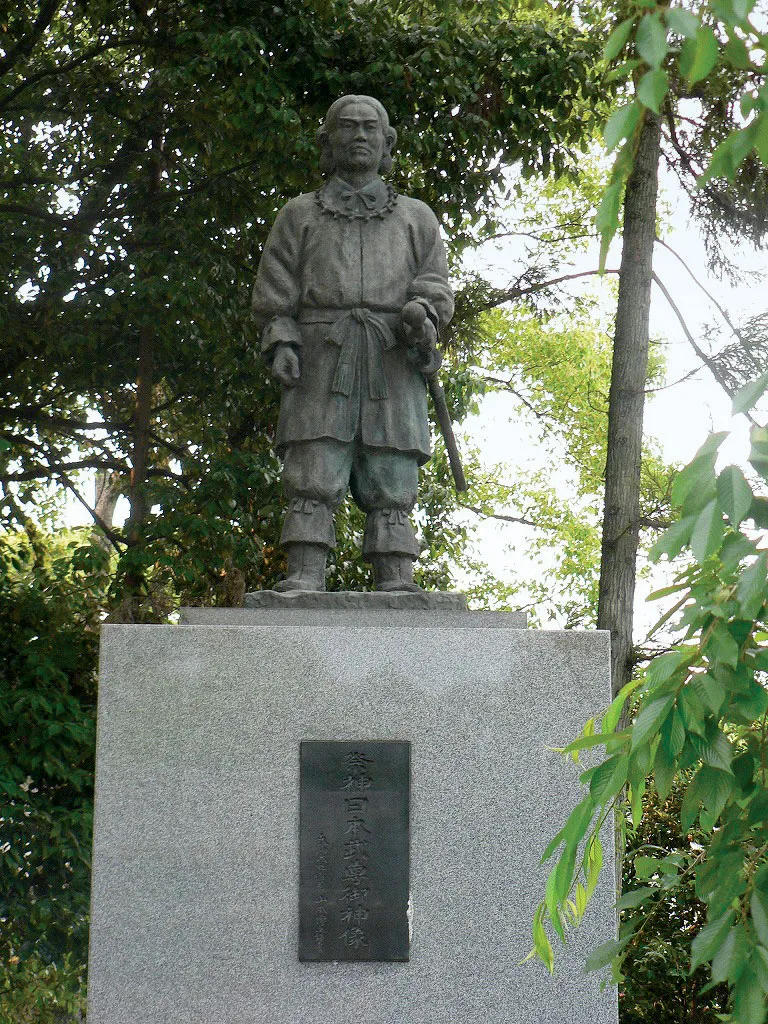
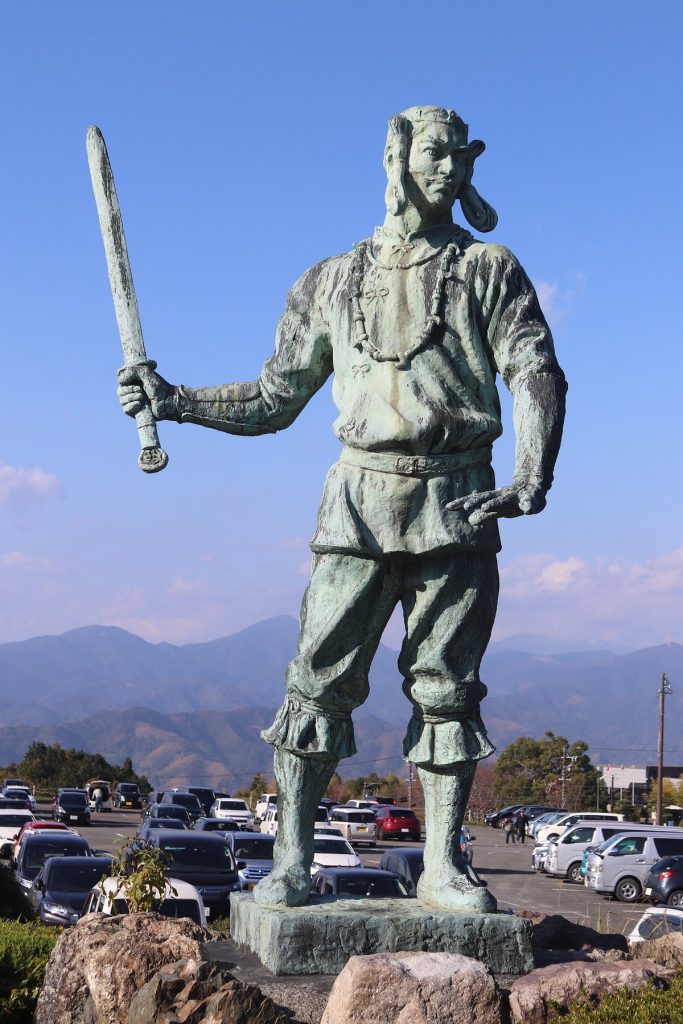
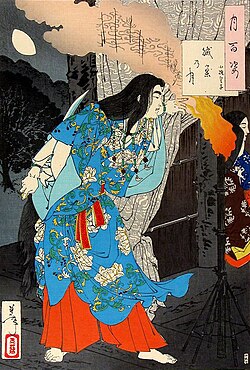
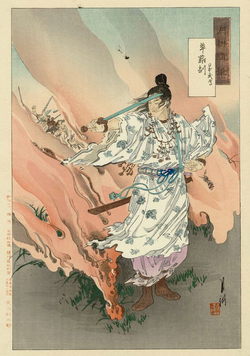
Traditional Japanese artwork generally portrays him as a youthful, noble-looking warrior wearing courtly or military clothing. He is frequently depicted carrying Kusanagi, reflecting the importance of the sacred sword in his adventures. However, these artistic representations developed over centuries and should not be confused with descriptions preserved in the original chronicles.
Family
Yamato Takeru belonged to the legendary imperial family of ancient Japan. He was traditionally identified as the son of Emperor Keikō and Harima no Inabi no Ōiratsume, placing him within the ruling lineage of the Yamato court. His relationship with his father is one of the most interesting differences between the two principal accounts of his life. The Kojiki presents Emperor Keikō as increasingly fearful of his son’s violent temperament, eventually sending him away on dangerous military missions. This creates the image of a tragic prince whose loyalty to his father is not always reciprocated. The Nihon Shoki, however, portrays the emperor as trusting his son’s abilities and recognizing his extraordinary contribution to the court.
Another important family connection is his aunt, Yamatohime-no-Mikoto, traditionally associated with the Ise Grand Shrine. Before his eastern campaign, she provides him with the sacred sword Ame-no-Murakumo-no-Tsurugi, which later becomes known as Kusanagi-no-Tsurugi. His consorts also play significant roles in the narrative. Ototachibana-hime sacrifices herself during his eastern expedition to calm dangerous waters, while Miyazuhime becomes closely associated with the sword’s eventual enshrinement. The traditions also identify Emperor Chūai, the fourteenth emperor of Japan, as one of Yamato Takeru’s sons. These relationships give his story a deeply personal dimension, balancing military achievement with family loyalty, sacrifice and loss.
Other names
Yamato Takeru appears under several names in Japanese historical and mythological traditions. His original name is generally given as Ousu-no-Mikoto or Wo-Usu, with Prince Ousu being a common English rendering. The name Yamato Takeru, often translated as the Brave of Yamato, is associated with his victory over the Kumaso warriors. According to the Kojiki, after he disguises himself and defeats the two Kumaso leaders, their surviving leader acknowledges his courage and gives him the name Yamato Takeru.
The title Yamato Takeru-no-Mikoto is the most widely recognized form of his name today. Other written variations appear in different chronicles and later interpretations, reflecting differences in historical transcription and naming conventions. These names are more than simple alternatives. They represent different stages in the prince’s legendary identity, from his early life within the imperial household to his emergence as one of ancient Japan’s most celebrated warrior heroes.
Powers and Abilities
Yamato Takeru is primarily remembered for extraordinary human capabilities rather than an extensive collection of supernatural powers. His legendary reputation rests on military strength, strategic intelligence, courage and his association with a sacred weapon. His most famous exploit takes place during the campaign against the Kumaso. Rather than confronting the enemy leaders through conventional warfare, he disguises himself as a woman and infiltrates a gathering where the two brothers are celebrating. Once close enough, he attacks and kills them. This episode establishes his reputation as a warrior who combines physical courage with calculated deception.
His eastern expedition introduces another defining element of his legend: Kusanagi-no-Tsurugi. Originally known as Ame-no-Murakumo-no-Tsurugi, the sword is traditionally associated with the storm god Susanoo and the defeat of the eight-headed serpent Yamata-no-Orochi. Yamato Takeru receives the weapon from his aunt Yamatohime before travelling east. During his journey through Suruga, hostile forces lure him into a grassy plain and set the surrounding vegetation on fire. Using the sword to cut away the burning grass, he creates an escape route and survives the attack. This episode becomes associated with the weapon’s name, commonly translated as the Grass-Cutting Sword.
His adventures also demonstrate remarkable endurance. He confronts hostile communities, dangerous landscapes and supernatural forces during his campaigns. However, his final encounter with the deity of Mount Ibuki proves fatal. After underestimating the mountain kami and attempting to confront it without his sacred sword, he becomes seriously ill. His death leads to one of the most memorable supernatural episodes in Japanese mythology. According to the chronicles, his spirit emerges from his burial place in the form of a magnificent white bird and flies away. This transformation gives Yamato Takeru a final connection with the supernatural world, turning his death into an enduring symbol of heroic departure.
Modern Day Influence
Yamato Takeru continues to occupy an important position in Japanese cultural heritage. His legend is preserved through Shinto religious traditions, historical literature, visual art and modern entertainment. He also remains an important subject for scholars examining the relationship between early Japanese political identity and mythological storytelling. One of the strongest connections to his legacy is Atsuta Jingū in Nagoya. According to shrine tradition, Miyazuhime, his wife, arranged for Kusanagi-no-Tsurugi to be enshrined after his death. The shrine remains closely associated with the sacred sword, which is regarded as one of the Three Sacred Treasures symbolizing the Japanese imperial throne.
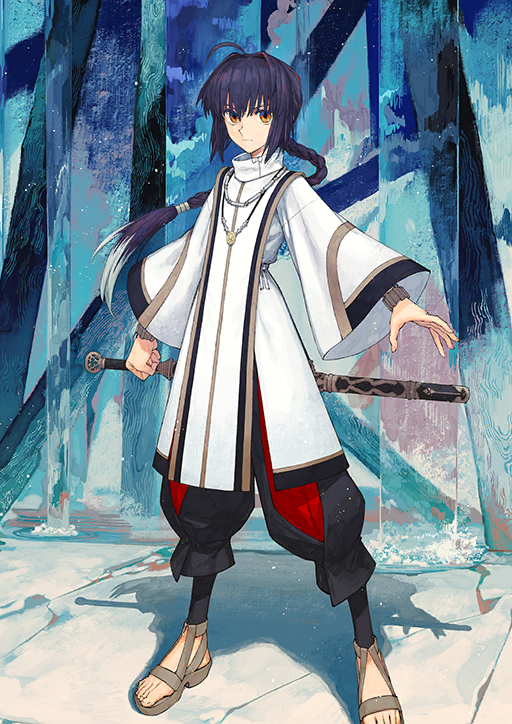
His story has also inspired generations of artists. Japanese woodblock prints, paintings and literary adaptations frequently portray his military campaigns, his encounter with the burning grassland and his association with Kusanagi. These representations have helped maintain his presence in popular understandings of ancient Japanese legend. Modern entertainment has further expanded his reach. The 1994 Japanese fantasy film Yamato Takeru reimagined the legendary prince for cinema, while manga, anime and video games continue to draw inspiration from his adventures and the sacred sword associated with him. The name Kusanagi has also appeared in numerous contemporary fictional works, demonstrating how elements of his legend have travelled beyond their original religious and literary context.
His story has also been interpreted differently across historical periods. While earlier political narratives sometimes presented him as an embodiment of loyalty to imperial authority, contemporary interpretations increasingly explore his personal suffering, complicated relationship with his father and the human cost of territorial expansion. Ultimately, Yamato Takeru remains one of Japan’s most compelling legendary heroes. His story is not simply about conquest and military achievement but also about the tension between duty, identity, sacrifice and mortality. That combination continues to make his legend relevant more than a thousand years after it was first recorded.
Related Images


Source
Aoki, M. Y. (1974). Ancient myths and early history of Japan: A cultural foundation. Exposition Press.
Aston, W. G. (1896). Nihongi: Chronicles of Japan from the earliest times to A.D. 697. Kegan Paul.
Borgen, R., & Ury, M. (1990). Readable Japanese mythologies: Selections from Nihon shoki and Kojiki. Journal of the Association of Teachers of Japanese, 24(1), 61–97.
Chamberlain, B. H. (1981). The Kojiki: Records of ancient matters. Charles E. Tuttle Company. (Original work published 1932)
Ebersole, G. L. (1989). Ritual poetry and the politics of death in early Japan. Princeton University Press.
Encyclopaedia Britannica. (2025). Yamato Takeru. https://www.britannica.com/topic/Yamato-Takeru
Philippi, D. L. (1968). Kojiki. University of Tokyo Press.
University of California, Berkeley, Office of Resources for International and Area Studies. (n.d.). Yamato bibliography of sources. https://orias.berkeley.edu/yamato-bibliography-sources
Frequently Asked Questions
Who was Yamato Takeru in Japanese mythology?
Yamato Takeru was a legendary Japanese warrior prince, son of Emperor Keikō, celebrated for his military campaigns, strategic intelligence and association with the sacred Kusanagi sword.
What is Yamato Takeru famous for?
Yamato Takeru is famous for defeating the Kumaso warriors through disguise, surviving a grassland fire using Kusanagi and becoming a legendary hero of ancient Japan.
What sword did Yamato Takeru carry?
Yamato Takeru carried Kusanagi-no-Tsurugi, the Grass-Cutting Sword, one of Japan’s Three Sacred Treasures, traditionally associated with the Shinto shrine of Atsuta Jingū.
How did Yamato Takeru die?
Yamato Takeru became seriously ill after confronting the deity of Mount Ibuki without his sacred sword. He eventually died at Nobono in the traditional account.
What happened to Yamato Takeru after his death?
According to Japanese legend, Yamato Takeru transformed into a magnificent white bird after death and flew away from his burial place, symbolising his supernatural departure.


