


Xiwangmu : The Queen Mother of the West in Chinese Tradition
At a glance
| Description | |
|---|---|
| Origin | Chinese Mythology |
| Classification | Gods |
| Family Members | Dongwanggong (Husband) |
| Region | China |
| Associated With | Immortality, Sacred peaches, Mount Kunlun |
The Mythlok Perspective
In Mythlok’s Perspective, Xiwangmu represents the fascinating relationship between divine authority and humanity’s pursuit of immortality. Her position in Chinese mythology invites comparison with Hera from Greek mythology, another powerful female deity whose authority extends across the divine hierarchy. However, while Hera’s influence centres on marriage, queenship and family, Xiwangmu governs the mysteries of longevity and the immortal realm. Their differences reveal how ancient cultures imagined feminine divine power through entirely different responsibilities, from protecting cosmic order to transcending mortality.
Xiwangmu
Introduction
Xiwangmu (西王母), widely known as the Queen Mother of the West, is one of the most fascinating and enduring divine figures in Chinese mythology. Associated with immortality, longevity and supernatural authority, she occupies a unique position between the human world and the celestial realm. Her story stretches across centuries of Chinese religious history, evolving from an intimidating supernatural presence into a revered goddess who presides over immortals and the mysteries of eternal life.
Some of the earliest descriptions of Xiwangmu appear in the Classic of Mountains and Seas (Shanhaijing), an ancient collection of geographical accounts, supernatural beings and legendary traditions. These descriptions present her as a powerful mountain-dwelling figure with distinctly animal characteristics. She was associated with heavenly punishments, calamities and forces beyond ordinary human understanding.
Her identity gradually developed as Chinese religious beliefs changed. By the Han dynasty (206 BCE–220 CE), Xiwangmu had become an important object of worship, particularly among people seeking protection, longevity and a place in the immortal world. Her image appeared in tomb decorations, religious objects and artistic representations, reflecting the widespread fascination with life beyond death.
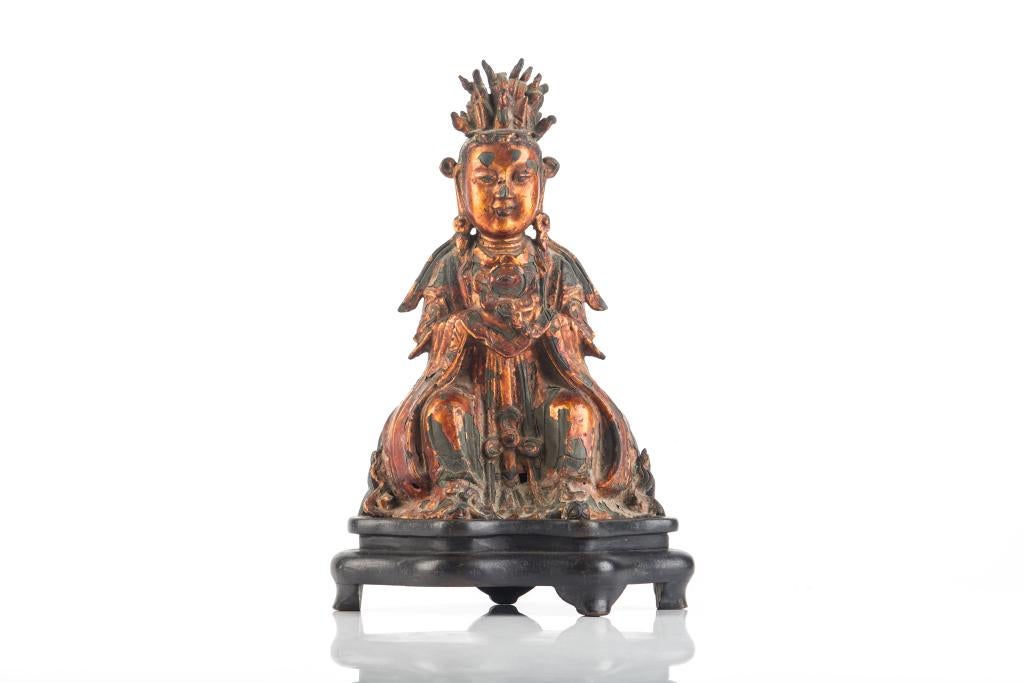
Later Daoist traditions elevated her further, establishing her as the sovereign of female immortals and the guardian of a celestial paradise in the west. Her association with Mount Kunlun, the Jade Pool and the Peaches of Immortality eventually made her one of the most recognisable goddesses in Chinese religious imagination.
Physical Traits
The physical appearance of Xiwangmu changed considerably throughout Chinese religious history. Her earliest description in the Classic of Mountains and Seas presents a being with a human body, a leopard’s tail and tiger’s teeth. She also has dishevelled hair, wears a distinctive headdress known as a sheng and is described as being skilled at whistling. This unusual appearance reflects her early association with the wilderness and supernatural forces rather than the refined image of a celestial queen familiar today.
During the Han dynasty, representations of Xiwangmu became increasingly associated with immortality and divine protection. Artists began portraying her as a majestic female deity seated in a celestial setting, surrounded by supernatural attendants and symbolic creatures. These representations were particularly important in funerary art, where her presence was connected with hopes of spiritual protection and an existence beyond death.
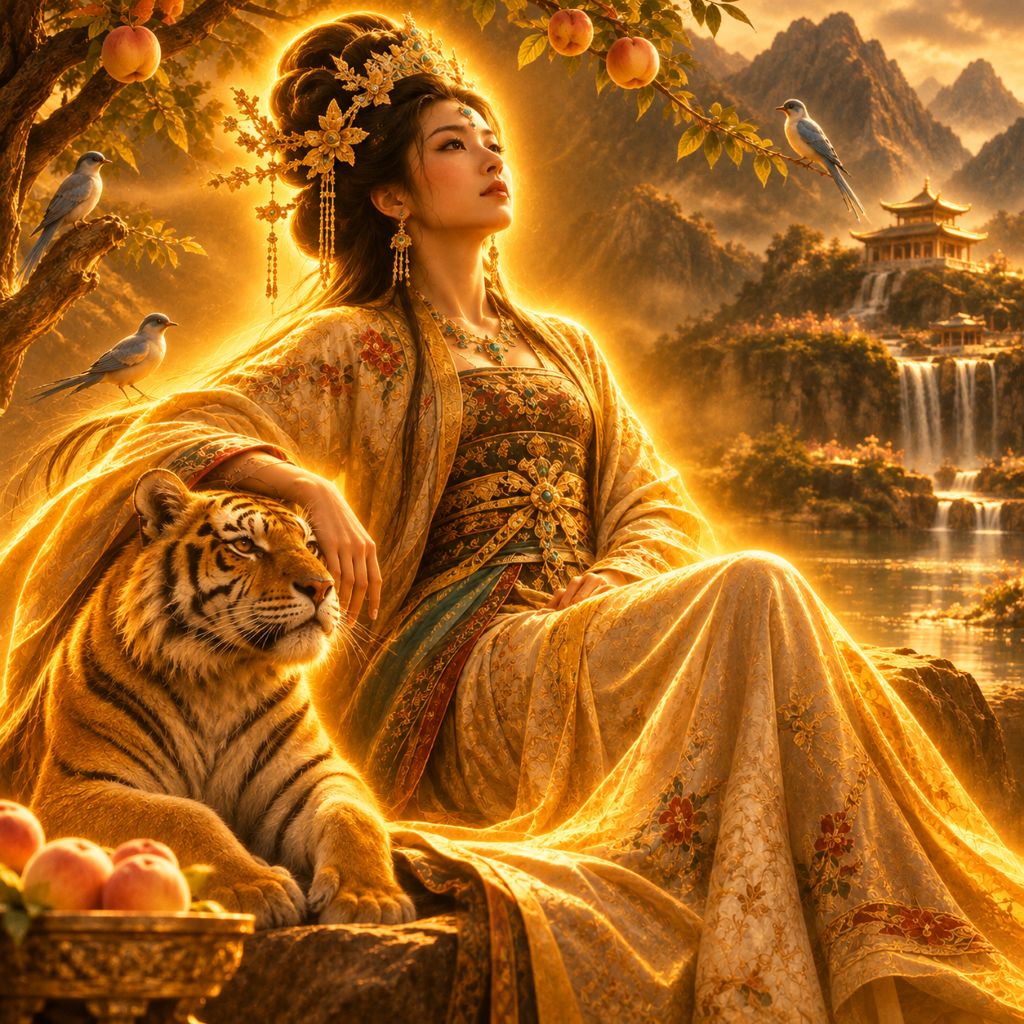
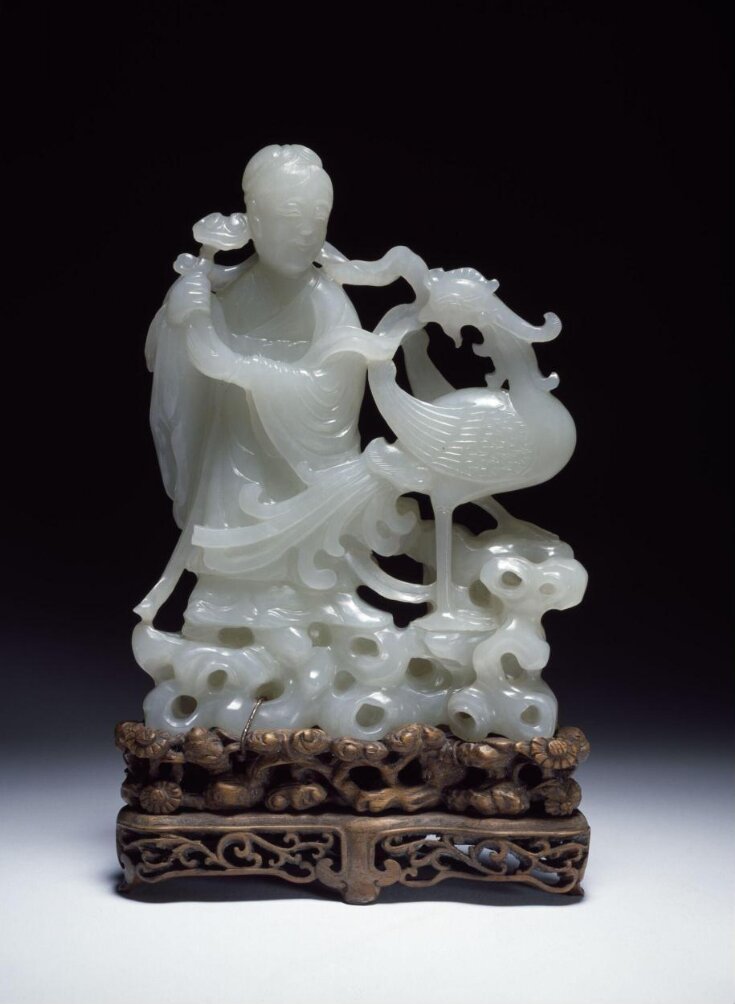
Several creatures became closely associated with her. The three blue birds, often described as supernatural messengers or attendants, were among her most recognisable companions. Other recurring figures included the nine-tailed fox, the jade hare and the three-legged bird. These creatures helped establish the visual identity of her celestial domain.
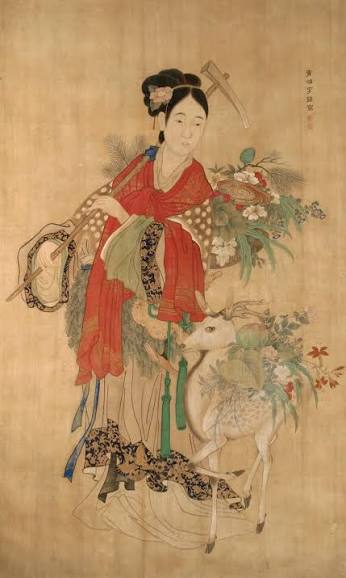
In later artistic traditions, Xiwangmu became a regal woman wearing elaborate robes and an ornate headdress. Her appearance conveyed authority, wisdom and supernatural dignity. Rather than having one fixed physical form, her changing representations reveal how different generations interpreted her divine nature.
Family
Unlike many deities in Chinese mythology, Xiwangmu does not have a universally established family genealogy. The earliest accounts concentrate on her supernatural authority, dwelling place and relationship with the immortal world rather than identifying her parents or children.
One of the most important figures associated with her is Dongwanggong (東王公), also known as the King Father of the East. In later religious traditions, he became her male counterpart, with Xiwangmu governing the western celestial realm and Dongwanggong associated with the east. Their complementary positions reflected broader ideas about cosmic balance and the relationship between opposing forces.
Some traditions describe Dongwanggong as her consort, although this relationship should not be treated as a universal feature of her earliest mythology. Their association became more established as Chinese religious traditions developed.
Xiwangmu is also connected with numerous immortals, celestial attendants and supernatural creatures. The three blue birds, in particular, are traditionally associated with serving her and carrying out her instructions. These figures belong to her celestial household rather than an established biological family. Her position as the ruler of female immortals became especially important in later Daoist traditions. This gave her authority over an entire community of supernatural beings and established her as an independent divine power rather than simply the companion of a male deity.
Other names
Xiwangmu has been known by several names and titles throughout East Asian religious and literary traditions. Her most familiar English title is Queen Mother of the West, which reflects her association with the western celestial realm.
The meaning of her original Chinese name, however, has attracted scholarly discussion. The traditional interpretation connects the characters with a royal maternal figure in the west. Some scholars, including Paul Rakita Goldin, have suggested that wangmu may have older associations with the spirit of a deceased paternal grandmother. This interpretation offers an alternative understanding of her early religious identity, although it is not universally accepted.
Other titles became popular as her religious importance expanded. Wangmu Niangniang is an honorific form commonly used in Chinese popular religious traditions. Yaochi Jinmu, meaning Golden Mother of the Jade Pool, emphasises her association with the celestial paradise and its sacred waters. Jinmu Yuanjun is another title found in later Daoist traditions.
Her name also travelled across East Asia. She is known as Seiōbo in Japanese, Seowangmo in Korean and Tây Vương Mẫu in Vietnamese. These variations demonstrate how her religious identity became part of a wider East Asian cultural tradition. Despite the differences in terminology, these names generally preserve the same central image: a powerful female divine figure associated with the western paradise, immortality and supernatural authority.
Powers and Abilities
Xiwangmu’s most celebrated power is her connection with immortality. She is traditionally associated with the Peaches of Immortality, which grow in her celestial orchard. According to developed Chinese religious and literary traditions, these extraordinary fruits take thousands of years to mature and can grant exceptional longevity or immortality to those permitted to eat them.
The peaches became one of the defining symbols of Xiwangmu. They represented humanity’s ancient desire to overcome death and gain access to a supernatural existence. Her celestial banquets, where these fruits were served to gods and immortals, became recurring subjects in Chinese art and storytelling. Her association with immortality extends beyond the peaches. Xiwangmu was regarded as a guardian of sacred knowledge and the supernatural forces governing the boundary between life and death. In some traditions, she could offer protection, grant blessings and assist those seeking spiritual transcendence.
Her earlier mythology presents a considerably more intimidating figure. The Classic of Mountains and Seas associates her with heavenly calamities and punishments, while later accounts connect her with plague, disaster and the supernatural powers responsible for controlling destructive forces. These associations suggest that her authority originally extended beyond benevolent protection.
As Daoist traditions developed, Xiwangmu became the sovereign of female immortals and an important figure within the celestial hierarchy. Her residence was increasingly associated with Mount Kunlun and the Jade Pool, a supernatural landscape separated from the ordinary human world. Her powers therefore encompass two seemingly different aspects of divinity. She can represent the destructive forces of nature while also offering protection, longevity and the possibility of transcending mortality.
Modern Day Influence
Xiwangmu continues to hold an important place in Chinese religious and cultural traditions. Her association with longevity makes her particularly significant in celebrations and artistic representations connected with birthdays, prosperity and the hope for a long life. Images of the goddess and her peaches remain recognisable symbols of good fortune and divine blessings.
Her influence also extends beyond mainland China. In Japan, she became a popular subject in religious paintings, decorative arts and theatrical traditions. During the Momoyama and Edo periods, representations of Seiōbo appeared in paintings and objects associated with marriage, birthdays and celebrations. Her image was particularly appropriate for occasions where longevity and prosperity were important themes.
Chinese literature has also preserved her legacy. One of her most famous appearances occurs in the Ming dynasty novel Journey to the West. The celestial Peach Banquet organised in her honour becomes central to the adventures of Sun Wukong, the Monkey King. His interference with the celebration and the theft of the Peaches of Immortality introduce one of the novel’s most memorable episodes.
Her story continues to attract academic interest because it reveals how religious identities evolve over time. Scholars examine her transformation through ancient literature, Han dynasty funerary art, Daoist traditions and the changing understanding of female divinity in East Asia.
Xiwangmu’s lasting significance lies in the unusual combination of authority, danger and benevolence within her character. She represents humanity’s fascination with immortality, but her earliest descriptions also remind us that supernatural power was not always understood as something gentle or reassuring. Across centuries of Chinese tradition, the Queen Mother of the West has remained a guardian of mysteries that ordinary mortals can only hope to understand.
Related Images




Source
Britannica, T. Editors of Encyclopaedia. (2025). Xiwangmu. Encyclopaedia Britannica. https://www.britannica.com/topic/Xiwangmu
Britannica, T. Editors of Encyclopaedia. (2025). Pantao. Encyclopaedia Britannica. https://www.britannica.com/topic/pantao
Britannica, T. Editors of Encyclopaedia. (2026). Taoism: Symbolism and mythology. Encyclopaedia Britannica. https://www.britannica.com/topic/Taoism/Symbolism-and-mythology
Cahill, S. E. (1993). Transcendence and divine passion: The Queen Mother of the West in medieval China. Stanford University Press.
Springer. (2018). Chinese Queen Mother of the West: Xi Wang Mu (西王母). In Encyclopedia of psychology and religion. Springer. https://link.springer.com/rwe/10.1007/978-3-642-27771-9_200178-1
Cambridge University Press. (1994). Transcendence and divine passion: The Queen Mother of the West in medieval China [Book review]. Journal of the Royal Asiatic Society, 4(3), 447–449. https://www.cambridge.org/core/journals/journal-of-the-royal-asiatic-society/article/abs/transcendence-and-divine-passion-thequeen-mother-of-the-west-in-medieval-china-by-suzanne-e-cahill-pp-xxii-303-8-figs-map-stanford-calif-stanford-universitypress-1993/B945D02D37AD31470B151D45C03B8501
Mythology Chinese. (2026). Chinese Queen Mother of the West: Xi Wang Mu (西王母). https://www.mythologychinese.com/Xiwangmu/
Mythopedia. (2022). Xiwangmu. https://mythopedia.com/topics/xiwangmu/
Frequently Asked Questions
Who is Xiwangmu in Chinese mythology?
Xiwangmu is the Queen Mother of the West, an ancient Chinese goddess associated with immortality, longevity and the celestial realm of Mount Kunlun.
What powers does Xiwangmu possess?
Xiwangmu is associated with immortality, divine protection, longevity and authority over female immortals. She also possesses the legendary Peaches of Immortality.
Is Xiwangmu married to Dongwanggong?
Some later Chinese religious traditions describe Dongwanggong as Xiwangmu’s consort and male counterpart, although their relationship is not consistently established in early mythology.
Where does Xiwangmu live?
Xiwangmu is traditionally associated with Mount Kunlun and the Jade Pool, a celestial paradise in the western reaches of Chinese cosmology.
What are Xiwangmu's Peaches of Immortality?
They are magical fruits from her celestial orchard, traditionally believed to grant extraordinary longevity or immortality to those who eat them.


