
Sodop : The Mysterious Gold Spirit of Philippine Lore
At a glance
| Description | |
|---|---|
| Origin | Philippine Mythology |
| Classification | Spirits |
| Family Members | N/A |
| Region | Philippines |
| Associated With | Gold, Wealth, Material value, Prosperity |
The Mythlok Perspective
In Mythlok’s Perspective, Sodop represents more than just gold; she embodies humanity’s timeless relationship with value and desire. Unlike structured wealth deities from other traditions, her fragmented presence reflects a culture where meaning is rooted in environment rather than hierarchy. Comparable to figures like Lakshmi from Indian traditions or Plutus from Greek belief, Sodop differs by lacking narrative dominance, existing instead as a quiet force. This makes her less a character and more an idea, one shaped by both abundance and restraint.
Sodop
Introduction
Sodop is a little-known yet intriguing figure in Philippine folklore, most often identified as a deity or spirit associated with gold. Unlike major figures such as Bathala or Mayari, Sodop appears in fragmented records and compiled lists of pre-colonial deities, which makes her both mysterious and fascinating. The scarcity of detailed narratives surrounding Sodop reflects a broader challenge in studying Philippine traditions, where much knowledge was passed down orally and later disrupted during colonization.
In some interpretations, Sodop is understood as a symbolic embodiment of wealth, material value, and the allure of gold. Other interpretations, especially those influenced by regional traditions like those of Mindanao, hint at a more complex identity tied to deeper spiritual or even underworld associations. This duality suggests that Sodop may not represent a single, unified myth but rather a convergence of beliefs shaped by different indigenous cultures across the Philippines.
Physical Traits
There are no confirmed descriptions of Sodop’s physical appearance in traditional sources. This absence is not unusual within Philippine folklore, where many deities and spirits are defined more by their essence than their form. Instead of fixed imagery, Sodop is often imagined through symbolic interpretation.
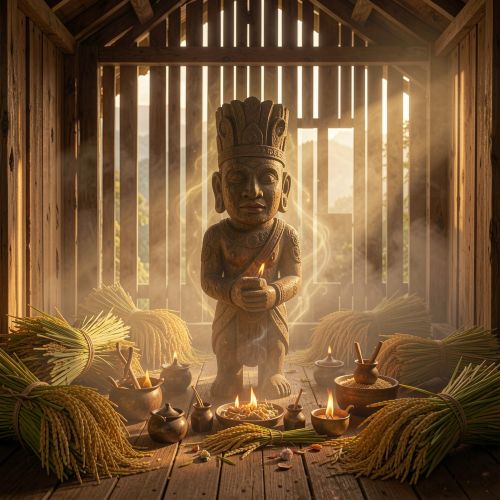
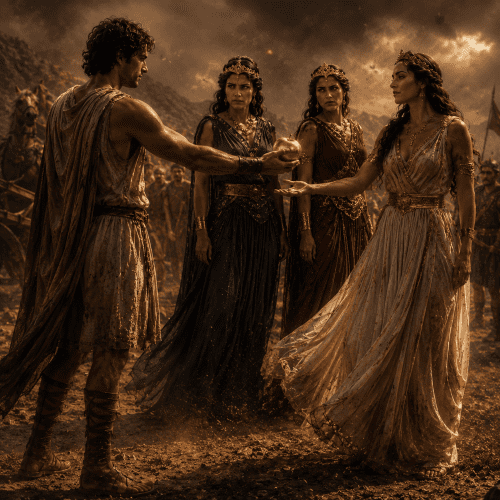
In modern artistic representations, she may be depicted with golden tones, radiant skin, or adorned in ornaments, reflecting her association with wealth and precious metals. In some interpretations influenced by underworld traditions, Sodop takes on a more shadowy or ethereal presence, representing both the beauty and danger of material desire. These visualizations, however, are contemporary reconstructions rather than canonical depictions.
Family
Sodop does not have a documented family lineage in surviving mythological records. Unlike central deities who are part of structured pantheons with clear relationships, Sodop exists independently without known parents, siblings, or offspring.
This lack of familial connection may indicate that she belonged to a localized belief system or functioned as a specialized deity whose role did not require integration into a larger divine hierarchy. It also reflects the fragmented nature of Philippine mythology, where different regions preserved different aspects of spiritual belief without a unified narrative structure.
Other names
Sodop is sometimes written as S’dop or S’dop in various sources. These variations arise from transliteration differences and the oral nature of Philippine traditions rather than representing distinct identities. Despite these spelling changes, the core identity remains consistent. Sodop continues to be associated with gold, value, and symbolic wealth across all references.
Powers and Abilities
Sodop’s primary domain is gold, making her a representation of wealth, prosperity, and material allure. While no detailed myths describe her performing specific actions or miracles, her association alone suggests influence over the presence, value, and possibly the distribution of precious metals.
Gold in Philippine culture was historically significant, used in trade, ornamentation, and ritual offerings. As such, a deity linked to gold would naturally carry immense symbolic power. Sodop may have been invoked indirectly through practices related to wealth, status, or offerings, even if direct rituals are not documented.
Some comparative interpretations link her loosely to other Southeast Asian figures associated with wealth or greed, suggesting that Sodop might represent both the blessing and burden of riches. This dual symbolism aligns with many mythological traditions where wealth is both desirable and dangerous.
Modern Day Influence
Although Sodop is not widely featured in mainstream Philippine media, her presence has subtly re-emerged in modern cultural expressions. One notable example is her influence in contemporary pop culture, where the name “Sodop” has been used to represent a symbolic realm of gold and prosperity in visual storytelling, such as music videos inspired by indigenous mythology.
More broadly, Sodop’s continued mention in online mythological compilations, educational platforms, and cultural revival efforts highlights a growing interest in rediscovering pre-colonial Filipino beliefs. Initiatives like folklore preservation projects and academic studies are helping bring lesser-known figures like Sodop back into public awareness.
In rural areas and among cultural practitioners, belief systems rooted in indigenous spirituality still persist. Even when Sodop is not directly worshipped, the ideas she represents—wealth, value, and the spiritual significance of natural resources—remain embedded in Filipino cultural identity.
Related Images



Source
Jocano, F. L. (1969). Outline of Philippine mythology. Centro Escolar University Research and Development Center.
Landa Jocano, F. (2000). Notes on Philippine divinities. (Document compilation).
Philippine mythology. (2024, April). In Wikipedia. https://en.wikipedia.org/wiki/Philippine_mythology
List of Philippine mythological figures. (2024, April). In Wikipedia. https://en.wikipedia.org/wiki/List_of_Philippine_mythological_figures
Sodop (Born To Win) – BINI Wiki – Fandom. (n.d.). https://bini.fandom.com/wiki/Sodop_(Born_To_Win)
Philippine Mythology | PPTX – Slideshare. (2011). https://www.slideshare.net/slideshow/philippine-mythology/10484966
A Handout Filipino Mythology Gods and Goddesses | PDF – Scribd. (n.d.). https://www.scribd.com/document/100126839/A-Handout-Filipino-Mythology-Gods-and-Goddesses
Filipino Mythology Gods and Goddesses Tagalogs | PDF – Scribd. (n.d.). https://fr.scribd.com/doc/167929011/Filipino
Cole, F. C. (1913). The Wild Tribes of Davao District, Mindanao. Chicago: Field Museum of Natural History.
Demetrio, F. R. (1992). Myths and Symbols: Philippines. Manila: National Bookstore.
Manuel, E. A. (1973). Philippine Folklore. Quezon City: University of the Philippines Press.
Frequently Asked Questions
Who is Sodop in Philippine folklore?
Sodop is a lesser-known deity or spirit linked to gold and wealth in Philippine pre-colonial traditions.
What does Sodop represent?
Sodop symbolizes gold, prosperity, and the cultural value of material wealth in early Filipino belief systems.
Is Sodop part of a major pantheon?
No, Sodop appears independently without clear ties to major deities like Bathala.
Are there stories about Sodop?
There are no detailed myths; most references come from compiled lists of deities.
Is Sodop still relevant today?
Yes, Sodop appears in modern cultural reinterpretations and ongoing folklore preservation efforts.