

Beowulf : The Old English Epic That Defined a Civilization
At a glance
| Attribute | Description |
|---|---|
| Mythology | Germanic Mythology |
| Language Written | Old English |
| Age | Circa 700–1000 CE |
| Author | Anonymous |
| Main Characters | Beowulf, Hrothgar, Grendel, Grendel’s Mother, Dragon, Wiglaf |
Mythlok Perspective
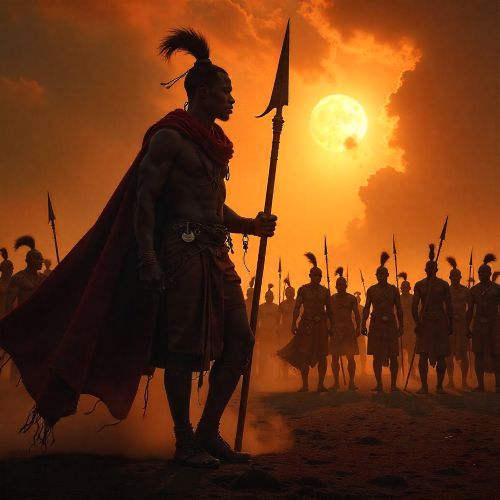
In Mythlok’s Perspective, Beowulf endures because it presents heroism as a journey through the stages of life rather than a single act of bravery. The young warrior who defeats Grendel seeks glory, but the aging king who faces the dragon seeks responsibility and protection for his people. The poem’s true power lies in this transformation. Cross-culturally, Beowulf shares striking similarities with heroes such as Gilgamesh from Mesopotamian tradition and Arjuna from the Mahabharata. Like them, Beowulf confronts not only external monsters but also the reality of mortality. These heroes remind us that greatness is measured not by invincibility, but by the willingness to face inevitable challenges with courage and honor.
Beowulf
Introduction
Beowulf is one of the most important works in the history of English literature. Written in Old English and preserved in a single medieval manuscript, the poem tells the story of a heroic warrior whose courage and sense of duty make him a legendary figure. Although the events take place in Scandinavia among the Danes and Geats, the poem reflects the values and beliefs of Anglo-Saxon England, where it was composed.
Scholars generally believe that Beowulf was written sometime between the 8th and early 11th centuries, with the surviving manuscript dating to around 1000 CE. The poem contains 3,182 lines and is widely regarded as the earliest surviving epic written in a European vernacular language. More than a tale of monster-slaying, Beowulf explores leadership, loyalty, mortality, and the search for lasting fame. Its themes remain relevant today, helping the poem endure for over a thousand years.
Historical Background
The story of Beowulf is set in the 6th century among Germanic tribes in what is now Denmark and southern Sweden. Many of its characters are linked to historical figures and royal lineages known from other early medieval sources. One notable example is King Hygelac of the Geats, whose death is also mentioned by the historian Gregory of Tours, providing a rare historical anchor for the narrative.
The poem survives in a manuscript known as the Nowell Codex, which was copied around 975–1025 CE. Unfortunately, the original composition date remains uncertain. Most scholars place its creation between 700 and 1000 CE, with many favoring the 8th century. Like many early medieval works, the author remains unknown and is commonly referred to as the “Beowulf Poet.”
Beowulf emerged from a rich oral storytelling tradition. Before being written down, stories of heroes and kings were likely recited by poets known as scops in royal halls. The poem preserves many features of this tradition, including alliterative verse, vivid imagery, and ceremonial speeches. At the same time, it reflects a society undergoing religious transformation, blending older pagan traditions with newer Christian ideas.
Synopsis & Themes
The epic follows the life of Beowulf, a prince of the Geats renowned for his extraordinary strength and bravery. Hearing that the Danish king Hrothgar is being terrorized by a monster named Grendel, Beowulf sails to Denmark with a band of warriors to offer his assistance.
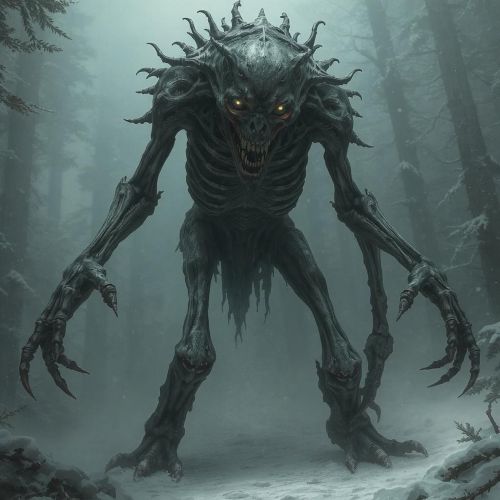
Grendel has been attacking Heorot, Hrothgar’s magnificent mead hall, for years. Refusing to use weapons, Beowulf confronts the monster in hand-to-hand combat and tears off Grendel’s arm. Mortally wounded, the creature flees and dies. The victory brings celebration, but peace is short-lived.
Seeking revenge for her son’s death, Grendel’s mother attacks Heorot. Beowulf tracks her to a mysterious underwater lair and defeats her after a fierce battle. Having restored safety to the Danes, he returns home in triumph.
The poem’s final section takes place fifty years later. Beowulf is now king of the Geats and has ruled wisely for decades. When a dragon awakens after a treasure hoard is disturbed, the aging king chooses to confront the threat himself. Although he succeeds in killing the dragon with the help of Wiglaf, he receives a fatal wound and dies. His death marks the end of an era and leaves his people uncertain about the future.
Several powerful themes run throughout Beowulf. Heroism is portrayed as a willingness to risk one’s life for others. The concept of wyrd, or fate, reminds readers that even the greatest heroes cannot escape mortality. The poem also emphasizes the importance of reputation and legacy, suggesting that honorable deeds allow a person to live on in memory long after death.
Another significant theme is the tension between pagan and Christian values. While the characters operate within a warrior culture that prizes vengeance and honor, the narrator frequently interprets events through a Christian moral framework. This combination creates a unique perspective on heroism, responsibility, and human destiny.
Key Characters
Beowulf is the central figure of the epic and serves as the ideal heroic warrior. He possesses immense physical strength, unwavering courage, and a deep sense of duty. Throughout the poem, he evolves from a young adventurer seeking glory into a wise ruler willing to sacrifice himself for his people.
King Hrothgar rules the Danes and serves as a mentor figure to Beowulf. Though unable to defeat Grendel himself, he offers wisdom and insight about leadership, power, and the responsibilities that come with kingship. Grendel is the first monster Beowulf faces. Isolated from human society and consumed by hatred, he attacks Heorot because he cannot tolerate the joy and fellowship found there. The poem describes him as a descendant of Cain, linking him to biblical traditions of exile and sin.
Grendel’s mother is a more complex antagonist. Motivated by grief and revenge, she seeks justice according to the values of the warrior culture that shapes the poem’s world. Her actions mirror the cycle of vengeance that drives much of the story. The dragon serves as Beowulf’s final adversary. Unlike Grendel, it is not motivated by envy or rage but by possessiveness and greed. As a symbol of mortality and the inevitable decline of earthly achievements, the dragon represents the ultimate challenge faced by the aging hero.
Wiglaf is Beowulf’s loyal young companion. When all the other warriors flee during the dragon battle, Wiglaf remains at his king’s side. His loyalty exemplifies the heroic code and suggests hope for the future after Beowulf’s death.
Cultural & Religious Significance
Few literary works provide as much insight into early medieval Germanic society as Beowulf. The poem offers a detailed picture of the warrior culture that shaped northern Europe during the Migration Period. Loyalty between rulers and their retainers was central to social stability, and personal honor was considered one of the highest virtues.
A key symbol within the poem is Heorot, the great mead hall of King Hrothgar. More than a building, it represents community, prosperity, and social order. The repeated attacks on Heorot therefore symbolize threats to the very foundations of civilization.
Religion also plays an important role in the poem. Although the story is set before the Christianization of Scandinavia, the narrator often interprets events through a Christian lens. References to biblical figures and divine providence coexist with older beliefs in fate, heroic destiny, and supernatural creatures.
This blending of traditions reflects the transitional period in which the poem was composed. Anglo-Saxon society was moving from pagan Germanic beliefs toward Christianity, and Beowulf captures both worlds simultaneously. The result is a rich cultural synthesis that has fascinated historians, literary scholars, and readers for generations.
The poem’s modern reputation owes much to J. R. R. Tolkien. His influential 1936 lecture, Beowulf: The Monsters and the Critics, argued that the poem should be appreciated as a literary masterpiece rather than merely a historical source. Tolkien’s interpretation transformed the study of Beowulf and helped secure its place as a foundational work of world literature.
Modern Adaptations
The enduring popularity of Beowulf has inspired countless adaptations across literature, film, theatre, and popular culture. Each generation has reinterpreted the story to reflect contemporary concerns while preserving its timeless themes. In literature, one of the most famous retellings is Grendel by John Gardner, which presents the story from the monster’s perspective. Another notable adaptation is Eaters of the Dead by Michael Crichton, which combines elements of Beowulf with historical adventure.
The story has also appeared on screen in films such as Beowulf & Grendel and Beowulf, the latter directed by Robert Zemeckis and featuring groundbreaking motion-capture technology. Stage productions, operas, graphic novels, and video games continue to draw inspiration from the epic. These adaptations demonstrate the remarkable flexibility of the story and its ability to resonate with audiences across different cultures and eras.
More than a thousand years after its creation, Beowulf remains a powerful exploration of courage, leadership, sacrifice, and the human struggle against forces beyond our control. Its influence can be seen not only in literature but also in modern fantasy, making it one of the most enduring heroic narratives ever written.

Source
Britannica, E. (2026, May 10). Beowulf | Summary, Poem, Characters, Monster, Analysis, & Facts. Britannica. https://www.britannica.com/topic/Beowulf
Heaney, S. (2000). Beowulf. Faber and Faber.
LitCharts. (2016, September 6). Christianity and Paganism Theme Analysis – Beowulf. LitCharts. https://www.litcharts.com/lit/beowulf/themes/christianity-and-paganism
Notes. (2024, October 26). Beowulf: Summary, Themes & UGC NET Exam Notes. UGC NET English Notes. https://notes.ugcnetenglish.in/british-literature/early-history-britain/beowulf
Paganheim. (2024, December 18). Beowulf: Epic Narrative of Medieval Germanic Heroism. Paganheim. https://paganheim.com/blogs/mythology/beowulf-epic-narrative-of-medieval-germanic-heroism
Tolkien, J. R. R. (1936). Beowulf: The Monsters and the Critics. Proceedings of the British Academy.
Wikipedia. (2007, July 29). List of adaptations of Beowulf. Wikipedia. https://en.wikipedia.org/wiki/List_of_adaptations_of_Beowulf
Frequently Asked Questions
Who was Beowulf?
Beowulf is the legendary Geatish hero of the Old English epic poem Beowulf, famous for defeating Grendel, Grendel’s mother, and a dragon
Is Beowulf based on a real person?
Beowulf himself is likely legendary, but several characters and events in the poem are connected to real historical figures and kingdoms.
What does Grendel symbolize in Beowulf?
Grendel often symbolizes chaos, isolation, and the threats that exist outside the boundaries of civilized society.
Why is Beowulf important?
Beowulf is the oldest surviving English epic and provides valuable insights into Anglo-Saxon culture, beliefs, and heroic ideals.
What is the main theme of Beowulf?
The central themes include heroism, fate, mortality, leadership, loyalty, and the pursuit of lasting legacy.