

Epic of Manas : The Story That Defines Kyrgyz Identity
At a glance
| Attribute | Description |
|---|---|
| Mythology | Central Asian Mythology |
| Language Written | Kyrgyz |
| Age | Oral tradition over 1,000 years; written references from 18th century |
| Author | Anonymous; preserved by manaschi (bards) |
| Main Characters | Manas, Kanykei, Semetey, Seytek, Bakai, Almambet, Kongurbai |
Mythlok Perspective
In Mythlok’s View, the Epic of Manas is not just a heroic saga but a civilizational memory encoded through storytelling. It reflects how cultures use narrative to preserve identity across time. Unlike purely divine epics, Manas balances human leadership with spiritual guidance, grounding myth in lived experience. In comparison, it shares structural similarities with the Indian Mahabharata in its generational storytelling, while echoing the Iliad in its focus on war and honor, yet it remains uniquely rooted in nomadic philosophy.
Epic of Manas
Introduction
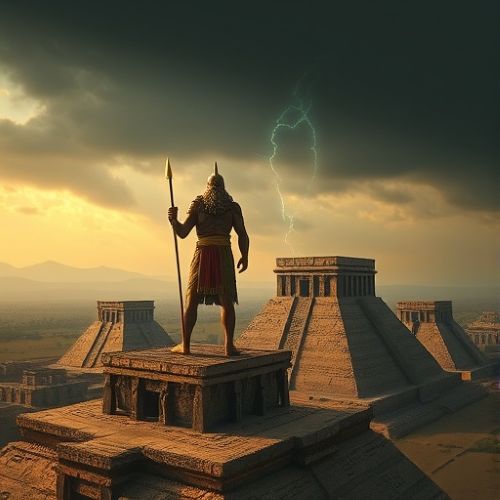
The Epic of Manas is widely regarded as the longest surviving oral epic in the world and remains the cultural backbone of the Kyrgyz people. Known locally as Manas dastany, it is not just a story but a living tradition that carries history, belief systems, and social values across generations. Performed by skilled storytellers called manaschi, the epic has been passed down orally for centuries, often improvised during recitations.
What makes the Epic of Manas remarkable is not just its scale, often estimated at over half a million lines, but its role as a cultural archive. It preserves the worldview of a nomadic civilization, capturing everything from warfare and diplomacy to family structures and spirituality. Today, it continues to influence identity in Kyrgyzstan and among Kyrgyz communities beyond its borders, standing alongside global epics like the Mahabharata and the Iliad in both scale and significance.
Historical Background
The origins of the Epic of Manas are complex and layered, shaped by centuries of oral transmission. While Kyrgyz tradition often places its beginnings around the 10th century, scholars suggest that the narrative likely evolved between the 9th and 18th centuries. Elements within the story appear to reflect historical conflicts, including the defeat of the Uyghur Khaganate around the 9th century and later tribal struggles across Central Asia.
The epic remained unwritten for most of its existence, preserved instead through memory and performance. Early documentation began in the 19th century when scholars such as Chokan Valikhanov and Vasily Radlov recorded portions of the tale. One of the most important recorded versions came from the renowned manaschi Sagymbay Orozbakov in the early 20th century, whose recitations helped preserve the epic during a time of major social change.
During the Soviet era, the Epic of Manas faced ideological challenges, with certain interpretations criticized or censored. Despite this, it endured and later became a powerful symbol of national identity after Kyrgyzstan gained independence. The celebration of its millennium in 1995 marked a turning point, elevating it to global recognition and reinforcing its place as a cultural treasure.
Synopsis & Themes
The Epic of Manas unfolds across multiple generations, most commonly structured as a trilogy focusing on Manas, his son Semetei, and his grandson Seytek. Some versions extend even further, presenting a continuous lineage of heroes who defend and define the Kyrgyz people.
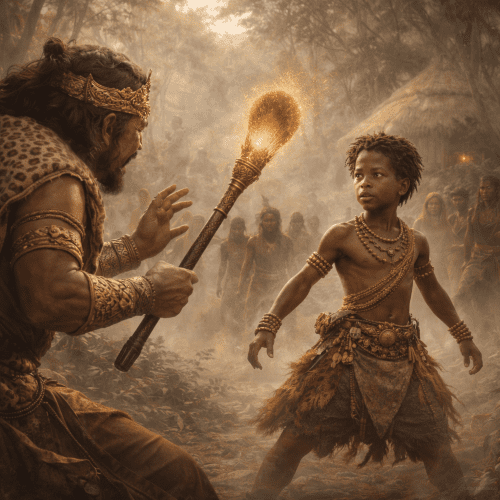
The narrative begins with the birth of Manas, a long-awaited child destined to unite fragmented tribes. As he grows, he gathers allies, defeats rival forces such as the Oirats, and establishes a sense of unity among his people. His leadership is not only defined by strength in battle but also by his ability to build alliances and maintain order. After his death, the story continues through Semetei, who must reclaim his legacy amid exile and internal conflict, and Seytek, who carries forward the responsibility of preserving unity.
At its core, the Epic of Manas explores themes of unity, resilience, and identity. It emphasizes the importance of collective strength over individual glory, portraying victory as a result of cooperation and shared purpose. The epic also highlights loyalty, justice, and the moral responsibilities of leadership. Family bonds play a central role, particularly the idea of lineage and inheritance, where each generation must uphold the sacrifices of the previous one.
Another key theme is the balance between the physical and spiritual worlds. Dreams, omens, and divine guidance frequently influence events, reflecting a worldview where the material and supernatural are deeply intertwined. Through these elements, the epic presents not just a history of battles but a philosophical framework for understanding life.
Key Characters
The characters of the Epic of Manas are larger than life, yet deeply human in their motivations and relationships. Manas himself is the central figure, portrayed as a warrior of immense strength and a unifier of tribes. His leadership defines the foundation of the narrative, representing courage, vision, and responsibility.
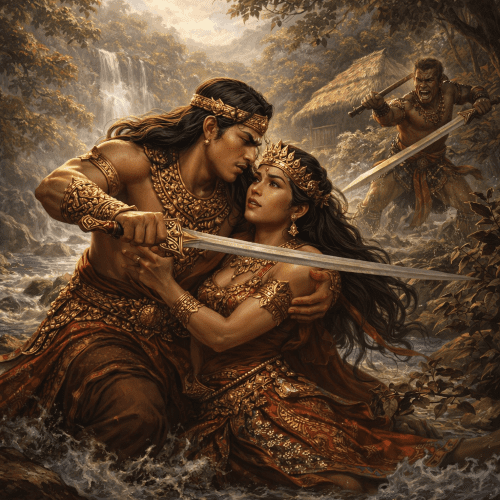
Kanykei, his wife, is one of the most respected figures in the epic. She is not only a devoted partner but also a strategist and protector of her family’s legacy. Her intelligence and resilience often shape the direction of events, making her a key force within the story.
Semetei, the son of Manas, represents the struggle of inheriting a legacy. His journey is marked by exile, conflict, and eventual restoration, reflecting the challenges of living up to a heroic lineage. Seytek, the grandson, continues this cycle, embodying continuity and the enduring spirit of the Kyrgyz people.
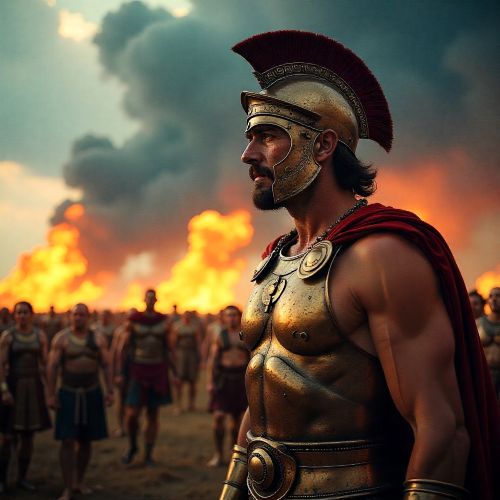
Supporting figures such as Bakai, the wise elder, and Almambet, a loyal warrior who joins Manas, add depth to the narrative. These characters highlight the importance of counsel, friendship, and trust in achieving collective goals. Antagonists, often depicted as external invaders or rival leaders, serve to reinforce the central theme of unity against division.
Cultural & Religious Significance
The Epic of Manas holds a unique place as both a cultural and spiritual symbol. It functions as a repository of Kyrgyz traditions, preserving language, customs, and ethical values in a form that remains accessible through performance. The role of the manaschi is especially significant, as these storytellers are seen not merely as performers but as custodians of ancestral knowledge.
Religiously, the epic reflects a blend of older Central Asian beliefs and later Islamic influences. Elements of Tengri worship, centered on the sky and natural forces, coexist with Islamic values and moral teachings. This fusion creates a layered spiritual framework that mirrors the historical evolution of the Kyrgyz people.
In modern Kyrgyzstan, the epic continues to shape national identity. It is taught in schools, celebrated in festivals, and represented in monuments such as those in Bishkek’s Ala-Too Square. The imagery of Manas and the symbolism of unity are deeply embedded in the nation’s cultural consciousness, making the epic a cornerstone of both heritage and identity.
Modern Adaptations
The Epic of Manas has successfully transitioned into the modern world while retaining its traditional essence. Contemporary performances by manaschi remain a vital part of cultural life, often featured at festivals and public events. These recitations continue to evolve, demonstrating the flexibility of oral storytelling in adapting to new audiences.
In addition to live performances, the epic has found new forms in literature, film, and digital media. Documentaries and television adaptations have introduced its stories to wider audiences, while translations into multiple languages have made it more accessible globally. Museums such as the Manas Ordo complex serve as cultural hubs, preserving artifacts and educating visitors about the epic’s significance.
Educational initiatives also play a key role in keeping the tradition alive. The inclusion of Manas studies in academic curricula ensures that younger generations remain connected to their heritage. Digital platforms and virtual experiences are further expanding its reach, allowing the Epic of Manas to remain relevant in an increasingly interconnected world.


Source
Central Asia Guide. (2025). Manas national epic of Kyrgyzstan. https://central-asia.guide/kyrgyzstan/kyrgyz-culture/manas-epic/
Folkways Today. (2025). Manas and the manaschi: Foundations of the Kyrgyz soul. https://folkways.today/manas-manaschi-kyrgyzstan/
Wikipedia. (2004). Epic of Manas. https://en.wikipedia.org/wiki/Epic_of_Manas
UNESCO. (2025). Manuscript of the Kyrgyz epic Manas by the narrator Sagymbay Orozbakov. https://www.unesco.org/en/memory-world/manuscript-kyrgyz-epic-manas-narrator-sagymbay-orozbakov
Levin, T., & Sultanova, S. (2001). The Kyrgyz epic “Manas”. In The music of Central Asia (pp. 45-67). Indiana University Press.
Auezov, M. (2004). Manas: The Kyrgyz heroic epos in four parts (Vols. 1-2). International Academy of Sciences.
Ubukeyev, M. (Director). (1995). The universe of the Manas [Film]. IMDb. https://www.imdb.com/title/tt32513789/
Asiamix Travel. (2026). The Manas epic in Kyrgyz art: Statues, opera, film. https://asiamixtravel.com/blog/manas-in-art
Frequently Asked Questions
What is the Epic of Manas?
The Epic of Manas is a massive Kyrgyz oral epic narrating the life of hero Manas and his descendants across generations.
How long is the Epic of Manas?
It is considered the longest epic poem in the world, with over 500,000 lines in some versions.
Who performs the Epic of Manas?
Special storytellers called manaschi perform it through memorized yet improvised oral recitations.
What are the main themes of the Epic of Manas?
Unity, bravery, cultural identity, and generational legacy are the central themes of the epic.
Why is the Epic of Manas important today?
It preserves Kyrgyz heritage, strengthens national identity, and continues through education and modern adaptations.