


Shun : The Legendary Sage Emperor of Chinese Tradition
At a glance
| Description | |
|---|---|
| Origin | Chinese Mythology |
| Classification | Mortals |
| Family Members | Gusou (Father), Wodeng (Mother), Xiang (Half-brother), Ehuang, Nüying (Wives), Shangjun (Son) |
| Region | China |
| Associated With | Filial piety, Wisdom, Virtue, Agriculture, Governance, Justice |
The Mythlok Perspective
n Mythlok’s Perspective, Shun represents a model of leadership in which moral character matters more than inherited power. His journey from family hardship to the throne shares an interesting parallel with King Arthur of Celtic legend, whose legitimacy as ruler was established through his ability to prove himself worthy of the crown rather than simply inheriting authority. However, while Arthur’s legend centres on kingship, courage and destiny, Shun’s story places filial piety, patience and ethical conduct at its heart. Both traditions explore what makes someone worthy of leadership, reminding us that a crown may establish authority, but character determines how it is exercised.
Shun
Introduction
Shun, also known as Emperor Shun or Yu Shun (虞舜), is one of the most celebrated sage rulers in Chinese mythology and early historical tradition. Traditionally placed among the Five Emperors, he is remembered for his extraordinary filial devotion, moral integrity and ability to govern through wisdom rather than force. His story represents an important Chinese ideal: that leadership should be earned through character and service rather than inherited through bloodline.
According to traditional accounts, Shun was born into a troubled household. His father, stepmother and half-brother treated him cruelly, and some versions describe repeated attempts to kill him. Despite these hardships, Shun continued to respect his parents and fulfil his family responsibilities. His extraordinary patience and commitment to filial piety eventually attracted the attention of Emperor Yao, the legendary ruler who preceded him.
Rather than appointing his own son, Danzhu, as successor, Yao chose to test Shun’s character and administrative abilities. He gave him his two daughters in marriage and entrusted him with responsibilities that demonstrated his capacity to govern. Impressed by Shun’s conduct, Yao eventually transferred imperial authority to him.
This legendary transfer of power became particularly significant in Chinese political philosophy. It represented the principle of merit-based succession, suggesting that a ruler’s legitimacy should come from virtue and competence rather than family inheritance. Together with Yao and Yu the Great, Shun became an enduring symbol of ethical leadership in Chinese civilisation.
Physical Traits
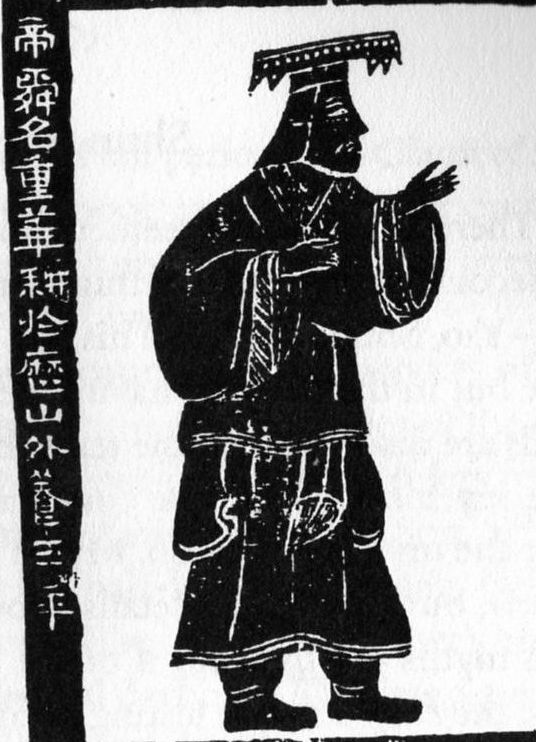
Descriptions of Shun’s physical appearance are relatively limited, but one unusual feature distinguishes him from other legendary Chinese rulers. Traditional accounts describe him as having double pupils in each eye, an extraordinary characteristic associated with his personal name, Chonghua (重華).
The name is traditionally interpreted through its association with double pupils or double brilliance. This unusual feature became an important part of his legendary identity, and later artistic representations sometimes depicted him with two pupils in each eye. In traditional Chinese symbolism, unusual physical characteristics could signify exceptional destiny, wisdom or heavenly favour.
Some later descriptions also attribute distinctive facial features and an imposing appearance to Shun. However, these details vary between accounts and should not be treated as a consistent physical description. Unlike legendary warriors and supernatural beings, Shun’s identity is not built around physical strength or extraordinary anatomy. His appearance serves primarily as a symbolic expression of his exceptional status. His double pupils remain the most recognisable physical characteristic associated with the legendary emperor.
Family
Shun’s family relationships form one of the most important parts of his legend. His father, Gusou (瞽叟), is traditionally portrayed as an unkind and difficult man who repeatedly mistreated his son. His mother, Wodeng (握登), is associated with his early life, although accounts differ regarding the circumstances of her death. Following her death, his father reportedly remarried, bringing a stepmother and half-brother into the household.
His half-brother Xiang (象) is particularly prominent in the stories. Arrogant and jealous, Xiang allegedly joined their father and stepmother in attempts to harm Shun. Some accounts describe Shun escaping dangerous situations through his intelligence and the assistance of his wives. Despite these experiences, Shun remained devoted to his parents. This behaviour became the defining example of xiao, the Confucian principle of filial piety.
Shun married Ehuang (娥皇) and Nüying (女英), the two daughters of Emperor Yao. Their marriages were traditionally understood as part of Yao’s assessment of Shun’s character and ability to manage a household. Later traditions also associate the sisters with the sacred landscape surrounding the Xiang River. Shun had a son named Shangjun (商均). However, he did not select him as his successor. Instead, he recommended Yu, the son of Gun, whose efforts to control the Great Flood eventually established his reputation as another exemplary ruler. These family relationships connect Shun’s personal struggles with his eventual position as emperor.
Other names
Shun is known by several names and honorific titles in Chinese tradition. His most familiar designation is Emperor Shun, while Yu Shun (虞舜) identifies him through his association with the Youyu clan. His personal name is Chonghua (重華), traditionally connected with the belief that he possessed double pupils. He is also called Da Shun (大舜), meaning Great Shun, an honorific reflecting his reputation as an exemplary ruler.
The designation Youyu-shi (有虞氏) refers to his traditional clan or lineage association. Some classical accounts also connect him with the Yao (姚) surname. These different names reflect the development of Shun’s identity across Chinese historical, philosophical and mythological traditions. They distinguish his personal identity, clan association and position as a legendary emperor.
Powers and Abilities
Shun is not traditionally portrayed as a deity possessing conventional supernatural powers. Instead, his exceptional abilities are associated with moral authority, wisdom, administrative competence and a remarkable relationship with the natural world. His most celebrated characteristic is his extraordinary filial piety. Despite facing mistreatment from his family, he continued to behave with patience and respect. This virtue became so central to his legend that later traditions portrayed Heaven and nature as responding directly to his goodness.
One famous story describes elephants helping Shun plough agricultural fields while birds assisted in removing weeds. These animals symbolised the harmony between a virtuous individual and the natural world. The story eventually became an important part of traditional Chinese teachings about filial devotion.
Shun was also remembered for his administrative achievements. The Shangshu, particularly the Canon of Shun, credits him with establishing twelve provinces, raising ceremonial altars on twelve mountains and deepening rivers. These activities reflect his association with territorial organisation, public administration and maintaining social order. His leadership also involved appointing capable officials and establishing standards of justice. Traditional accounts describe his efforts to address disorder and punish wrongdoing while maintaining fairness.
Another important achievement was his decision to recommend Yu as his successor. Rather than automatically favouring his own son, Shun recognised Yu’s abilities and contributions to flood management. This decision reinforced his reputation as a ruler who placed the welfare of the kingdom above personal interests. Shun’s greatest power, therefore, was not supernatural strength but the ability to inspire cooperation, maintain order and earn the trust of those around him.
Modern Day Influence
Shun continues to occupy an important position in Chinese cultural memory, particularly through his association with filial piety and ethical leadership. His story remains a familiar reference in discussions of traditional Chinese values, family responsibilities and the moral obligations of rulers. One of the most influential representations of Shun appears in The Twenty-Four Filial Exemplars, a traditional collection celebrating individuals whose devotion to their parents demonstrated exceptional virtue. Shun appears as its first example, with the story of animals helping him cultivate the fields illustrating how his goodness supposedly moved Heaven and Earth.
His influence also extends into Chinese political philosophy. The legendary transfer of authority from Yao to Shun became an important example in discussions about merit-based succession. It offered an alternative to hereditary inheritance by suggesting that the most capable and virtuous individual should govern. Shun is also associated with several cultural and geographical traditions. Jiuyi Mountain in Hunan Province is traditionally identified as his burial place, while stories connected with his agricultural activities survive in regional folklore.
His wives, Ehuang and Nüying, also became important figures in Chinese literary and religious traditions, particularly through their association with the Xiang River and its sacred landscape. Today, Shun remains more than a legendary emperor. He represents an enduring cultural ideal in which personal integrity, responsibility and public service are considered more important than wealth, ancestry or political power.
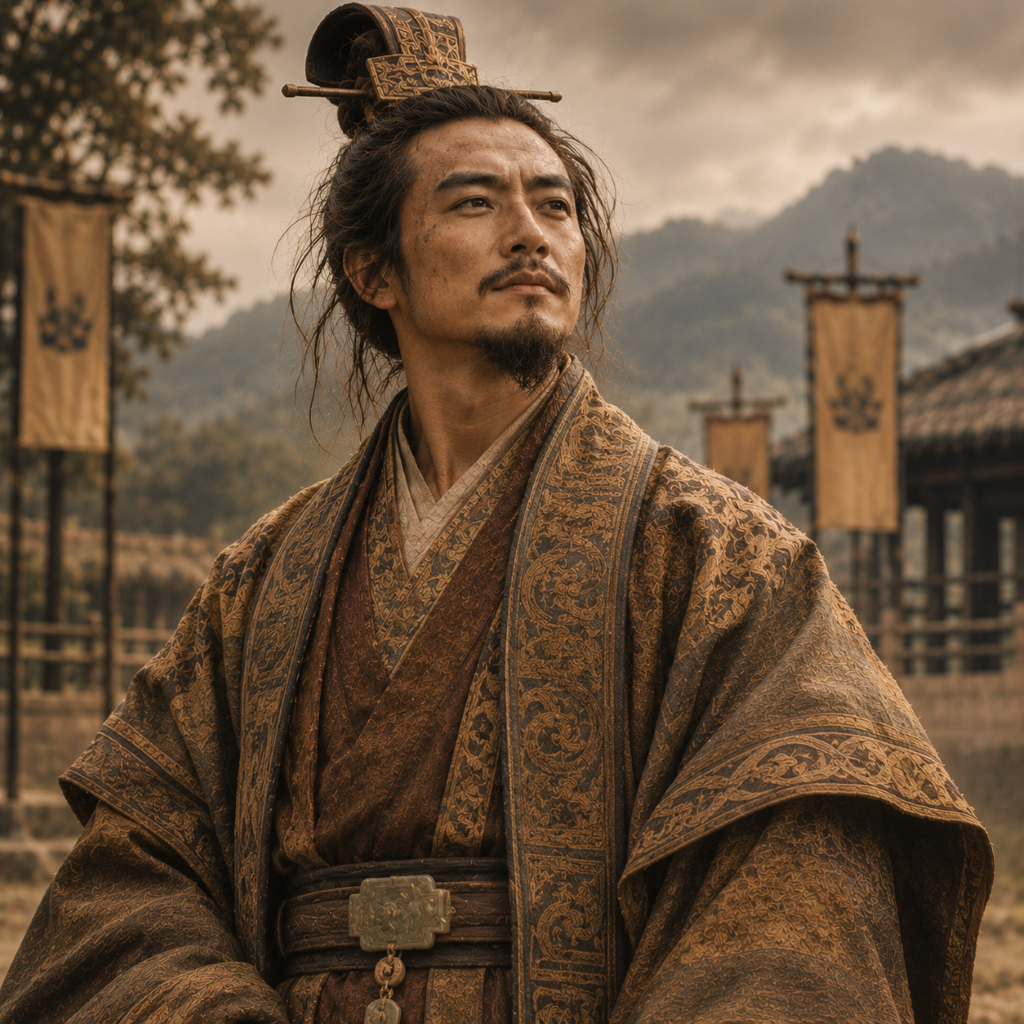
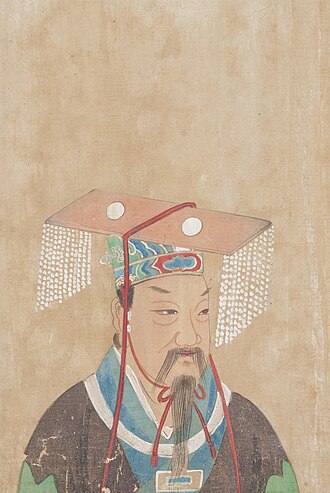
Related Images



Source
Birrell, A. (1993). Chinese mythology: An introduction. Johns Hopkins University Press.
Britannica. (2025, March 30). Shun. https://www.britannica.com/topic/Shun
Chinaknowledge. (2012). Shun 舜. http://www.chinaknowledge.de/History/Myth/personsshun.html
Jordan, D. K. (2012). Filial exemplar #1: Emperor Shùn 舜帝. University of California, San Diego.
https://pages.ucsd.edu/~dkjordan/chin/chtales/story101.html
Lewis, M. E. (1999). Writing and authority in early China. State University of New York Press.
Sima, Q. (1993). Records of the grand historian: Han dynasty (B. Watson, Trans.). Columbia University Press.
Taiwan Review. (n.d.). Filial piety modernized. Taiwan Today. https://taiwantoday.tw/AMP/society/taiwan-review/22902/filial-piety-modernized
Yang, L., & An, D. (2005). Handbook of Chinese mythology. ABC-CLIO.
Frequently Asked Questions
Who is Shun in Chinese mythology?
Shun is a legendary Chinese sage emperor and one of the Five Emperors, celebrated for his extraordinary filial piety, moral integrity and ability to govern through wisdom.
What were Shun's special powers?
Shun was not known for magical powers. His legendary abilities included exceptional wisdom, moral authority, administrative skills and a symbolic connection with nature.
Who were Shun's wives and children?
Shun married Ehuang and Nüying, the daughters of Emperor Yao. His son was Shangjun, although he recommended Yu the Great as his successor.
Why did Emperor Yao choose Shun as his successor?
Emperor Yao selected Shun because of his exceptional virtue, filial piety and administrative abilities, believing that leadership should be based on merit rather than inheritance.
Why did Shun have double pupils?
Chinese tradition describes Shun as having double pupils in each eye. This unusual characteristic became associated with his personal name Chonghua and symbolised his extraordinary status.


