

Rapa Nui (1994) : Sacred Rituals and Island Power Struggles
| Description | |
|---|---|
| Country of Origin | United States of America |
| Language | English |
| Genre | Adventure |
| Cast | Jason Scott Lee, Esai Morales, Sandrine Holt |
| Directed by | Kevin Reynolds |
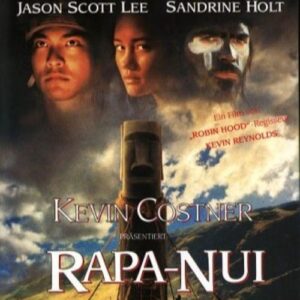
Rapa Nui
The 1994 film Rapa Nui brings to life the haunting beauty and cultural depth of Easter Island, known traditionally as Rapa Nui. While at first glance it may seem like a story of rivalry and survival, the film is deeply rooted in the spiritual and symbolic traditions of the island’s ancient people. It uses narrative drama to explore belief systems, ritual power, and the delicate relationship between humans, nature, and the divine.
At the heart of the film lies the Birdman competition, a ritual inspired by real traditions tied to the cult of Makemake, the island’s creator deity. This competition is not merely a physical contest but a sacred act that determines leadership through divine favor. Warriors risk their lives to retrieve the first egg of the sooty tern from a perilous islet, symbolizing a direct connection between human endurance and spiritual legitimacy. The film captures this with intensity, presenting the ritual as both awe-inspiring and brutal, reflecting how belief systems can shape societal hierarchies.
The mythology in Rapa Nui is not presented through overt exposition but rather woven into the fabric of daily life. The towering moai statues, often seen as silent witnesses, represent ancestral spirits and the islanders’ reverence for lineage and legacy. Their construction and presence are tied to a belief that the ancestors continue to influence the living world. The film subtly portrays this connection, showing how the spiritual and physical realms coexist, even as resources dwindle and tensions rise.
One of the most compelling mythic themes in Rapa Nui is the idea of imbalance. The island’s ecological collapse is depicted not just as a physical crisis but as a spiritual one. The overuse of resources and the obsession with status, symbolized by the race to erect larger statues, suggest a departure from harmony with nature. This reflects a broader mythic pattern seen across cultures, where human hubris leads to downfall. The film positions this collapse as both a consequence of human action and a loss of spiritual alignment.
The characters themselves embody different relationships with belief. Some cling to tradition, seeing rituals as sacred duties, while others begin to question the structures that bind them. This tension mirrors the transition from one belief system to another, a theme common in many ancient societies. The shift from moai worship to the Birdman cult is portrayed as both a cultural evolution and a response to crisis, highlighting how mythology adapts to changing realities.
Visually, the film enhances its mythic tone through sweeping landscapes, dramatic cliffs, and the ever-present ocean. These elements are not just backdrops but active participants in the story, reinforcing the idea that nature itself is intertwined with the spiritual world. The isolation of the island amplifies this, making every ritual and belief feel more intense and immediate.
Despite its strengths, Rapa Nui takes creative liberties with historical accuracy, blending fact and fiction to create a compelling narrative. While this may not satisfy purists, it serves the film’s purpose of exploring universal mythic themes such as power, sacrifice, and the search for meaning. The storytelling leans into these themes, making the film resonate beyond its specific cultural setting.
In Mythlok’s Perspective, Rapa Nui presents belief as a living force shaped by survival and environment. The Birdman ritual reflects a shift from ancestral permanence to cyclical renewal, echoing patterns seen in other cultures. The transition mirrors the move from monument worship in ancient Egypt to ritualistic renewal in seasonal festivals. Similarly, it aligns with Mesoamerican traditions where divine favor is earned through trials. These parallels show how societies reinterpret the sacred in response to crisis.
Rapa Nui stands out as a film that doesn’t just depict a culture but attempts to capture its spiritual essence. It reminds viewers that mythology is not static but evolves with human experience, shaped by both reverence and necessity. For those interested in stories where belief, nature, and human ambition collide, Rapa Nui offers a visually rich and thought-provoking journey.