
Lodurr : The Giver of Flesh and Vitality in Norse Tradition
Listen
At a glance
| Description | |
|---|---|
| Origin | Norse Mythology |
| Classification | Gods |
| Family Members | N/A |
| Region | Norway, Sweden, Denmark, Iceland |
| Associated With | Human creation, Blood |
The Mythlok Perspective
In Mythlok’s Perspective, Lodurr represents the overlooked but essential force of embodiment. While Odin symbolizes spirit and Hœnir intellect, Lodurr anchors existence in flesh and blood. His role mirrors creator figures in other traditions who shape humanity’s physical form, such as Prometheus in Greek tradition or the Mesopotamian gods who fashioned humans from clay. Lodurr is not a thunderer or king but the quiet giver of vitality. Without him, humanity would have breath and thought, yet no living body to contain them.
Lodurr
Introduction
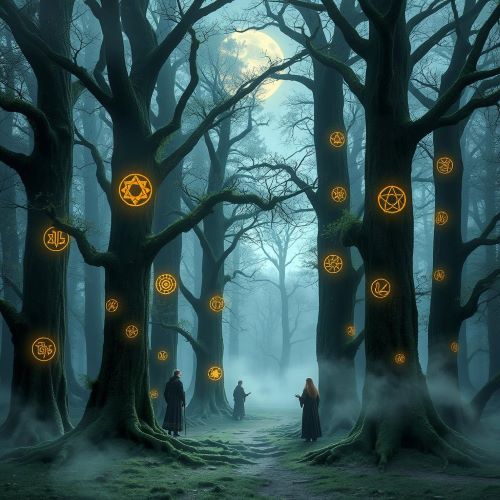
In the surviving sources of <a class="wpil_keyword_link" href="https://mythlok.com/languages/old-norse/" title="Old Norse : The Language of Norse Myth and Viking Tradition” data-wpil-keyword-link=”linked” data-wpil-monitor-id=”28131″>Old Norse literature, Lodurr (Old Norse: Lóðurr) stands as one of the most mysterious divine figures in the Norse pantheon. He appears clearly only once in the Poetic Edda, specifically in Völuspá, yet that single appearance grants him a foundational role in the creation of humanity. In stanza 18, three gods—Odin, Hœnir, and Lodurr—discover two lifeless tree trunks on the shore. From these logs, they shape the first human beings, Ask and Embla.
Each god contributes a vital element. Odin gives breath and spirit. Hœnir grants intelligence and consciousness. Lodurr bestows lá and litu góða, usually interpreted as blood or vital fluids and good color or healthy appearance. Without Lodurr’s gift, humanity would lack physical vitality and embodied presence.
Curiously, this version of creation differs from the account in the Prose Edda, written by Snorri Sturluson, where Odin’s brothers Vili and Vé assist him instead. Lodurr is absent from that narrative. This inconsistency has fueled centuries of scholarly debate about who Lodurr truly was. Despite minimal references, his role in the creation of Ask and Embla ensures that Lodurr remains essential to understanding Norse cosmology.
Physical Traits
No Old Norse source describes Lodurr’s physical appearance. Unlike Odin or Thor, he has no surviving iconography, no distinctive attributes, and no poetic kennings that hint at his form. He is defined entirely by function rather than by visual imagery.
His contribution to humanity, however, provides symbolic insight. In Völuspá, Lodurr gives lá and litu góða. The term lá most likely refers to blood or bodily fluids rather than warmth, as earlier translations sometimes suggested. Blood represents life-force, circulation, and embodied existence. The phrase litu góða refers to good color, implying healthy complexion or physical beauty.
From this, scholars infer that Lodurr’s domain relates to physical vitality, bodily integrity, and perhaps aesthetic harmony. Yet this interpretation arises from his action, not from any description of his own appearance. In contrast to many mythic gods who are vividly portrayed, Lodurr remains visually undefined—almost abstract.
Family
The surviving texts provide no direct information about Lodurr’s parentage, siblings, or descendants. He is not explicitly listed among the Æsir or Vanir genealogies. This absence has led scholars to attempt to identify him with better-known figures.
One major theory proposes that Lodurr may be identical with Loki. In some skaldic poems, Odin is referred to as “Lodurr’s friend,” a phrase that parallels Odin’s well-known companionship with Loki. If Lodurr were Loki, he would be the son of Fárbauti and Laufey and brother to Helblindi and Býleistr. However, the texts never explicitly confirm this equivalence.
Another theory identifies Lodurr with Vili or Vé, Odin’s brothers, who appear in the Prose Edda creation account. If Lodurr were one of them, he would be a son of Borr and Bestla, making him Odin’s brother. This would reconcile the differing creation narratives. Still, no primary source directly equates these names. Because no genealogy explicitly includes Lodurr, he remains isolated within the Norse divine family structure.
Other names
Lodurr appears only under the name Lóðurr in early sources. There are no confirmed alternate names recorded in the Poetic Edda or other primary texts.
However, medieval Icelandic rímur sometimes use “Lóður” as a poetic alternative for Loki, which has strengthened the theory that Lodurr and Loki may be connected. The triadic grouping of Odin, Hœnir, and Loki in other myths resembles the Odin, Hœnir, and Lodurr grouping in Völuspá, further fueling speculation.
The etymology of “Lóðurr” remains uncertain. Linguists have proposed connections to words meaning “to blaze,” “to grow,” or “fruitful land,” though none are definitively proven. These linguistic hints have led to theories associating Lodurr with fire, vitality, or fertility. Still, these remain hypotheses rather than established facts. In short, Lodurr has no securely attested alternate names, only scholarly conjectures.
Powers and Abilities
Lodurr’s sole confirmed act is his participation in the animation of Ask and Embla. In Völuspá, the three gods find two tree trunks lacking destiny or vitality. Odin gives them breath (önd), Hœnir gives them mind (óðr), and Lodurr grants them lá and litu góða.
This triad is profoundly symbolic. Odin represents spirit. Hœnir represents intellect. Lodurr represents physical life and embodied presence. Without Lodurr’s gift of blood and healthy form, humanity would lack material vitality.
No other myths attribute additional powers to him. He is not depicted as a warrior, ruler, trickster, or fertility god in surviving sources. Yet his single act is foundational. Lodurr governs the biological dimension of human existence. In cosmological terms, he anchors spirit and mind into flesh. His power is subtle but indispensable. He is not the architect of the cosmos but the giver of living substance.
Modern Day Influence
Lodurr’s limited textual presence has prevented him from becoming a major figure in modern adaptations of Norse tradition. Unlike Odin, Thor, or Loki, he does not appear prominently in contemporary films, novels, or video games.
However, he occupies an important place in academic discourse. Scholars studying the transmission of Norse creation myths often analyze Lodurr’s identity in relation to Loki or to Odin’s brothers. His obscurity highlights the fragmentary nature of Old Norse sources and the interpretive challenges of reconstructing pre-Christian belief systems.
In modern neopagan discussions, Lodurr sometimes represents forgotten aspects of divinity—embodied vitality, flesh, and physical existence. His role in creation resonates symbolically in philosophical discussions about the relationship between body, mind, and spirit. Though rarely depicted, Lodurr remains foundational. Without him, there would be no living humanity in Norse cosmology.
Related Images


Source
Lindow, J. (2002). Norse mythology: A guide to gods, heroes, rituals, and beliefs. Oxford University Press.
Orchard, A. (1997). Dictionary of Norse myth and legend. Cassell.
Simek, R. (2007). Dictionary of northern mythology (A. Hall, Trans.). D.S. Brewer.
Snorri Sturluson. (1995). The Poetic Edda (C. Larrington, Trans.). Oxford University Press.
Sturluson, S. (1916). The Prose Edda (A. G. Brodeur, Trans.). American-Scandinavian Foundation.
Turville-Petre, E. O. G. (1964). Myth and religion of the North: The religion of ancient Scandinavia. Weidenfeld & Nicolson.
Völuspá. (n.d.). In Poetic Edda. Retrieved from https://en.wikipedia.org/wiki/V%C3%B6lusp%C3%A1
Norse Mythology for Smart People. (n.d.). Lodurr. Retrieved March 4, 2026, from https://norse-mythology.org/gods-and-creatures/the-aesir-gods-and-goddesses/lodurr/
Frequently Asked Questions
Who is Lodurr in Norse tradition?
Lodurr is a mysterious Norse deity mentioned in the Poetic Edda who helped create the first humans by giving them blood and healthy appearance.
Is Lodurr the same as Loki?
Some scholars suggest Lodurr may be another name for Loki due to poetic parallels, but no primary source confirms this identification.
What did Lodurr give to Ask and Embla?
Lodurr granted them lá (interpreted as blood or vital fluids) and litu góða (good color or healthy appearance).
Why is Lodurr not mentioned in the Prose Edda?
In the Prose Edda, the creation of humanity is attributed to Odin’s brothers Vili and Vé, which may represent a variant tradition.
What does Lodurr’s name mean?
The exact meaning is uncertain, though some linguistic theories connect it to growth, fire, or vitality.
