

Kroni : The Primordial Force of Evil in Indian Ayyavazhi Tradition
At a glance
| Description | |
|---|---|
| Origin | Indian Mythology |
| Classification | Spirits |
| Family Members | N/A |
| Region | India |
| Associated With | Evil, Chaos, Spiritual Ignorance, Cosmic Opposition, Kali Yuga |
The Mythlok Perspective
In Mythlok’s Perspective, Kroni stands apart from most villains in Indian tradition because he is not simply a powerful enemy but the source from which all later forms of evil emerge. His fragmentation across the ages reflects a profound idea: evil rarely disappears completely. Instead, it changes shape and adapts to each era. This makes Kroni comparable to figures such as Sauron in modern fantasy or Lucifer in Christian theology, both of whom symbolize corruption that persists through time. Yet Kroni is unique because his story combines cosmic mythology with an inward spiritual lesson. The battle against him is not only fought by gods and heroes but also within every individual. His enduring relevance comes from this dual role as both a cosmic adversary and a mirror of humanity’s own weaknesses.
Kroni
Introduction
Kroni is one of the most important figures in Ayyavazhi tradition, a religious movement that emerged in southern India and developed a distinctive interpretation of cosmic history and divine intervention. Unlike many villains found in Indian epics, Kroni is not merely a powerful demon or asura. He is regarded as the very first manifestation of evil that appeared in creation.
According to the Akilathirattu Ammanai, Kroni came into existence during the earliest cosmic age known as Neetiya Yukam. His emergence introduced suffering, disorder, and spiritual darkness into the universe. Because of this role, Kroni occupies a unique position within Ayyavazhi theology as the source from which later forms of evil originated.
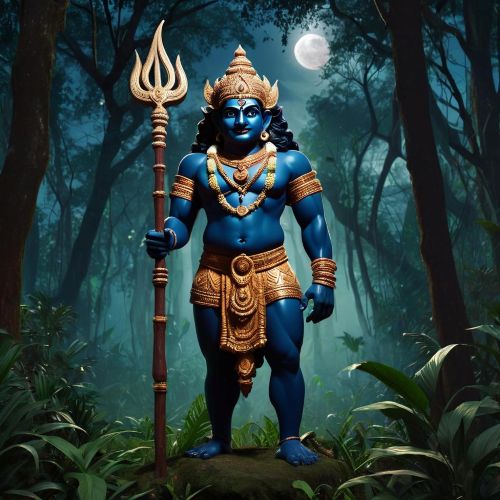
A central theme of the Kroni narrative is the ongoing struggle between righteousness and corruption. Rather than being destroyed immediately, Kroni was divided into multiple fragments by Mayon, the divine form identified with Vishnu. These fragments reappeared throughout successive ages, taking different forms and challenging dharma repeatedly.
For followers of Ayyavazhi, Kroni is more than a mythological antagonist. He represents the recurring presence of evil in both society and human consciousness. His story provides a framework for understanding why injustice, greed, oppression, and spiritual ignorance continue to appear throughout history.
Physical Traits
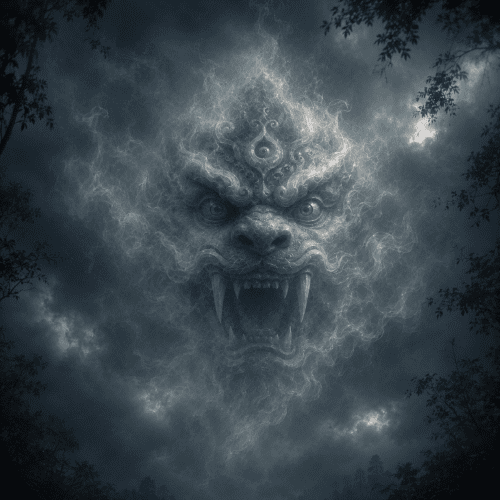
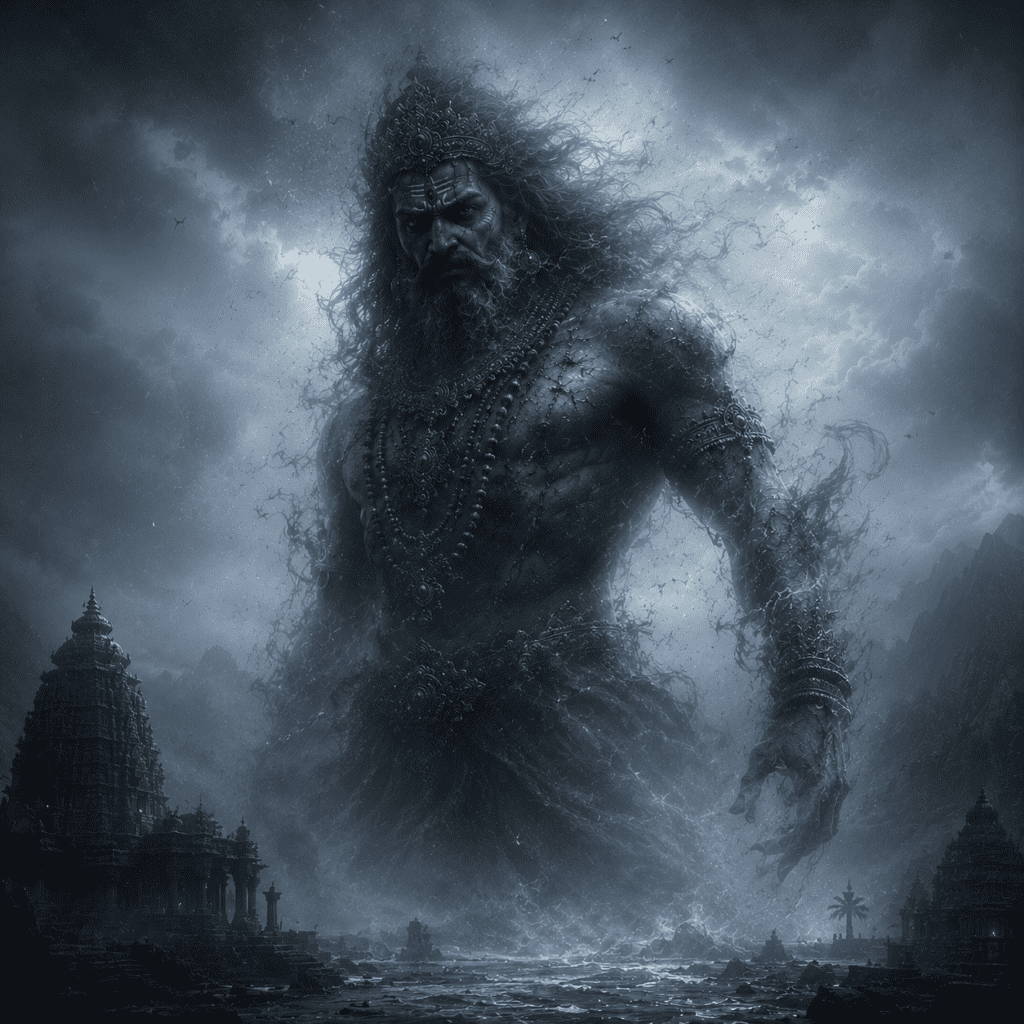
The Akilathirattu Ammanai portrays Kroni as a being of unimaginable scale. His body was so vast that ordinary measurements could not adequately describe it. Ancient accounts depict him with countless limbs, each comparable in size to a mountain, emphasizing his status as a cosmic rather than earthly entity.
His most defining characteristic was an insatiable hunger. This hunger was not merely physical but symbolized the destructive nature of evil itself. Kroni’s appetite grew so extreme that he consumed vast portions of creation in an attempt to satisfy it.
Traditional narratives state that he drank the waters of the seas and even swallowed Mount Kailash, the sacred abode associated with Shiva. Yet these acts failed to quench his craving. His relentless consumption threatened the stability of the universe and demonstrated the danger posed by unchecked chaos. The immense scale of Kroni’s form serves a symbolic purpose. His gigantic body illustrates how evil, when left unchallenged, can expand beyond limits and overwhelm entire worlds
Family
Kroni does not possess a conventional family lineage. Unlike many figures in Indian traditions who are born from gods, sages, or cosmic beings, Kroni emerged as a primordial force without parents, spouses, or descendants.
However, Ayyavazhi theology describes six fragments of Kroni that became the source of evil in later ages. After Mayon defeated and divided him, each fragment was destined to be born in a different Yukam.
The first fragment manifested as Kuntomasali during Chathura Yukam. The second appeared as Thillaimallalan and Mallosivakanan in Netu Yukam. The third emerged as Suraparppan, Sinkamukasuran, and Iraniyan during Kretha Yuga. The fourth fragment became Ravanan, the famous king of Lanka who opposed Rama in the Ramayana.
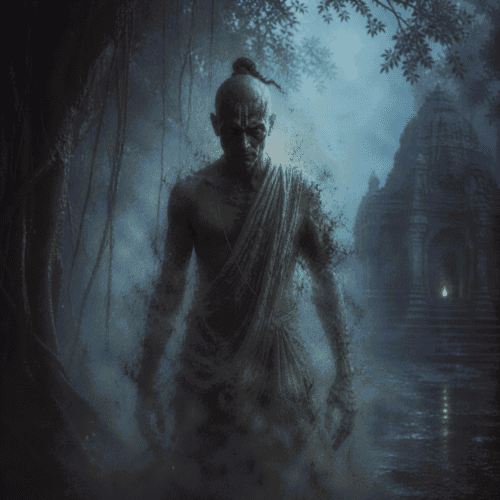
The fifth fragment appeared as Thuriyothanan, identified with Duryodhana and his brothers from the Mahabharata. The sixth and final fragment became Kaliyan, the embodiment of evil in Kali Yuga.
Through these incarnations, Kroni’s influence extends across the entire cosmic timeline of Ayyavazhi belief.
Other names
Kroni is primarily known by his Tamil name, குறோணி (Kroni). Unlike many mythological beings whose identities vary significantly between regions, the name Kroni remains closely associated with Ayyavazhi theology.
He is frequently described as the “primordial manifestation of evil” because he represents the first appearance of wickedness in creation. In theological discussions, Kroni is often compared to Satan due to his role as an adversarial force opposing divine order.
The final fragment of Kroni is known as Kaliyan, who becomes the dominant manifestation of evil during Kali Yuga. In certain Ayyavazhi texts and interpretations, Kaliyan is also referred to as Kalineesan or Neesan, terms associated with wickedness and moral corruption. While these names refer to different manifestations, they all originate from the same primordial source represented by Kroni.
Powers and Abilities
Kroni’s greatest power lies in his role as the embodiment of evil itself. Rather than relying solely on physical strength, he represents forces that distort truth, encourage injustice, and separate living beings from spiritual enlightenment.
One of his most significant abilities is cosmic destruction. His enormous appetite enabled him to consume elements of creation on a scale beyond comprehension. This destructive hunger symbolizes the tendency of evil to spread endlessly when left unchecked.
Another important aspect of Kroni’s power is fragmentation and reincarnation. Even after being defeated, his essence continued to manifest through different forms across successive ages. This allowed him to influence multiple generations and challenge divine order repeatedly.
In Ayyavazhi philosophy, Kroni’s influence also operates internally. His six fragments are often interpreted as symbolic representations of negative qualities within human beings. These qualities obstruct spiritual growth and prevent individuals from attaining higher states of awareness. Because of this symbolic dimension, Kroni functions not only as an external enemy but also as a representation of the inner obstacles that must be overcome on the path toward divine realization.
Modern Day Influence
Kroni continues to play an important role in contemporary Ayyavazhi thought and religious practice. His story helps explain the presence of suffering, inequality, and moral decline in the current age. Followers believe that Kali Yuga remains under the influence of Kaliyan, the final fragment of Kroni. Unlike previous manifestations, Kaliyan is viewed as a more subtle force that works through social injustice, greed, discrimination, and spiritual ignorance. This interpretation allows Kroni’s story to remain relevant in the modern world.
The teachings of Ayya Vaikundar, the central figure of Ayyavazhi, are closely connected to the struggle against Kroni’s influence. Vaikundar emphasized equality, compassion, and resistance to oppression as ways of overcoming the forces associated with Kaliyan.
Many scholars have also examined Kroni as a symbolic expression of social resistance. Within the historical context of southern India, the defeat of evil becomes a metaphor for challenging discrimination and restoring justice. Today, Kroni remains one of the most distinctive theological concepts in Indian religious thought. His narrative continues to shape how Ayyavazhi followers understand morality, spiritual progress, and the ultimate triumph of righteousness.
Related Images


Source
Patrick, G. (2003). Religion and Subaltern Agency. University of Madras.
Krishnanathan, T. (2000). Ayya Vaikundarin Vazhvum Sinthanaiyum. Thinai Publications.
Vivekanandan, N. (2003). Akilathirattu Ammanai Moolamum Uraiyum (Parts 1 & 2). Vivekananda Publications.
Arisundara Mani, A. (2002). Akilathirattu Ammanai Parayana Urai. Ayya Vaikundar Thirukkudumbam Publications.
Manibharathi, A. (2003). Akilathirattu Vilakka Urai. Thirunamappukazh Publications.
Wikipedia. (n.d.). Kroni. https://en.wikipedia.org/wiki/Kroni
Wikipedia. (n.d.). Ayyavazhi mythology. https://en.wikipedia.org/wiki/Ayyavazhi_mythology
Wiktionary. (2021). Kroni. https://en.wiktionary.org/wiki/Kroni
Frequently Asked Questions
Who is Kroni in Indian tradition?
Kroni is the primordial embodiment of evil in Ayyavazhi theology and the source of later manifestations of wickedness across different ages.
Why was Kroni divided into six parts?
Mayon divided Kroni into six fragments to prevent his total destruction of creation and to limit his power across successive ages.
Is Kroni the same as Ravana?
No. Ravana is considered one manifestation of a fragment of Kroni during Treta Yuga, not Kroni’s original form.
What does Kroni symbolize?
Kroni symbolizes spiritual ignorance, moral corruption, chaos, and the recurring presence of evil in both society and human nature.
How does Kroni influence Kali Yuga?
Ayyavazhi tradition teaches that Kaliyan, the final fragment of Kroni, spreads injustice, greed, and spiritual decline throughout the current age.