

Dragons in Ancient Civilizations and Sacred Traditions
Dragons are among the most powerful and enduring mythic beings in world traditions. Found across Europe, Asia, the Americas, and the ancient Near East, dragons symbolize strength, chaos, protection, wisdom, and elemental power. Unlike ordinary animals in folklore, dragons often stand at the center of cosmic conflict or divine authority. They are rarely passive creatures. They shape destinies.
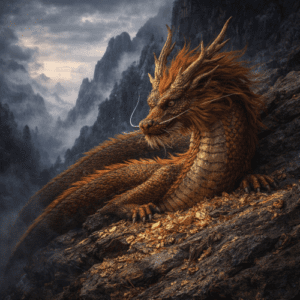
In European legend, dragons frequently appear as formidable adversaries. The Norse dragon Fafnir represents greed and transformation, having once been mortal before becoming a monstrous guardian of cursed treasure. In Christian lore, Saint George defeats a dragon as a symbol of triumph over chaos and evil. These dragons are destructive forces that must be confronted and overcome.
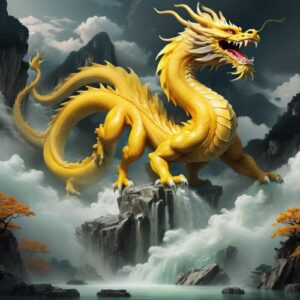
East Asian dragons reflect a very different interpretation. Rather than embodiments of evil, they are divine controllers of weather and water. Figures such as Ryujin govern oceans and tides, sustaining life rather than threatening it. In Chinese tradition, dragons symbolize imperial authority, prosperity, and cosmic harmony. Here, they are revered as sacred beings aligned with balance and natural order.
Norse mythology introduces the immense Jormungandr, a world-encircling being tied to apocalyptic fate. Though often described as serpent-like, Jormungandr functions symbolically as a dragon figure — a cosmic boundary marking the limits of the known world. In Mesoamerican belief, Quetzalcoatl combines avian and dragon-like imagery to represent knowledge, wind, and creation.
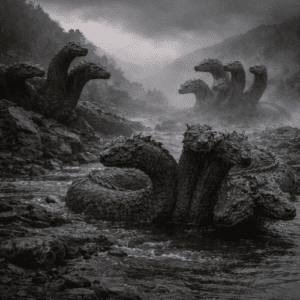
In Mesopotamian myth, chaos itself can take dragon-like form, as seen in Tiamat, whose defeat establishes order in the cosmos. Across cultures, dragons frequently embody primordial forces that precede structured civilization. Whether feared, worshipped, or challenged, they consistently represent power beyond human control. They guard sacred treasures, command storms, encircle worlds, and test heroes. Some must be slain to restore balance. Others must be honored to maintain harmony.
Exploring dragons across cultures reveals how civilizations understood power, transformation, and the raw forces of existence. They are not merely fantasy creatures. They are mythic embodiments of energy itself — sometimes destructive, sometimes protective, always extraordinary.