


Tambal : The Identity-Stealing Spirit of Philippine Folklore
At a glance
| Description | |
|---|---|
| Origin | Philippine Mythology |
| Classification | Gods |
| Family Members | N/A |
| Region | Philippines |
| Associated With | Identity theft, Mimicry, Forests, Deception, Disorientation |
The Mythlok Perspective
In Mythlok’s Perspective, the Tambal represents a uniquely psychological form of fear where identity becomes unstable rather than threatened physically. Unlike predators that destroy the body, it replaces the self, making it closer to global doppelganger traditions than typical Southeast Asian spirits. Similar ideas appear in European changelings and Japanese shadow doubles, yet Tambal remains grounded in nature. Its forest-bound presence ties identity loss to isolation, suggesting that separation from community is where the self becomes most vulnerable.
Tambal
Introduction
The Tambal is a mysterious supernatural creature associated with Filipino folklore, particularly stories about forests, human impersonation and unexplained disappearances. Described as an elemento, or elemental being, it is feared for its ability to assume the appearance of a human and take that person’s place among family and friends. Unlike creatures that rely on physical strength or supernatural attacks, the Tambal uses deception to separate individuals from their communities and infiltrate their lives.
One of the most detailed contemporary accounts of the Tambal appears in a story published by Filipino author Anna Maria Manalo in 2022. The narrative originated from an encounter recounted by her cousin and his friends while camping around Los Baños, Laguna. It describes a creature inhabiting forests and large parks, approaching unsuspecting people before luring them away from familiar surroundings.
The Tambal is particularly unsettling because its victims may not realise what has happened until the creature has already assumed their identity. Its stories belong to a broader tradition of Filipino supernatural beliefs in which forests are inhabited by beings capable of interfering with the human world.
Physical Description
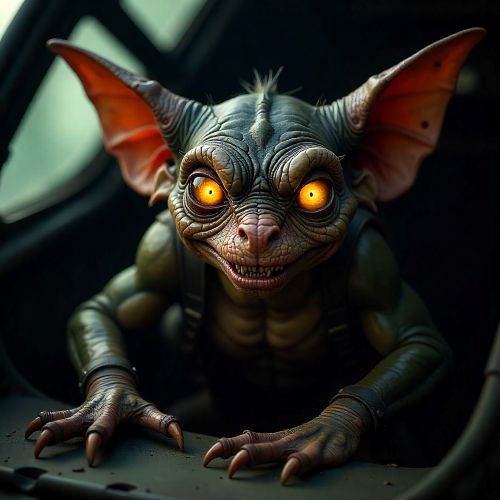
The Tambal does not have a consistently established physical appearance because its defining characteristic is its ability to imitate human beings. Rather than appearing as an obvious monster, it assumes the likeness of an individual it intends to replace. Its disguise can extend beyond physical resemblance to include familiar mannerisms and behaviour, allowing it to interact with people who know its victim.
In the accounts popularised by Manalo, the creature initially approaches its intended target in a seemingly ordinary human form. It then lures the person deeper into the forest, where confusion and disorientation make escape difficult. Once the victim has disappeared, the Tambal can adopt their appearance and return to their household.
An unusual feature of this folklore concerns what happens when the creature’s deception is exposed. Instead of leaving behind a conventional body, the Tambal reportedly transforms into a small tree trunk, making it appear as though it has died. This transformation allows it to disappear into its natural surroundings and potentially seek another victim. The absence of a fixed monstrous appearance distinguishes the Tambal from many other Filipino supernatural creatures. Its most recognisable form is therefore the familiar face of someone who may no longer be present.
Mythological Context
The Tambal belongs to the broad world of Filipino supernatural folklore, where elemento is commonly used to describe mysterious beings associated with the unseen world. Such entities are frequently connected with natural environments, including forests, mountains, rivers and secluded places. In Tambal narratives, the forest is more than a backdrop. It is the creature’s hunting ground, a place where familiar landmarks disappear into dense vegetation and travellers can lose their sense of direction. The boundary between ordinary human life and the supernatural becomes particularly uncertain when someone ventures into these isolated surroundings.
The creature’s ability to impersonate humans also introduces a distinctive form of supernatural threat. Its danger comes from the possibility that an individual can disappear while an imitation continues living within their household. However, the Tambal should not automatically be treated as a member of the Aswang family. Although both appear in discussions of Filipino supernatural creatures, their characteristics and narrative traditions are different.
Origins
The precise historical origins of the Tambal legend remain uncertain. Unlike better-documented Filipino supernatural beings, it does not have a clearly established creation narrative, ancient genealogy or identifiable place within a traditional pantheon. The strongest identifiable contemporary account connects the creature with Los Baños in Laguna, particularly the forested surroundings of Mount Makiling. Anna Maria Manalo’s 2022 publication identifies a camping encounter in this area as the inspiration for her retelling. This provides a geographical association but does not establish that Laguna is the exclusive or historically original home of the Tambal.
Philippine Primer’s guide to mythical creatures also records the Tambal, describing its ability to imitate human victims, disorient them and take their place at home. The guide additionally mentions a 2016 Filipino film titled Elemento, which incorporates the creature into a supernatural family narrative. These references establish the Tambal’s presence in contemporary Filipino folklore discussions. However, claims about its pre-colonial origins or widespread historical worship remain unsupported by the available documentation.
Notable Members
No individual Tambal has an established name, genealogy or independent mythological biography. The creature is primarily described as a category of supernatural being rather than a single personality with a distinct identity. The accounts focus on its victims and the process of impersonation rather than on individual Tambal personalities. Consequently, there are no documented leaders, rulers, ancestors or named members associated with this group.
Relationship with Other Beings
The Tambal is sometimes discussed alongside elemento and engkanto, two broad terms associated with supernatural beings in Filipino folklore. These terms provide a general cultural context for understanding the creature, although they should not be treated as interchangeable names for the Tambal.
Its relationship with the Aswang is also worth distinguishing. The Aswang encompasses several types of supernatural creatures, including shapeshifters and predatory beings. The Tambal, however, is distinguished by its identity-stealing behaviour rather than an established association with blood consumption or human flesh.
There is also potential confusion with the Tambaloslos, a separate creature appearing in Visayan and Bicolano folklore. The Tambaloslos is generally associated with grotesque physical characteristics, exaggerated features and the ability to mislead travellers. Despite the similarity in names and certain forest-related characteristics, the two should not be considered the same being.
Similar Beings
The Tambal shares thematic similarities with supernatural doubles and human impersonators found in different cultural traditions. The European doppelganger is perhaps its closest conceptual parallel. Both involve the appearance of an identical human counterpart, creating uncertainty about the authenticity of familiar faces. However, the Tambal’s forest-dwelling behaviour and its reported transformation into a tree trunk give it a distinct narrative identity.
Japanese folklore also contains supernatural beings associated with impersonation and deceptive appearances. The kitsune, for example, is known for shapeshifting and assuming human forms to interact with people. Unlike the Tambal, however, the kitsune has a much broader range of stories involving intelligence, relationships and supernatural abilities.
Another useful comparison is the changeling tradition found in European folklore, where a supernatural being replaces a human, sometimes within a family. The underlying fear of losing a loved one to an imitation connects these traditions, although their narratives and supernatural mechanisms differ. These comparisons help explain the Tambal’s place within the wider world of supernatural folklore without suggesting that the traditions share a common origin.
Symbolism and Interpretations
The Tambal represents the fear of losing one’s identity and the uncertainty of recognising the people closest to us. Its ability to imitate a human being challenges the assumption that appearance and familiarity are reliable indicators of identity. Its association with forests also carries symbolic significance. In traditional storytelling, unfamiliar wilderness often represents a departure from the security of the community. Once an individual becomes separated from familiar surroundings, ordinary rules and protections seem less dependable.
The creature’s impersonation of family members introduces another layer of meaning. The home, normally understood as a place of belonging and safety, becomes vulnerable to an unseen intruder. The Tambal does not simply take someone’s appearance; it disrupts relationships built on recognition, affection and trust. Its reported transformation into a tree trunk adds to its connection with the natural world. The forest becomes both its hiding place and a means of escaping human detection. Ultimately, the Tambal can be interpreted as a representation of the anxieties surrounding isolation, deception and the fragile nature of human identity.
Modern Influence
The Tambal has found a place in contemporary Filipino popular culture through folklore publications, horror storytelling and discussions of mythical creatures on digital platforms. One notable appearance is the 2016 Filipino film Elemento, which incorporates the Tambal into a supernatural story involving a child and the disruption of family relationships. The film demonstrates how the creature’s central concept of human impersonation can be adapted into modern horror narratives.
Author Anna Maria Manalo’s 2022 publication has also contributed to renewed interest in the creature. By presenting a reported encounter associated with Los Baños, Laguna, her account has helped introduce the Tambal to contemporary readers interested in Filipino supernatural traditions. The Tambal therefore occupies an interesting position in contemporary Filipino folklore. Although its historical documentation remains limited, its identity-stealing abilities have given it a distinctive place among supernatural creatures associated with the country’s forests and wilderness.




Source
Philippine Primer. (2019, October 19). Guide to Filipino mythical creatures. https://primer.com.ph/tips-guides/2019/10/19/guide-to-filipino-mythical-creatures/
Kollective Hustle. (2022, October 17). Kapre and Aswang 101: Filipino mythology for beginners. https://www.kollectivehustle.com/blog/kapreandaswang-filipino-mythology-for-beginners
Genius Firms. (2025, April 12). Tambaloslos: A mythical creature in Philippine folklore. https://www.geniusfirms.com/blog/tambaloslos-a-mythical-creature-in-philippine-folklore/
Philnews. (2023, March 18). Philippine mythology creatures – List of PH mythical creatures. https://philnews.ph/2023/03/18/philippine-mythology-creatures-list-of-ph-mythical-creatures/
Ramos, M. (1990). Creatures of Philippine lower mythology. Ateneo de Manila University Press.
Jocano, F. L. (1969). Outline of Philippine mythology. Centro Escolar University Research and Development Center.
Wikipedia contributors. (2024). List of Philippine mythological figures. Wikipedia. https://en.wikipedia.org/wiki/List_of_Philippine_mythological_figures
Jocano, F. L. (1969). Philippine Mythology and Folklore. Quezon City: Punlad Research House.
Eugenio, D. L. (1993). Philippine Folk Literature: The Myths. University of the Philippines Press.
Frequently Asked Questions
What is a Tambal in Philippine folklore?
Tambal is a forest-dwelling spirit known for perfectly mimicking humans and replacing them within their own families without immediate detection.
Can a Tambal be detected or stopped?
Folklore suggests only subtle behavioral differences reveal it, as there are no widely known rituals or methods to defeat it.
Where is the Tambal commonly found?
Tambal stories are mainly linked to forested regions in Samar, Leyte, and parts of Luzon, especially areas with strong oral traditions.
How does the Tambal choose its victims?
It typically targets individuals who wander alone in forests, isolating them before taking over their identity and life.
Is Tambal the same as Aswang?
No, Tambal is sometimes grouped under Aswang but differs by focusing on identity replacement rather than feeding on humans.


