

Beowulf (2007) : The Hero, Grendel and the Curse of the Dragon
| Description | |
|---|---|
| Country of Origin | United States of America |
| Language | English |
| Genre | Action, Fantasy |
| Cast | Ray Winstone, Anthony Hopkins, Angelina Jolie, John Malkovich, Robin Wright, Crispin Glover, Brendan Gleeson, and Alison Lohman |
| Directed by | Robert Zemeckis |
Beowulf
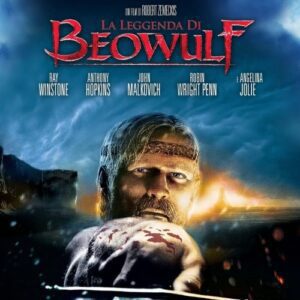
Beowulf (2007), directed by Robert Zemeckis, presents a cinematic interpretation of one of the oldest heroic legends in European tradition. The film is inspired by the Old English epic Beowulf, a story rooted in early Germanic and Scandinavian mythic culture. While the film introduces new narrative elements and dramatic reinterpretations, its core story still revolves around the legendary hero Beowulf and the mythic monsters that define his fate. The movie’s mythology is built around three central forces: the monstrous outsider represented by Grendel, the seductive supernatural power embodied by Grendel’s Mother, and the ancient dragon that ultimately brings the hero’s life to its end.
The story begins in the kingdom of Hrothgar, whose great hall of Heorot is repeatedly attacked by Grendel. Within the mythological structure of the story, the hall represents more than a place of celebration. In early Germanic culture, the mead hall symbolized civilization, loyalty, and the unity of warriors under a king. Grendel’s attacks therefore represent the intrusion of chaos into the heart of human society. In the epic tradition, Grendel is described as a being descended from Cain, connecting the monster to the idea of a cursed bloodline banished from the human world. The film retains the idea of Grendel as an outcast creature who exists beyond the boundaries of society, driven by rage and isolation.
Beowulf arrives as a warrior seeking glory, a motivation consistent with the heroic ideals of early northern cultures. In the mythology surrounding such heroes, fame and honor were considered forms of immortality. A warrior who performed legendary deeds would be remembered in stories long after death. Beowulf’s confrontation with Grendel therefore reflects a mythological pattern seen in many traditions: the hero defeating a monstrous being that threatens the stability of human order. The battle itself emphasizes the hero’s strength and courage, as Beowulf defeats the creature in direct combat, symbolizing the triumph of human bravery over supernatural terror.
The death of Grendel, however, reveals a deeper layer of mythological meaning within the film. Grendel’s mother emerges not simply as a vengeful monster but as an ancient supernatural force that manipulates the fate of kings. Known only as Grendel’s Mother, she inhabits a hidden realm beneath a dark lake. This setting reflects the importance of liminal spaces in northern mythology. Lakes, caves, and deep waters were often seen as gateways to mysterious worlds inhabited by spirits or otherworldly beings.
In the film, the encounter between Beowulf and Grendel’s mother becomes more than a battle. She tempts the hero with promises of power, legacy, and eternal glory. This reinterpretation transforms the mythological structure of the story. Rather than defeating the creature outright, Beowulf enters into a secret pact that allows the supernatural power she represents to continue influencing the human world. The mythological symbolism of this moment is significant. It suggests that the monsters in the story are not simply external enemies but reflections of human ambition, desire, and weakness.
This theme becomes clearer as Beowulf later becomes king. The hero who once sought glory now carries the burden of leadership, yet the consequences of his earlier choices continue to shape the future. In many mythological traditions, heroes who gain power through supernatural bargains eventually face the return of that power in destructive form. The film expresses this idea through the appearance of a dragon many years later.
Dragons occupy a central place in Germanic and Norse mythology. These creatures were often associated with ancient treasure, destructive fire, and the corrupting influence of greed. One of the most famous dragons in northern legend is Fafnir, a being transformed into a dragon through his obsession with cursed gold. In the story of Beowulf, the dragon represents the final test of the hero’s life and the inevitable consequences of past actions.
The dragon emerges as a devastating force that threatens the kingdom Beowulf now rules. In mythological terms, the creature represents both chaos and destiny. Unlike the earlier battle with Grendel, this confrontation occurs when Beowulf is no longer a young warrior but an aging king. The shift reflects a key theme in heroic mythology: the passage of time and the inevitability of fate.
The final battle between Beowulf and the dragon carries strong symbolic meaning. Dragons in northern legend often guard treasure that represents both wealth and danger. The hoard they protect is rarely a blessing; instead, it is often linked to curses, betrayal, or destructive desire. By confronting the dragon, Beowulf faces the ultimate manifestation of the power that has followed him throughout his life.
The film portrays the hero’s death as the completion of his mythological journey. Although he defeats the dragon, the victory comes at the cost of his life. This ending reflects the tragic dimension of many early heroic legends. In these stories, true heroism lies not in surviving every battle but in facing inevitable death with courage and honor.
Through its reinterpretation of the Beowulf legend, the film explores the mythological themes of heroism, temptation, and destiny that define northern European storytelling. The monsters in the story represent forces that exist both outside and within human nature, while the hero’s journey reflects the cultural ideals of bravery and legacy that shaped early warrior societies.
By presenting these mythological elements through the story of Beowulf, the film continues the long tradition of retelling ancient legends in new forms. Even as the narrative evolves, the core myth remains recognizable: a hero rises to confront the monsters of his world, only to discover that the greatest battles are often tied to the choices that shape his own fate.