


Crom Dubh : The Ancient Irish God of Harvest and Balance
Listen
At a glance
| Description | |
|---|---|
| Origin | Irish Mythology |
| Classification | Gods |
| Family Members | N/A |
| Region | Ireland |
| Associated With | Harvest cycles, Fertility, Sacrifice, Weather control, Agricultural balance |
The Mythlok Perspective
From Mythlok’s perspective, Crom Dubh is not a villainous remnant of paganism but a moral pressure point in Irish belief. He represents the land’s refusal to provide without consequence. His darkness reflects accountability, not malevolence. When later traditions frame him as defeated, they reveal a cultural discomfort with reciprocity and sacrifice. Comparable figures like Osiris in Egypt and Pachamama in the Andes carry the same warning: fertility is earned, not promised, and balance always exacts its due.
Crom Dubh
Introduction
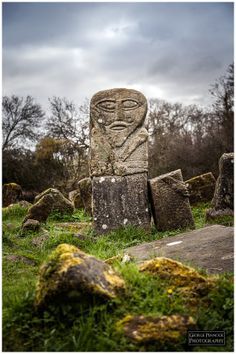
Crom Dubh is one of the most enigmatic figures to emerge from early Irish belief systems, standing at the crossroads of agriculture, seasonal cycles, and religious transformation. His name, commonly translated as “the Dark Crooked One” or “the Black Bowed One,” reflects both physical symbolism and deeper metaphysical meaning. Crom Dubh is widely understood as a later folkloric survival or regional transformation of the older idol-god Crom Cruach, whose worship is recorded in medieval sources such as the Dindsenchas and the Annals of the Four Masters.
Unlike the polished warrior gods or heroic kings of Irish tradition, Crom Dubh belongs to a more ancient spiritual layer shaped by agrarian survival. He represents the uneasy truth that fertility and abundance are inseparable from decay and sacrifice. His stories are most strongly associated with Lughnasadh, the late-summer harvest festival, particularly in western Ireland. Over time, Christian narratives reframed him as a defeated pagan power, often opposing Saint Patrick, yet the persistence of his legend suggests that Crom Dubh never fully disappeared from cultural memory.
Physical Traits
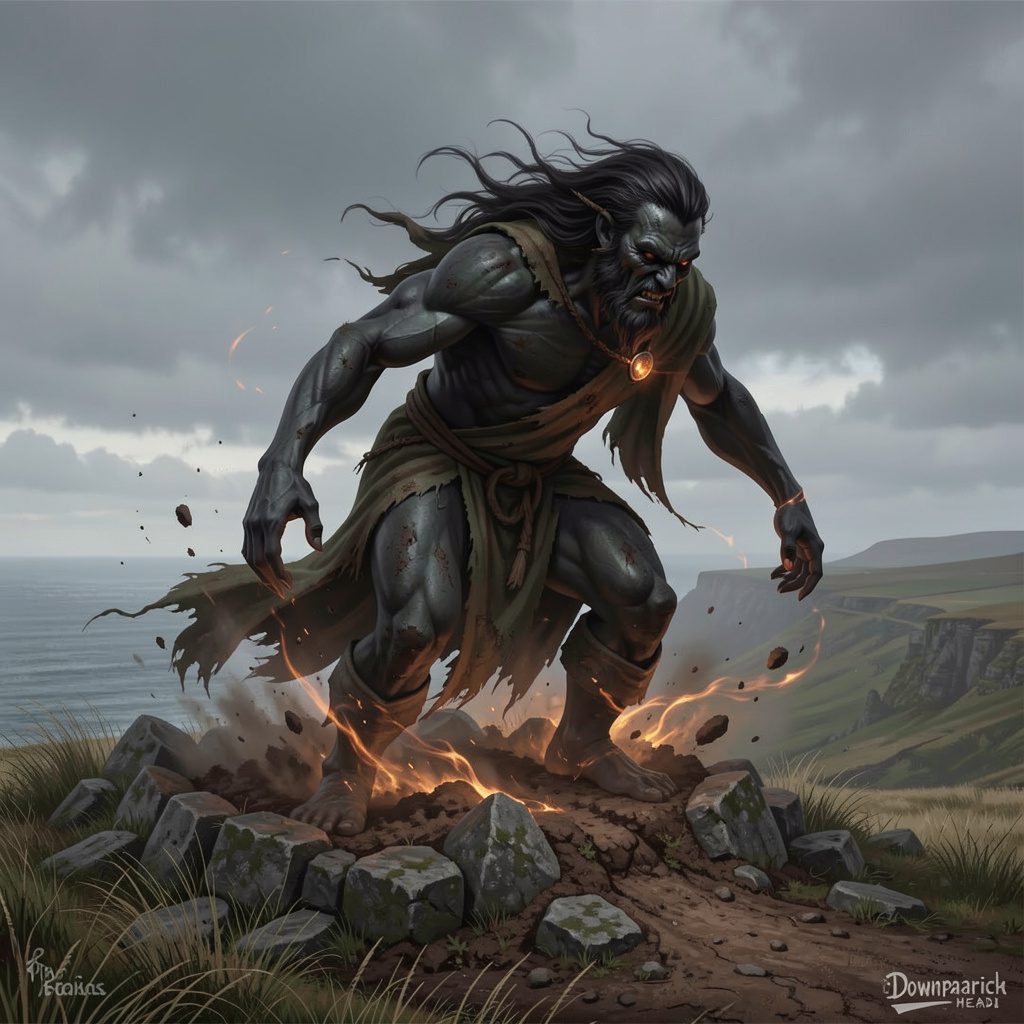
Descriptions of Crom Dubh rely heavily on symbolism rather than precise physical detail, which is typical of deities rooted in oral tradition. He is consistently imagined as dark, bent, or stooped, an embodiment of weight and age rather than youthful strength. This crooked posture is often interpreted as the burden of the land itself, bent beneath the cycle of planting, death, and renewal.
Folklore from Mayo and surrounding regions presents him as an imposing but weathered presence, sometimes towering, sometimes emerging from the earth or sea cliffs. His darkness is not merely visual but elemental, aligning him with soil, night, and the unseen processes beneath the surface. In later storytelling, especially under Christian influence, these traits became exaggerated into something monstrous, yet earlier interpretations suggest reverence rather than fear. Crom Dubh’s form communicates inevitability rather than malice, the certainty that all growth carries a cost.
Family
Crom Dubh does not possess a clearly defined family structure in surviving Irish sources. Unlike the Tuatha Dé Danann, whose genealogies are carefully preserved, Crom Dubh appears as a solitary or localized power. This absence of lineage suggests extreme antiquity, pointing to a time when deities were tied more closely to land and function than to dynastic myth.
Some interpretations loosely connect him to Crom Cruach, either as an aspect, successor, or regional variation rather than a separate descendant. Occasional folkloric references link him symbolically to a grain maiden, often named Eithne, whose descent or sacrifice represents the harvested crop returning to the earth. These relationships are not familial in a biological sense but ritualistic and symbolic, reinforcing Crom Dubh’s identity as a god of cycles rather than lineage.
Other names
Crom Dubh appears under several names across Irish tradition, each reflecting a different phase of belief or regional emphasis. The most prominent is Crom Cruach, the idol worshipped at Magh Slécht, described as receiving offerings to ensure prosperity. Other titles such as Cenn Crothaí, meaning “head of all worship,” indicate his former prominence before Christian reinterpretation.
Local folklore at Downpatrick Head preserves names like Cormac Dubh and Leodrisg, blending sea, land, and chieftain imagery. These variations demonstrate how Crom Dubh evolved from a national cult figure into a localized folkloric presence. The shifting names also reveal how older gods were gradually absorbed into Christian storytelling, not erased, but transformed into cautionary figures or defeated powers.
Powers and Abilities
Crom Dubh’s power lies in dominion over agricultural balance. He governs fertility, harvest yield, and the fragile relationship between humans and land. In pre-Christian belief, prosperity depended on honoring this balance through offerings of first fruits, cattle, or symbolic sacrifice. Failure to do so invited famine, blight, or misfortune.
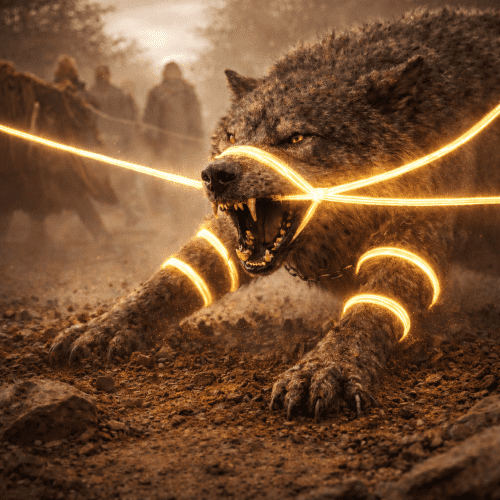
Folklore credits him with control over weather patterns critical to farming cycles, including rain and drought. Shape-shifting appears in several legends, where Crom Dubh takes the form of a serpent, bull, or shadowy giant, reinforcing themes of renewal and transformation. Christian narratives reduce these abilities, portraying his defeat as moral victory, yet even in these stories his endurance suggests a power that could only be subdued, never erased.
Modern Day Influence
Crom Dubh’s legacy survives most clearly in folk custom rather than formal worship. “Crom Dubh Sunday,” observed in parts of western Ireland, coincides with harvest traditions and echoes Lughnasadh practices beneath Christian framing. Pilgrimages to Croagh Patrick and Downpatrick Head preserve layers of older ritual significance beneath later religious meaning.
In contemporary culture, Crom Dubh appears in academic studies, modern pagan practice, and ecological interpretations of myth. He has become a symbol of environmental balance, reminding modern audiences that abundance is inseparable from responsibility. In literature and visual art, he is increasingly reclaimed not as a demonized relic, but as a representation of humanity’s ancient relationship with land, labor, and seasonal truth.
Related Images



Source
Carey, J. (1994). A single ray of the sun: Religious speculation in early Ireland. Andras House.
MacKillop, J. (2004). Dictionary of Celtic mythology. Oxford University Press.
Monaghan, P. (2014). The encyclopedia of Celtic mythology and folklore. Facts on File.
Ó hÓgáin, D. (2006). The lore of Ireland: An encyclopedia of myth, legend & art. Boydell Press.
Squire, C. (2000). Celtic myth and legend: Poetry & romance. Greenwich House. (Original work published 1905)
Wikipedia contributors. (2026). Crom Dubh. In Wikipedia, The Free Encyclopedia. Retrieved January 29, 2026, from https://en.wikipedia.org/wiki/Crom_Dubh
The Fall of Crom Cruach. (2025). Emerald Isle Irish and Celtic Myths. Retrieved from https://www.emeraldislemyths.com/crom-cruach
Frequently Asked Questions
Who was Crom Dubh in Irish belief?
Crom Dubh was an ancient Irish deity associated with harvest, fertility, and the darker aspects of agricultural cycles, later reframed through Christian folklore.
Why is Crom Dubh described as bent or crooked?
The crooked form symbolizes the weight of the earth’s cycles, age, and the burden carried by agricultural gods tied to death and renewal.
Is Crom Dubh the same as Crom Cruach?
Many scholars believe Crom Dubh is a regional or later folkloric form of Crom Cruach rather than a completely separate figure.
What festival is linked to Crom Dubh?
He is strongly associated with Lughnasadh and later harvest traditions observed in early August.
Does Crom Dubh appear in modern Irish culture?
Yes, his influence survives in folklore, place names, seasonal customs, and modern reinterpretations tied to ecology and heritage.


