


Taotaomo’na : Ancient Ancestral Spirits of Chamorro Folklore
At a glance
| Description | |
|---|---|
| Origin | Chamorro Mythology |
| Classification | Hybrids |
| Family Members | N/A |
| Region | Guam, Saipan, Tinian, and Rota |
| Associated With | Protection, Size, Strength, Shapeshifting |
Mythlok Perspective
In Mythlok’s Perspective, the Taotaomo’na are best understood alongside the Menehune of Hawaiian tradition and other ancestral guardian spirits of the Pacific. While the Menehune are remembered as elusive master builders and culture heroes, the Taotaomo’na are revered as the enduring spirits of the Chamorro ancestors who continue to inhabit the land itself. This distinction transforms the Mariana Islands into a living ancestral landscape, where respecting nature is inseparable from honoring the generations who came before.
Taotaomo’na
Introduction
The Taotaomo’na are revered ancestral spirits in Chamorro mythology, believed to be the souls of the ancient inhabitants of the Mariana Islands, including Guam, Saipan, Tinian, and Rota. Their name, meaning “people of before” or “people who came before,” reflects their role as the spiritual ancestors of the Chamorro people. Rather than being distant supernatural beings, they are regarded as enduring members of the community who continue to inhabit the islands and maintain a close relationship with the living.
Deeply woven into Chamorro tradition, the Taotaomo’na are respected as guardians of sacred places and custodians of ancestral lands. They are believed to watch over forests, caves, mountains, ancient latte sites, and especially banyan (nunu) trees. While they often offer protection and guidance to those who honor traditional customs, they are also known to punish disrespect toward the natural world or sacred spaces, reinforcing the importance of living in harmony with both nature and one’s ancestors.
Physical Description
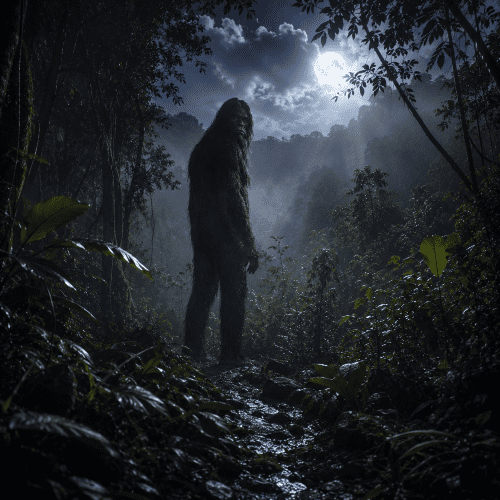
Unlike many mythological beings with a fixed appearance, the Taotaomo’na have no single, universally accepted form. Most traditions describe them as human-like spirits that resemble the ancient Chamorro people, although they are often perceived as taller or more imposing than ordinary humans. They may appear as elderly ancestors, mysterious strangers, or shadowy figures glimpsed in forests and other secluded places.
Many accounts emphasize that the Taotaomo’na are normally invisible, revealing themselves only when they choose. Some local traditions describe them as giants or even headless figures, while others portray them as indistinguishable from living people. Because they are spiritual beings rather than physical creatures, their appearance is believed to vary according to the observer, the location, or the purpose of the encounter.
Mythological Context
The Taotaomo’na occupy a central place in Chamorro spiritual belief as the continuing presence of the islands’ earliest inhabitants. Rather than existing in a distant supernatural realm, they are believed to coexist alongside the living, sharing the same landscape while remaining largely unseen. This belief reflects the Chamorro understanding that ancestors continue to influence the lives of their descendants long after death.
Stories of encounters with the Taotaomo’na have been passed down for generations, serving as reminders to respect sacred places and uphold traditional customs. Before entering dense forests, gathering plants, or visiting areas believed to be inhabited by these spirits, Chamorros traditionally ask permission as a sign of humility and respect. These customs reinforce the close relationship between the spiritual world, the natural environment, and the Chamorro community.
Origins
According to Chamorro tradition, the Taotaomo’na are the spirits of the ancient Chamorro people who lived on the Mariana Islands before European contact. After death, they remained connected to the land of their ancestors, continuing to watch over the places they once called home. Their enduring presence reflects the belief that ancestry is inseparable from identity and that the bond between the living and the dead is never truly broken.
The Taotaomo’na exist within the broader framework of Chamorro cosmology, which includes the creation stories of Fu’una and Puntan, the divine siblings who shaped the world. Although the Taotaomo’na are not deities themselves, they represent the continuation of humanity within this sacred order, preserving the wisdom, traditions, and spiritual legacy of the ancient Chamorro people.
Notable Members
Unlike many mythological traditions, Chamorro folklore rarely identifies individual Taotaomo’na by personal names. Instead, they are understood collectively as the ancestral spirits of the Chamorro people. Individual encounters usually describe unnamed elders, hunters, women, or families who appear briefly before disappearing, emphasizing that every ancestor may become part of the Taotaomo’na after death.
Some oral traditions recount encounters with particularly powerful ancestral spirits that guard specific locations such as banyan trees, caves, mountains, or ancient latte sites. These guardian spirits are remembered for protecting sacred places and reminding people to observe traditional customs rather than for possessing individual identities.
Relationship with Other Beings
The Taotaomo’na exist alongside other figures within Chamorro mythology while maintaining a distinct role as ancestral guardians. They are closely connected to the cosmological traditions surrounding Fu’una and Puntan, whose creation of the world established the ancestral lineage from which the Chamorro people descend.
Unlike gods or nature spirits, the Taotaomo’na are viewed as the continuing presence of human ancestors. Their relationship with the living is reciprocal: they offer guidance and protection to those who respect them, while those who disturb sacred sites or ignore customary practices may experience illness, misfortune, or other forms of spiritual retribution. This balance reflects the Chamorro belief that harmony between the living, the ancestors, and the natural world must always be maintained.
Similar Beings
The Taotaomo’na share similarities with ancestral spirits found throughout the Austronesian and Pacific worlds. Many Indigenous cultures believe that deceased ancestors continue to inhabit the landscape, offering protection, guidance, and wisdom to later generations while requiring respect for sacred places.
Although they are sometimes compared to ghosts or spirits in other mythologies, the Taotaomo’na differ in that they are not viewed as restless souls or malevolent apparitions. Instead, they represent respected ancestors whose continued presence reinforces the Chamorro values of family, stewardship of the land, and reverence for those who came before.
Symbolism and Interpretations
The Taotaomo’na symbolize the enduring bond between the Chamorro people, their ancestors, and the islands they inhabit. Their stories emphasize that the land is not merely a physical resource but a sacred inheritance shared with generations past. As guardians of forests, caves, and ancient settlements, they remind people that respect for nature is inseparable from respect for cultural heritage.
Scholars often interpret the Taotaomo’na as expressions of ancestral memory and cultural continuity. Their legends preserve traditional knowledge, reinforce social customs, and encourage responsible behavior toward both the environment and the community. Through these stories, Chamorro identity remains firmly rooted in the wisdom and experiences of earlier generations.
Modern Influence
Belief in the Taotaomo’na continues to play an important role in modern Chamorro culture, even as contemporary life has changed the islands. Many Chamorros still observe traditional customs such as asking permission before entering forests, avoiding unnecessary disturbance of banyan trees, and showing respect at ancient cultural sites. These practices serve as reminders of the enduring relationship between the living and their ancestors.
Following Spanish colonization, Catholicism became the dominant religion in the Mariana Islands, yet many traditional beliefs surrounding the Taotaomo’na continued alongside Christian practices. Today, the ancestral spirits remain a powerful symbol of Chamorro cultural identity and resilience. They continue to appear in oral traditions, literature, art, education, and cultural tourism, ensuring that the stories and values of the ancient Chamorro people are preserved for future generations.
Related Images


Sources
Guampedia Foundation. (n.d.). Taotaomo’na. https://www.guampedia.com/taotaomona/
Guampedia Foundation. (n.d.). Animism. https://www.guampedia.com/animism/
Visit Guam. (n.d.). Legends and folklore. https://www.visitguam.com/chamorro-culture/history/legends/
Cunningham, L. J. (1992). Ancient Chamorro society. Bess Press.
Cunningham, L. J. (1998). A history of Guam. Bess Press.
Thompson, L. M. (1947). Guam and its people: A study of culture change and colonial education. Princeton University Press.
Spoehr, A. (1954). The Northern Mariana Islands: A study in cultural change (Fieldiana: Anthropology, Vol. 41). Chicago Natural History Museum. https://www.biodiversitylibrary.org/item/21269
Frequently Asked Questions
What are the Taotaomo'na in Chamorro folklore?
The Taotaomo’na are ancestral spirits in Chamorro folklore, believed to be the souls of ancient Chamorros who protect sacred places and watch over the Mariana Islands.
Where are the Taotaomo'na believed to live?
Taotaomo’na are believed to inhabit banyan trees, forests, caves, mountains, and ancient latte sites across Guam and the Northern Mariana Islands.
Why do people ask permission before entering a forest in Guam?
Many Chamorros ask permission before entering forests because they believe Taotaomo’na live there, and showing respect helps avoid offending the ancestral spirits.
Are the Taotaomo'na considered good or evil?
The Taotaomo’na are neither purely good nor evil. They protect those who show respect but may punish people who disrespect sacred places or traditional customs.
Are the Taotaomo'na still important in Chamorro culture today?
Yes. The Taotaomo’na remain an important part of Chamorro culture, symbolizing ancestral heritage, respect for nature, and the enduring connection between the living and their ancestors.


