


Arapayan : The Mysterious Filipino Spirit of Poisonous Oils
At a glance
| Description | |
|---|---|
| Origin | Philippine Mythology |
| Classification | Spirits |
| Family Members | N/A |
| Region | Philippines |
| Associated With | Forests, Protection |
Mythlok Perspective
In Mythlok’s Perspective, Arapayan represents the unsettling relationship between supernatural belief and the human desire to influence fate through ritual. Its association with poisonous oils places it alongside figures such as Medea in Greek tradition, whose identity is similarly intertwined with potions, magic and destructive knowledge. Yet Arapayan’s significance lies in its collective invocation with Naginid and Makbarubak, revealing how Bicolano beliefs understood supernatural power as something that could be summoned through ritual.
Arapayan
Introduction
Arapayan is a mysterious supernatural entity associated with the traditional beliefs of the Bicolano people of the Philippines. Its name appears in historical accounts of ritual practices involving poisonous oils, alongside two other supernatural figures, Naginid and Makbarubak. Together, these three entities occupied a distinctive place in beliefs surrounding harmful magic, the preparation of enchanted substances and the supernatural forces believed to influence human life.
One of the earliest recorded references to Arapayan appears in the sixteenth-century account of Spanish chronicler Miguel de Loarca, who documented indigenous beliefs and customs in the Philippines. His description connects Arapayan and its two companions with rituals involving coconut oil and crocodile teeth. These practices were associated with the preparation of oils believed to carry supernatural properties, including the ability to cause harm.
Arapayan is particularly interesting because its identity is preserved through its association with a specific ritual tradition rather than an extensive collection of independent legends. Its place alongside Naginid and Makbarubak reveals how supernatural entities featured in Bicolano understandings of magic, illness and the unseen forces that could affect ordinary existence.
Physical Traits
Descriptions of Arapayan’s physical appearance are relatively limited in the earliest historical accounts. Miguel de Loarca primarily records the entity in connection with ritual practices rather than providing a detailed account of its appearance or behaviour. Consequently, its physical characteristics are best understood through later descriptions of the supernatural trio with which it is associated.
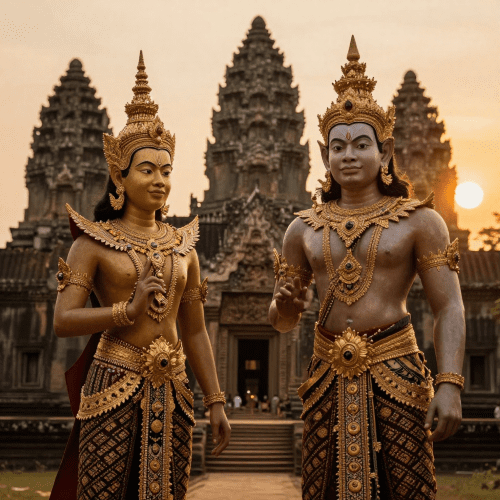
In some accounts of Bicolano beliefs, Arapayan, Naginid and Makbarubak are described as powerful, imposing and handsome male figures. Their bodies and faces are associated with distinctive markings and a striking appearance. One description presents the three entities as having a collective manifestation in a single three-headed form, suggesting that their supernatural identities could be represented together.
These descriptions distinguish the trio from ordinary human beings and emphasise their supernatural nature. However, the available accounts do not establish a definitive individual appearance for Arapayan. Its identity is therefore more closely connected to its ritual significance and association with the other two entities than to a particular physical form. The variation between descriptions also reflects the nature of Philippine oral traditions, where supernatural figures could acquire different characteristics as stories and beliefs travelled between communities.
Family
Arapayan is most frequently mentioned alongside Naginid and Makbarubak, two supernatural entities that share its association with ritual magic. The three are traditionally grouped together and are sometimes described as brothers. Their collective identity is particularly important in accounts of practices involving the preparation of poisonous oils. In historical descriptions of Bicolano beliefs, the trio is treated as a powerful group of supernatural beings whose names were invoked during specific rituals. Their association suggests a shared position within the spiritual understanding of those practices, although the surviving accounts provide little information about their individual relationships or origins.
The three entities are also sometimes described collectively as malevolent supernatural forces. Their association with harmful magic contributed to their reputation as dangerous figures within the traditional belief system. Spanish colonial writers frequently used terms such as demons, devils and idols when describing indigenous supernatural beings. These labels reflected the religious vocabulary and worldview of the colonisers rather than necessarily representing the way local communities understood these entities. Arapayan’s connection with Naginid and Makbarubak is therefore best understood through their shared ritual significance. Unlike supernatural figures with elaborate genealogies, the available traditions primarily preserve their identities as a closely associated group.
Other Names
Arapayan is the principal name associated with this supernatural entity, although Arapayam appears as a variant in some later references. Differences in spelling are not unusual in historical documentation of Philippine traditions, particularly when indigenous names were recorded by Spanish writers unfamiliar with local languages and pronunciation. Its two companions also appear under several spelling variations. Naginid is sometimes written as Nagined or Naguined, while Makbarubak appears as Macbarubac or Magkaburak in different accounts. These variations are important when examining historical references because the same supernatural figures may be identified through different spellings.
The trio of Naginid, Makbarubak and Arapayan is also associated with descriptions of powerful supernatural forces capable of bringing harm and disorder. Some later interpretations collectively refer to them as the Sowers of Chaos. This expression reflects their association with destructive supernatural practices rather than establishing a separate name for Arapayan itself. The different names and spellings demonstrate how indigenous beliefs were recorded and transmitted across generations. They also provide useful connections between early colonial accounts and later descriptions of Bicolano supernatural traditions.
Powers and Abilities
Arapayan’s principal supernatural association is with poisonous oils and the rituals through which these substances were believed to acquire their powers. Historical accounts describe how practitioners invoked Arapayan alongside Naginid and Makbarubak while preparing oils intended to carry supernatural effects. Miguel de Loarca’s account provides an important description of this practice. The ritual involved offerings of coconut oil and a crocodile’s tooth, accompanied by invocations directed towards the three entities. The resulting oil was believed to possess extraordinary properties that could be transferred to another person. These preparations were associated with harmful magic and the ability to bring illness or death upon an intended victim.
The historical description also refers to different kinds of oil, including preparations believed to cause death and others intended to counteract their effects. This suggests that the supernatural powers attributed to the trio were understood within a broader system of harmful magic and protection against it. Arapayan’s role in these practices was not necessarily independent of its companions. The three names were invoked together, indicating that their supernatural authority was understood collectively. Their presence in the ritual gave the preparation a spiritual dimension beyond the physical ingredients used by the practitioner.
The use of coconut oil and crocodile teeth is particularly significant because it illustrates how natural substances could become part of ritual practices through invocation and symbolic offerings. In this tradition, the effectiveness of the preparation was believed to depend not only on its ingredients but also on the supernatural forces associated with it. The association with poisonous oils places Arapayan within a tradition of beliefs concerning occult power, spiritual danger and the possibility of influencing another person’s fate through ritual means. Rather than being defined by physical strength or control over natural elements, its significance lies in the supernatural authority attributed to it during these practices.
Modern Day Influences
Arapayan remains a relatively obscure figure within the wider landscape of Philippine mythology, but its historical associations offer an important glimpse into the supernatural beliefs of the Bicolano people. Its connection with Naginid and Makbarubak preserves a distinctive aspect of traditional understandings of ritual magic and the unseen forces believed to influence human existence.
Interest in indigenous Philippine beliefs has grown through folklore research, cultural documentation, literature and contemporary artistic interpretations. Regional traditions that were once largely preserved through oral storytelling are receiving renewed attention, helping bring lesser-known supernatural figures into discussions of Filipino cultural heritage. Bicolano folk traditions also continue to attract interest through studies of traditional healing, spiritual practices and the role of supernatural beliefs in community life. These traditions provide a broader cultural setting through which figures such as Arapayan can be understood, even when direct evidence of continued worship or invocation is limited.
In contemporary storytelling, Arapayan offers an intriguing subject because its identity is connected to a specific historical practice rather than a widely circulated legend. Its association with poisonous oils, ritual offerings and supernatural companions provides material for exploring the relationship between traditional spirituality and the beliefs surrounding magic in premodern Philippine society. As interest in regional folklore continues, Arapayan represents an important part of the lesser-known supernatural traditions of the Philippines. Its story preserves the memory of a belief system in which ritual objects, spiritual invocations and unseen powers were closely intertwined.
Related Images


Source
Aswang Project. (2016, February 8). Bicolano Pantheon of Deities and Creatures | Philippine Mythology. https://www.aswangproject.com/bikolano-deities-in-philippine-mythology/
Bicolano Myths. (2016, January 7). Arapan, Nagined and Makbarubak – Bicolano Myths. http://bicolanomythsofgodsandmonsters.blogspot.com/2017/01/arapan-nagined-and-makbarubak.html
Bicolano Myths. (2017, January 17). Bicolano Mythological creatures. http://bicolanomythsofgodsandmonsters.blogspot.com/2017/01/bicolano-mythological-creatures.html
Caleb. (2019, March 4). In Philippine Mythology, Nagined, Arapayan, and … X. https://x.com/sethpuertoluna/status/1102677324523200512?lang=de
JE2L (Jurnal of English Education, Literasi, and Linguistics). (2021). Folk healing narratives: A grounded theory. https://jurnal.stain-madina.ac.id/index.php/je2l/article/view/407
Frequently Asked Questions
Who is Arapayan in Philippine mythology?
Arapayan is a supernatural entity in Bicolano tradition, known for its association with ritual magic and poisonous oils alongside Naginid and Makbarubak.
What is Arapayan known for?
Arapayan is primarily associated with rituals involving poisonous oils believed to possess supernatural powers capable of causing harm or counteracting its effects.
Who are Naginid and Makbarubak?
Naginid and Makbarubak are two supernatural entities associated with Arapayan. The three are collectively invoked in traditional Bicolano rituals involving poisonous oils.
What offerings were made to Arapayan?
Historical accounts describe offerings of coconut oil and crocodile teeth during rituals invoking Arapayan, Naginid and Makbarubak to prepare oils with supernatural properties.
Where does the legend of Arapayan originate?
Arapayan is associated with the traditional beliefs of the Bicolano people of the Philippines, particularly the historical region of Ybalon, documented in the sixteenth century.


